Sri Guru Tegh Bahadur Khalsa College (SGTB Khalsa College) Recruitment (2026)
Contents
Shri Guru Tegh Bahadur Khalsa College, also known as SGTB Khalsa College, is a prestigious educational institution in India. Established in 1951, it has consistently upheld a reputation for academic excellence and holistic development. With its commitment to providing quality education and fostering an inclusive learning environment, SGTB Khalsa College is known for attracting exceptional faculty and staff. In this article, we will explore the recruitment process and opportunities available at this esteemed college.
Sri Guru Tegh Bahadur Khalsa College (SGTB Khalsa College) Recruitment
SGTB Khalsa College stands as a beacon of education, fostering an enriching environment for both students and employees. The recruitment process is a crucial aspect of maintaining the college’s legacy of excellence. By selecting the best faculty and staff, the college ensures its continued success in providing quality education.
Latest SGTB Khalsa College Vacancies
| Title | Last Date | Posts | Location | Details |
|---|---|---|---|---|
| Sri Guru Tegh Bahadur Khalsa College Invites Application for 11 Assistant Professor Recruitment 2025 | Oct 23, 2025 | 11 Posts | New Delhi | View Details |
| SGTB Khalsa College Invites Application for 54 Non-Teaching Positions Recruitment 2023 | Feb 19, 2023 | 54 Posts | Delhi | View Details |
| SGTB Khalsa College Invites Application for 66 Assistant Professor Recruitment 2022 | Mar 19, 2022 | 66 Posts | New Delhi | View Details |
The Recruitment Process
Faculty Recruitment
Faculty members are the backbone of any academic institution. SGTB Khalsa College follows a rigorous and comprehensive recruitment process to ensure it brings in the best educators.
Job Postings
When faculty positions become available, the college advertises them through various channels, including the official website, job portals, and newspapers. The job postings include detailed information about the qualifications, experience required, and other essential criteria.
Application and Shortlisting
Prospective candidates submit their applications, which are then reviewed by the college’s selection committee. Shortlisted candidates are invited for further evaluation.
Interview and Demonstration
Shortlisted candidates appear for an interview, during which they are evaluated for subject knowledge, teaching methodologies, and interpersonal skills. Depending on the position, candidates might also be required to give a demonstration lecture.
Final Selection
Based on the interview performance, demonstration, and overall qualifications, the most suitable candidates are selected to join the faculty at SGTB Khalsa College.
About Shri Guru Tegh Bahadur Khalsa College (SGTB Khalsa College)
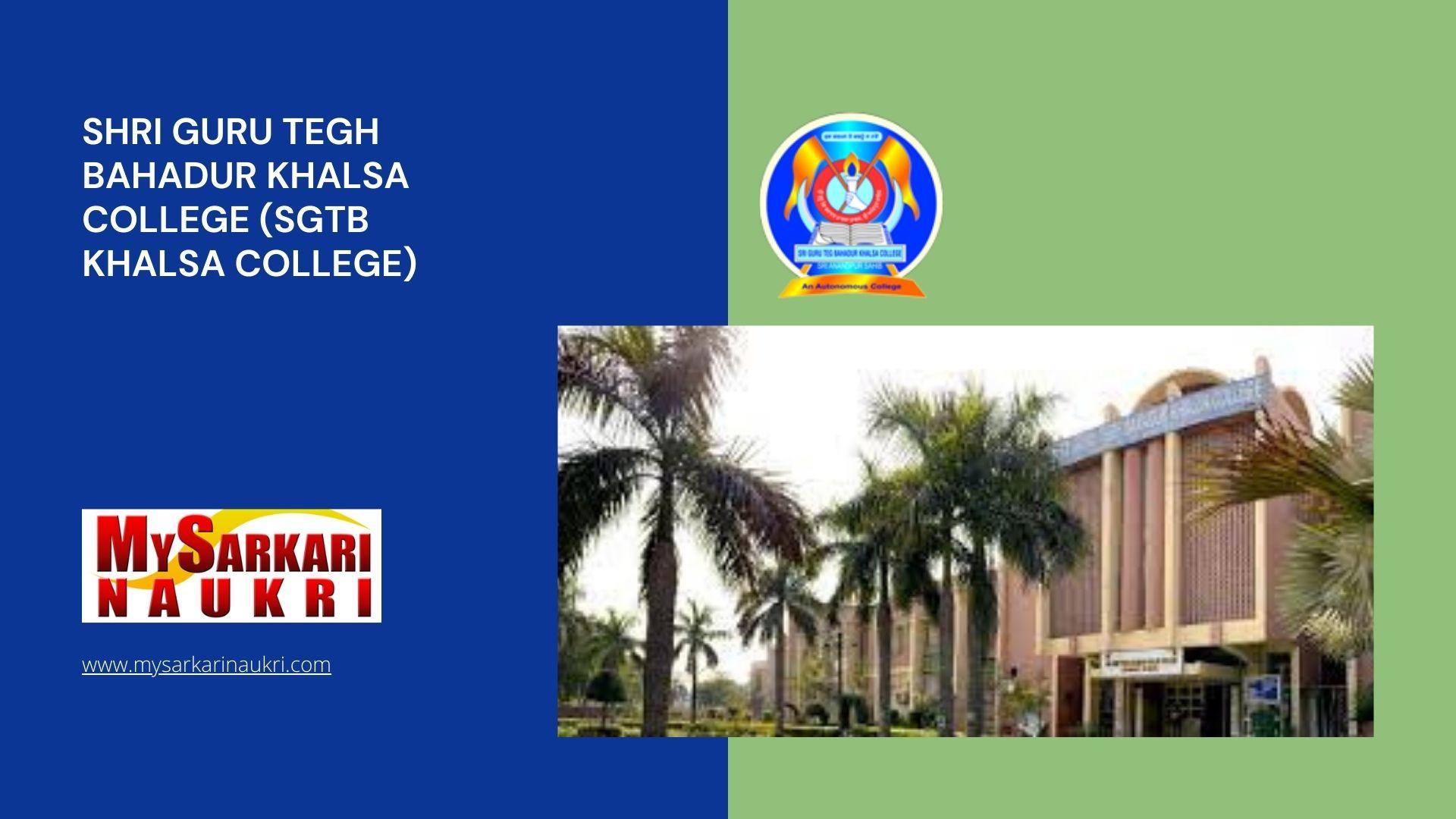
Sri Guru Tegh Bahadur Khalsa College, a leading institution of higher education within the University of Delhi, was founded in 1951 and is managed by the Delhi Sikh Gurdwara Management Committee. Rooted in the values of Sikhism while embracing modern education, the college was established during the challenging post-partition period when India was newly independent and faced with an influx of Punjabi refugees. With a mission to provide education to these refugees, the college began as a modest institution in Dev Nagar, Karol Bagh, New Delhi, with its first cohort of students appearing for Delhi University examinations in 1952.
As the college expanded, it relocated to University Enclave, Delhi, in 1971. The new campus was inaugurated in 1973 by Smt. Indira Gandhi, offering undergraduate programs in Humanities, Commerce, and Sciences. [Add when postgraduate courses were introduced and details on certificate courses]. Over time, the college has significantly improved its infrastructure, now featuring expanded academic blocks, modern science laboratories, a well-equipped library, digital centres for distance learning, hostels, a canteen and smart classrooms.
Contact Us:
M6W6+G28,
University of Delhi,
Arts Faculty Rd,
University Enclave,
New Delhi, Delhi 110007
PH: +91 97176 22113
Email ID: [email protected]
Website: https://sgtbkhalsadu.ac.in/
Frequently Asked Questions (FAQs)
To apply for a faculty position, you can check the official website or look for job postings on reputable portals.
Yes, the college regularly recruits non-teaching staff members to support its administrative functions.
Yes, the college welcomes students from different countries and promotes cultural diversity within its campus.
The qualifications required for faculty recruitment at SGTB Khalsa College vary depending on the specific position and the discipline. Generally, candidates must have a relevant postgraduate degree in the concerned subject, along with a Ph.D. or NET (National Eligibility Test) qualification. Additionally, candidates should have a strong academic record and a passion for teaching and research.