
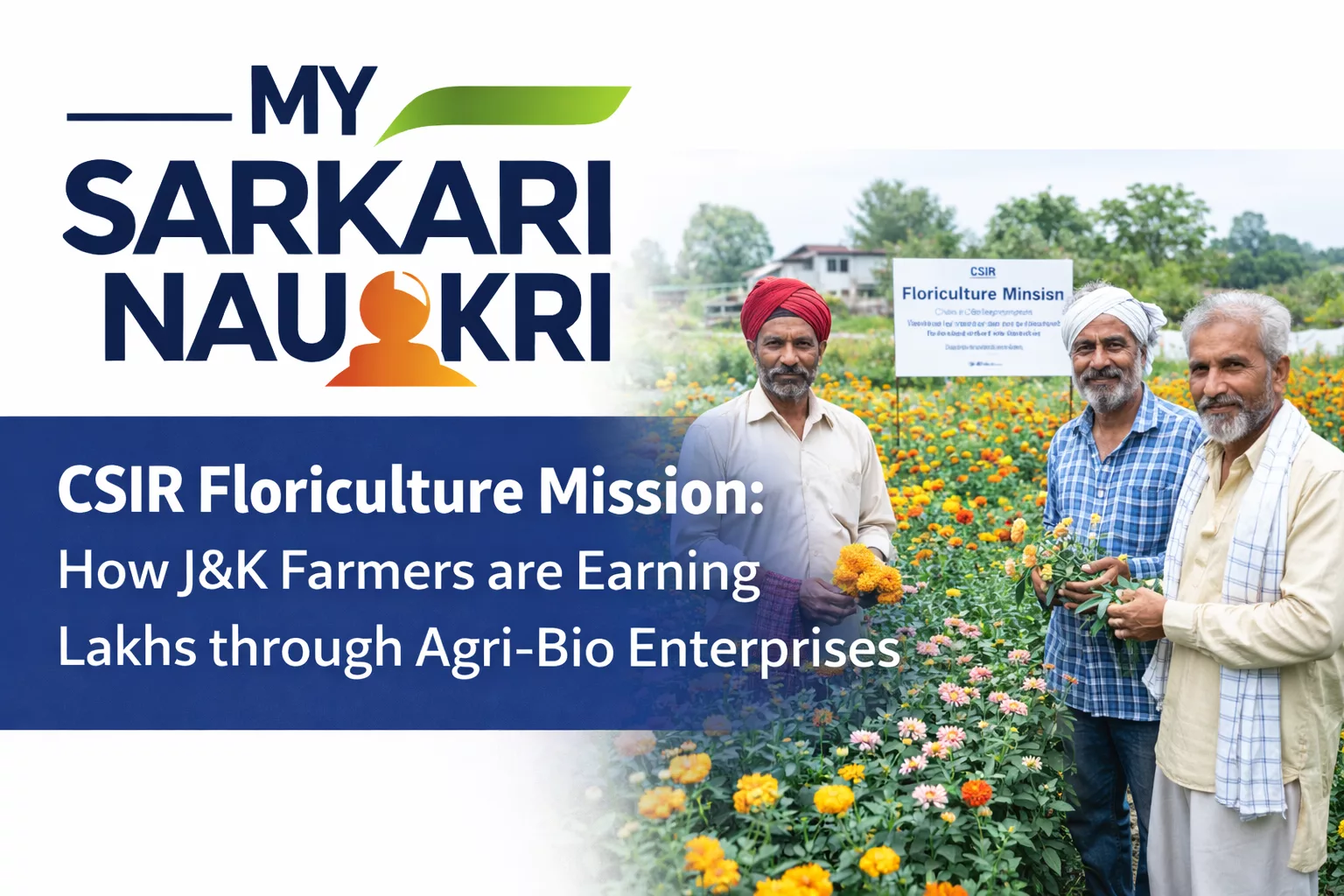
CSIR Floriculture Mission: How J&K Farmers are Earning Lakhs through Agri-Bio Enterprises
Contents
The CSIR-Indian Institute of Integrative Medicine (IIIM), Jammu, is spearheading a silent revolution in Jammu and Kashmir. Through the CSIR Floriculture Mission, the institute is transforming traditional farming into high-profit agri-enterprises.
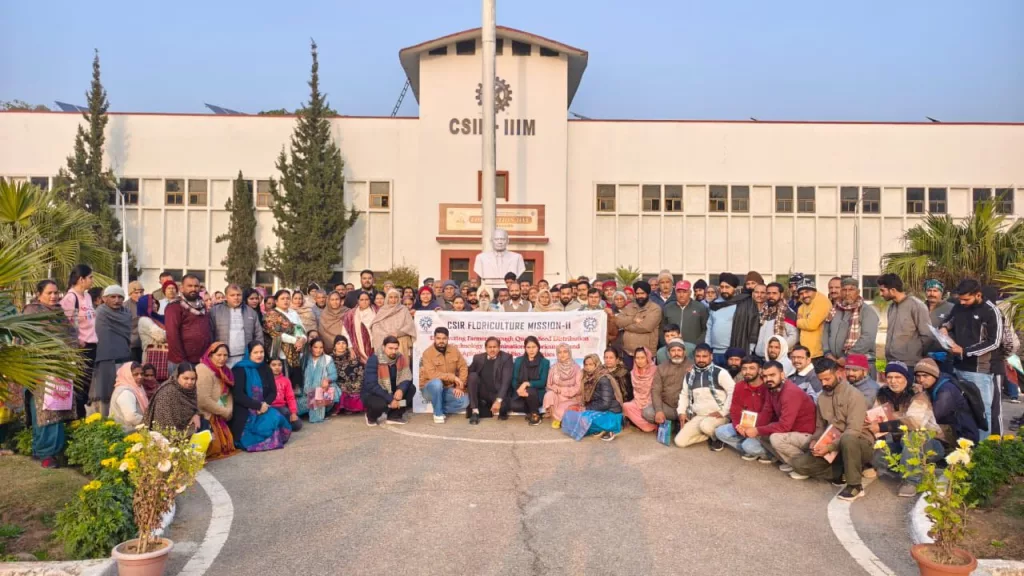
A recent mega-workshop organized by CSIR-IIIM brought together over 230 farmers from both rainfed and irrigated zones of Jammu, providing them with the tools, technology, and high-yielding seeds needed to multiply their income.
From Traditional Crops to High-Value Floriculture
The mission, guided by Dr. Jitendra Singh (Union Minister of State for Science and Technology), aims to move farmers away from low-yield traditional crops toward market-oriented floriculture.
Why Floriculture?
The agro-climatic conditions of J&K are ideal for premium flowers. The mission focuses on:
- Commercial Varieties: Lilium, Marigold, Gladiolus, Gerbera, and Carnation.
- High Demand: These flowers have a massive market in decorations, perfumes, and religious offerings.
- Employment: Floriculture is more labor-intensive, creating local jobs in nursery management and packaging.
Key Highlights of the CSIR-IIIM Workshop
Director of CSIR-IIIM, Dr. Zabeer Ahmed, emphasized that the mission isn’t just about giving seeds; it’s about “end-to-end” handholding.
| Feature | Details Provided to Farmers |
| Technical Training | Scientific nursery raising and pest management. |
| Input Support | Distribution of high-quality Marigold planting material. |
| Post-Harvest | Training in grading, cold chain integration, and packaging. |
| Market Intelligence | Real-time data on market demand and value chain management. |
The Integration of Apiculture (Beekeeping)
A unique aspect of this mission is the integration of Apiculture with Floriculture. Honeybees act as natural pollinators, which significantly increases flower seed production and quality.
Farmers are being trained in:
- Scientific Beekeeping: Colony and seasonal management.
- Migratory Beekeeping: Moving hives to different locations based on flowering seasons.
- Value Addition: Processing not just honey, but also beeswax and honey-based products to create multiple income streams.
How Science is Creating “Agri-Entrepreneurs”
The shift from “farmer” to “entrepreneur” is the core goal. Dr. Shahid Rasool, Nodal Scientist of the Mission, highlighted that the holistic approach—from quality germplasm to market linkages—ensures sustainable economic returns.
Infrastructure & Post-Harvest Boost
Er. Abdul Rahim (Chief Scientist, IIIM) pointed out that reducing post-harvest losses is critical. The mission is focusing on:
- Protected Cultivation: Greenhouses to protect high-value flowers.
- Efficient Irrigation: Drip and sprinkler systems.
- Cold Chain: Ensuring flowers stay fresh from the field to the city market.
“The success stories emerging from the Mission clearly demonstrate that science-based interventions can transform farmers into agri-entrepreneurs.” — Dr. Zabeer Ahmed, Director CSIR-IIIM.
Impact on the Ground
Farmers at the workshop shared that the improved varieties supplied by CSIR-IIIM have led to bumper harvests. Many reported that their income has increased manifold compared to previous years, thanks to timely agro-advisories and access to superior quality seeds.
Looking for more Agri-Business Opportunities?
The CSIR Floriculture Mission continues to expand its reach. If you are a farmer or a budding entrepreneur in the J&K region, keep an eye on official CSIR-IIIM Jammu notifications for upcoming workshops and seed distribution drives.
Commercial Flower Varieties & Peak Seasons
The diverse climate of J&K—from the subtropical plains of Jammu to the temperate hills of Doda and Kishtwar—allows for year-round production of specific varieties.
| Flower Crop | Top High-Yielding Varieties | Peak Growing/Planting Season | Best Growing Conditions |
| Marigold | African (Tagetes erecta), French (T. patula), Pusa Basanti, Pusa Narangi | Plains: Winter & Spring Hills: Summer & Rainy season | Open field; very versatile but sensitive to frost. |
| Gladiolus | White Prosperity, Eurovision, Novalux, Jyotsana | Plains: Oct–Nov (Planting) Hills: Mar–Apr (Planting) | Well-drained soil; requires 65–120 days to harvest. |
| Lilium | Asiatic (Stargazer), Oriental (Siberia, Casablanca) | Valley: May–Oct Plains: Winter/Spring | Best under 35–50% shade nets or polyhouses. |
| Gerbera | Various Hybrid Mixes | Year-round (mostly protected) | Requires protected cultivation (polyhouses). |
| Lavender | RRL-12 (Kashmir Lavender) | Planting: Nov–Dec or Feb–Mar Bloom: June–July | Rain-fed, temperate regions; ideal for slopes. |
| Carnation | Standard & Spray types | Off-season: Summer in high hills | Excellent for cut-flower exports. |
Key Takeaways for Agri-Entrepreneurs
- Integrated Income: CSIR-IIIM recommends “integrated models.” For instance, planting Marigold or Lavender alongside Apiculture (beekeeping) can boost pollination efficiency while providing a second income from honey and beeswax.
- Off-Season Advantage: High-altitude areas (above 1500m) like Kishtwar and Bhaderwah can produce flowers in the summer when the plains are too hot, fetching 3x higher market prices.
- Waste to Wealth: Farmers are also being trained to use “floral waste” to create high-value products like Herbal Gulal, Incense sticks (Agarbatti), and Essential oils, ensuring no part of the harvest goes to waste.
How to Get Involved?
If you are looking to start your own agri-bio enterprise, you can reach out to the CSIR-IIIM Jammu or your local Krishi Vigyan Kendra (KVK). They provide Quality Planting Material (QPM) and technical handholding for the initial setup.