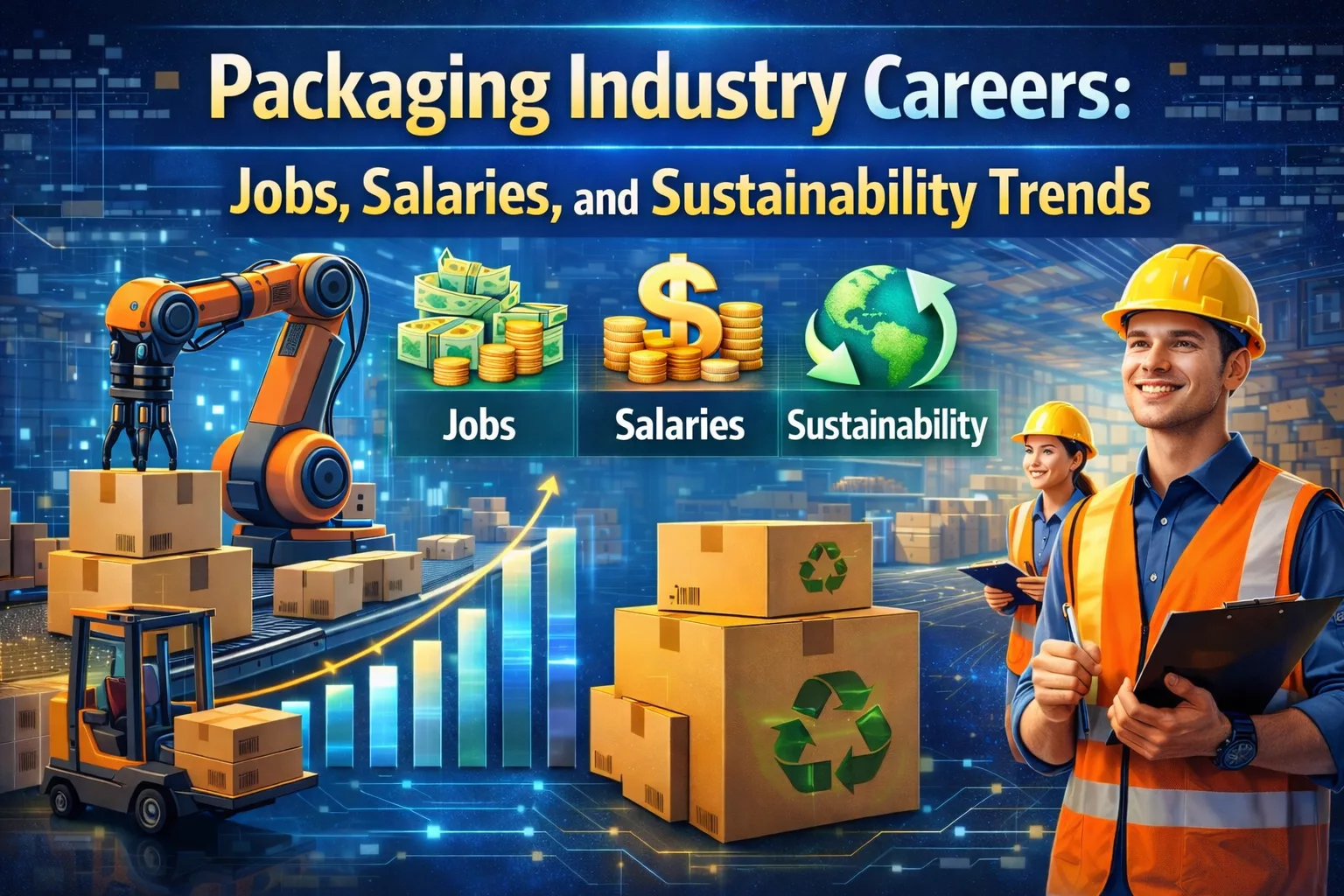
Packaging Industry Careers 2026: Jobs, Salaries, and Sustainability Trends
Contents
The global packaging industry is no longer just about “boxes and bottles.” It has evolved into a high-tech, multi-trillion-dollar ecosystem driven by Industry 4.0, circular economy mandates, and sophisticated material science. For aspirants in India and abroad, this represents one of the most stable and high-growth “recession-proof” career paths available today.
According to data from the Indian Institute of Packaging (IIP), the Indian market alone is set to reach USD 143 billion by 2029, growing at a CAGR of 11%. This guide provides an evergreen breakdown of the recruitment landscape, institutional pathways, and the shift toward sustainable engineering.
The Market Dynamics: A Decade of Growth
Understanding the scale of the industry is crucial for long-term career planning. The transition from traditional materials to “Smart & Green” packaging is the primary driver of new job roles.
| Metric | Global Projection (2034) | Indian Market (2029) |
| Market Value | USD 1.69 Trillion | USD 143 Billion |
| Growth Rate (CAGR) | 3.16% | 11% |
| Dominant Material | Plastics (40-45%) | Paper & Flexible Packaging |
| Key Driver | Sustainability & Automation | E-commerce & FMCG expansion |
Core Recruitment Domains & Job Roles
The packaging sector is interdisciplinary. Whether you are a mechanical engineer, a data scientist, or a sustainability advocate, there is a dedicated vertical for your skills.
A. Production, Manufacturing & Operations
This is the backbone of the industry, focusing on the conversion of raw materials into finished packaging products.
- Machine Operators & Maintenance Technicians: High demand for those skilled in PLC (Programmable Logic Controllers) and robotic arms.
- Operations Managers: Responsible for lean manufacturing and Six Sigma implementation to reduce waste.
B. Research & Development (R&D) and Design
As brands move away from single-use plastics, R&D is the most prestigious and highest-paying vertical.
- Packaging Engineers: Developing structural designs that use less material while maintaining strength.
- Sustainability Specialists: Conducting Life Cycle Assessments (LCA) to measure carbon footprints.
- Material Scientists: Innovating with bioplastics, seaweed-based films, and compostable polymers.
C. Smart Packaging & Digitalization (The Tech Frontier)
The integration of AI and IoT has birthed a new sub-sector.
- Automation Engineers: Designing smart labels with QR codes and RFID for real-time tracking.
- AI/ML Analysts: Using predictive algorithms to detect defects on high-speed production lines.
- Quality Control (QC) Engineers: Ensuring food safety standards (FSSAI/FDA) are met through rigorous testing.
Also Read: Future of Packaging: AI, ML, and Automation Career Guide
Education & Institutional Pathways: The IIP Advantage
In India, the Indian Institute of Packaging (IIP), under the Ministry of Commerce and Industry, is the gold standard for training.
Key Academic Programs:
- Postgraduate Diploma in Packaging (PGDP): The flagship 2-year program with nearly 100% placement records.
- Bachelor/Master of Science in Packaging Technology: Focused on the technical and chemical aspects of materials.
- Short-term Certifications (CPE/DPC): Ideal for working professionals looking to pivot into the packaging sector.
Professional Tip: Graduates from IIP are often recruited by global giants like Unilever, P&G, Amazon, and Tata Consumer Products.
Salary Benchmarks & Career Progression
Salaries in the packaging industry are competitive and scale rapidly with technical expertise in automation or sustainable materials.
| Career Level | Typical Experience | Estimated Salary (INR per Annum) |
| Entry-Level (Graduate Trainee) | 0–2 Years | ₹5,00,000 – ₹6,50,000 |
| Mid-Level (Specialist/Lead) | 5–8 Years | ₹8,00,000 – ₹16,00,000 |
| Senior Management (VP/Director) | 12+ Years | ₹22,00,000 – ₹45,00,000+ |
The Sustainability Pivot: 25,000+ New Roles
The “Green Transition” is not just a trend; it is a regulatory requirement. The industry is currently facing a skills gap of approximately 25,000 professionals in the following areas:
- Circular Economy Design: Designing products that are 100% recyclable.
- Compostable Technologies: Developing plant-based barrier coatings.
- Regulatory Compliance: Navigating Plastic Waste Management (PWM) Rules and Extended Producer Responsibility (EPR) frameworks.
Standard Annual Recruitment Cycle
While private companies hire year-round, the institutional and government-linked sectors follow a predictable pattern:
- IIP Admissions: Usually open in the second quarter (April-June) for the PGDP program.
- Campus Placements: Typically occur between December and March.
- Government Roles: Organisations like BIS (Bureau of Indian Standards) and FSSAI frequently release notifications for Technical Officers with packaging backgrounds.
FAQs
While a B.Tech in Mechanical or Chemical Engineering is a great start, a specialized Post Graduate Diploma from IIP is highly recommended to secure high-paying roles in R&D or Design.
No. The packaging industry is tied to essential goods (food, pharma, hygiene). As long as people consume goods, packaging remains a necessity, making it highly resilient to economic downturns.
AI is used for “Predictive Maintenance” (fixing machines before they break) and “Vision Systems” (using cameras to spot defects in 1,000 bottles per minute).