The Ultimate Career Guide: Cracking Government Job Interviews with AI Tools
Contents
- 1 🔁 The Permanent Government Recruitment Cycle (2026 Update)
- 2 📋 Eligibility Criteria for Interview-Level Posts
- 3 📈 Your 10-Year Sarkari Career Growth Roadmap (2026 Onwards)
- 4 💰 2026 Salary Breakdown: What You’ll Actually Earn (Pay Level-10)
- 5 🤖 AI-Powered Interview Prep: The 2026 Competency Matrix
- 6 🎯 5 Expert AI Preparation Protocols (Used by Toppers)
- 7 ❓ Frequently Asked Questions (FAQs) – 2026 Edition
- 8 🔗 Next Steps for Aspirants
- 9 Final Thought: AI Won’t Replace You—But a Candidate Using AI Might
Master the Personality Test for UPSC, PSCs, Banking & PSU Roles with Smart AI Strategies
In India’s fiercely competitive public sector recruitment landscape, clearing the written exam is just half the battle. The Personality Test (Interview)—the final stage of selection for Group A and B posts—remains the decisive gatekeeper to a lifelong Sarkari Naukri.
At MySarkariNaukri.com, our analysis of thousands of recruitment cycles (from UPSC and State PSCs to IBPS, SSC CGL, and PSUs like ONGC and NTPC) reveals a critical truth: technical knowledge gets you to the interview room—but personality, clarity, and situational awareness get you selected.
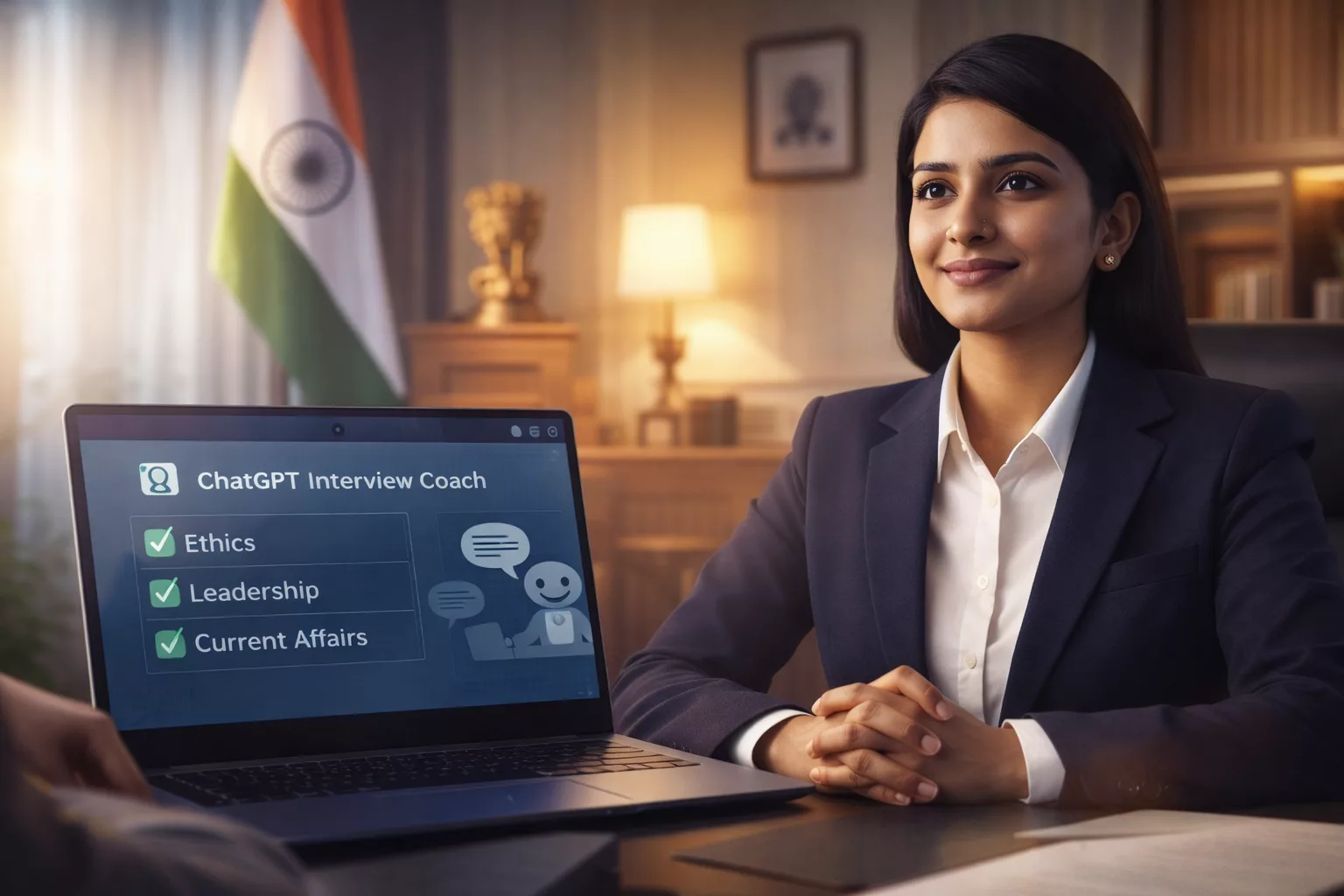
As we step into 2026, Artificial Intelligence (AI) has evolved from a novelty to a strategic interview prep partner. This guide gives you a future-proof, step-by-step blueprint to leverage AI ethically and effectively—while staying aligned with the rigid norms of government recruitment.
🔁 The Permanent Government Recruitment Cycle (2026 Update)
Most prestigious Indian government jobs follow a three-stage annual cycle that rarely changes. Understanding this structure helps you time your AI-powered prep perfectly.
| Stage | Purpose | AI Use Case |
|---|---|---|
| Stage I: Prelims / Screening | Eliminate bulk applicants via MCQs (e.g., UPSC Prelims, SSC CGL Tier-I) | Use AI to generate timed quizzes on current affairs or static GK |
| Stage II: Mains / Descriptive Exam | Test depth of subject knowledge & writing ability | Ask AI to critique your essay structure or suggest improvements in answer framing |
| Stage III: Personality Test (Interview) | Assess integrity, communication, ethics, and administrative temperament | This is where AI delivers maximum ROI—see detailed strategies below |
💡 Pro Tip: Start AI interview simulation only after clearing Mains. Premature focus on interviews can dilute your mains preparation.
📋 Eligibility Criteria for Interview-Level Posts
While vacancies change yearly, core eligibility rules remain stable across decades:
- Educational Qualification:
- Minimum: Bachelor’s degree from a UGC-recognized university
- Technical roles (e.g., Engineers in CPWD, Medical Officers in Railways): Require B.E./B.Tech, MBBS, LLB, or equivalent
- Age Limit (as of 2026):
- General: 21–32 years
- OBC: +3 years
- SC/ST: +5 years
- PwD: Up to +10 years (varies by category and post)
- Document Readiness:
Always carry valid caste/EWS certificates issued on or after April 1, 2025 (for 2026 recruitments).
→ AI Hack: Prompt: “Generate a DV checklist for [Post Name] based on latest DoPT guidelines.”
Most PSUs require candidates to be between 21 and 30 years as of the “crucial date” specified in the official notification. Even a single day over the limit can lead to disqualification.
→ Calculate your exact age as of any date using our free Age Calculator—updated for 2026 recruitments.
📈 Your 10-Year Sarkari Career Growth Roadmap (2026 Onwards)
Clearing the interview locks you into a structured promotion ladder. Here’s what to expect in central government or major PSUs:
| Year | Milestone | Typical Designation (Example) |
|---|---|---|
| Year 0 | Appointment | Assistant Section Officer (ASO), Probationary Officer (PO) |
| Year 2 | Confirmation | Section Officer / Executive Engineer |
| Year 4–5 | First Promotion | Under Secretary / Assistant Manager |
| Year 9–10 | Senior Grade | Deputy Secretary / Manager (Level-11) |
⚠️ Service Bond Alert: PSUs like NTPC, ONGC, BHEL often require a ₹2–5 lakh service bond for 2–3 years post-training. Breach = financial penalty.
💰 2026 Salary Breakdown: What You’ll Actually Earn (Pay Level-10)
With DA crossing 50% and 8th Pay Commission discussions underway, take-home pay has risen significantly.
For a Level-10 Officer in a Metro (Class X City):
- Basic Pay: ₹56,100
- Dearness Allowance (DA): 60% = ₹33,660
- House Rent Allowance (HRA): 30% = ₹16,830
- Transport Allowance + DA on TA: ~₹10,000
- Gross Monthly Income: ≈ ₹1,16,590
📌 Note: HRA varies by city classification:
🤖 AI-Powered Interview Prep: The 2026 Competency Matrix
Government interview boards evaluate candidates across four pillars. Use AI to simulate each:
| Interview Pillar | Weightage | AI Prompt Strategy |
|---|---|---|
| DAF & Resume Deep Dive | 40% | “Act as a UPSC board member. Cross-question me on my hobby: [Photography].” |
| Current Affairs (National/Global) | 30% | “Summarize India’s G20 legacy and Indo-Pacific strategy in 5 bullet points for civil services.” |
| Situational Judgment (Ethical Dilemmas) | 20% | “Give a STAR-method response if my senior asks me to approve a fake bill.” |
| Ethics & Governance Values | 10% | “Explain ‘Neutrality vs Anonymity’ in civil services with real examples.” |
🎯 5 Expert AI Preparation Protocols (Used by Toppers)
1. The DAF Interrogator
Upload your Detailed Application Form (DAF) to an AI tool. Ask:
“Identify 7 potential weak spots in my profile that a strict UPSC board might challenge.”
2. Mock Answer Transcription & Polish
Record yourself answering questions → transcribe via AI → ask:
“Remove fillers, improve flow, and shorten this to 90 seconds without losing impact.”
3. State-Specific Context Builder
For State PSCs (e.g., UPPSC, MPPSC):
“List top 3 agricultural challenges in [Madhya Pradesh] in 2026 and suggest policy solutions.”
4. Regional Language Formalizer
Appearing in Hindi/Marathi/Tamil? Use AI to:
“Convert this English answer about federalism into formal, bureaucratic Hindi—no slang.”
5. Theme-Based Question Predictor
Instead of guessing exact questions, prompt:
“Based on UPSC 2023–2025 transcripts, predict 5 recurring themes for 2026 interviews.”
✅ Remember: AI is for preparation only. In the actual interview, authenticity > perfection.
❓ Frequently Asked Questions (FAQs) – 2026 Edition
Yes. Eligibility is fixed as of the “crucial date” in the notification (usually the application deadline). Certificates must be valid on that date.
No. But using AI to refine your thoughts during prep is smart. Never memorize robotic scripts—boards detect inauthenticity instantly.
Typically 2 years in Central Govt & PSUs. Performance is reviewed before confirmation.
In UPSC, no—interviews are “blind” to ensure unbiased evaluation. But in some PSUs and State PSCs, total merit includes written + interview scores.
It’s under discussion, but not yet implemented. New recruits still join under 7th CPC + DA adjustments. Expect implementation by 2027.
For sensitive posts (e.g., IAS, IPS, IRS), a 1-year cooling-off period applies before joining private firms—to prevent conflict of interest.
🔗 Next Steps for Aspirants
- Download our free: DAF Analysis Checklist for 2026 Interviews
- Explore: Latest UPSC Interview Transcripts (2023–2025)
- Read: How to Answer “Why Civil Services?” – 10 Model Responses
Final Thought: AI Won’t Replace You—But a Candidate Using AI Might
In 2026, success belongs not to those who reject technology, but to those who harness it wisely—while staying rooted in values, ethics, and self-awareness. Let AI be your mirror, not your mouthpiece.
Stay updated with real-time admit cards, results, and interview call letters on MySarkariNaukri.com — your trusted source for authentic, exam-cycle-aligned career guidance.