
The Ultimate Career Guide to PSU Interview Secrets: GD & PI Mastery
Contents
- 1 The Recruitment Ecosystem: The Three-Tier Filter
- 2 Eligibility Standards & Entry Gateways (Evergreen)
- 3 The “Sarkari” Career Path: A 10-Year Growth Map
- 4 Financial Anatomy: 2026 Standard (Level-10)
- 5 Group Discussion (GD): The Evergreen Topics
- 6 Personal Interview (PI): Common Questions & Winning Responses
- 7 Competency Matrix Table: Weightage Analysis
- 8 Frequently Asked Questions (FAQs)
The journey to securing a “Sarkari” officer rank in India’s Maharatna, Navratna, or Miniratna Public Sector Undertakings (PSUs) is often perceived as a marathon of technical exams like GATE or UGC-NET. However, the true “gatekeepers” of these prestigious roles are the Group Discussion (GD) and Personal Interview (PI) rounds. At MySarkariNaukri.com, our decade-long research into PSU recruitment cycles reveals a consistent pattern: while the written exam gets you to the door, your performance in the boardroom determines if you step inside.
In this blueprint, we strip away the temporary “job alert” noise and focus on the institutional pillars that define a PSU career—from the psychological triggers of the interview panel to the financial reality of the Level-10 pay matrix in 2026.
The Recruitment Ecosystem: The Three-Tier Filter
Unlike private sector hiring, PSU recruitment follows a rigid, transparent, and legally-bound sequence. This “Standard Annual Cycle” ensures meritocracy and satisfies constitutional mandates.
- The Screening (Gateway): Primary shortlisting via National Level Exams (GATE/CAT/NET) or a dedicated Computer Based Test (CBT).
- The Collaborative Filter (GD/GT): Candidates are tested for team dynamics, leadership, and “officer-like qualities” (OLQs).
- The Individual Audit (Personal Interview): A 360-degree assessment of technical depth, personality, and organizational fit.
Eligibility Standards & Entry Gateways (Evergreen)
While specific dates change, the eligibility “DNA” of PSUs remains remarkably stable.
- Academic Thresholds: A minimum of 60-65% in a 4-year Engineering degree (B.E./B.Tech) or relevant Master’s (MBA/CA/Post-Graduation) is the standard.
- Age Dynamics: The standard entry age is 21 to 28 years for General candidates. Age relaxations (3 years for OBC-NCL, 5 years for SC/ST) are institutional constants.
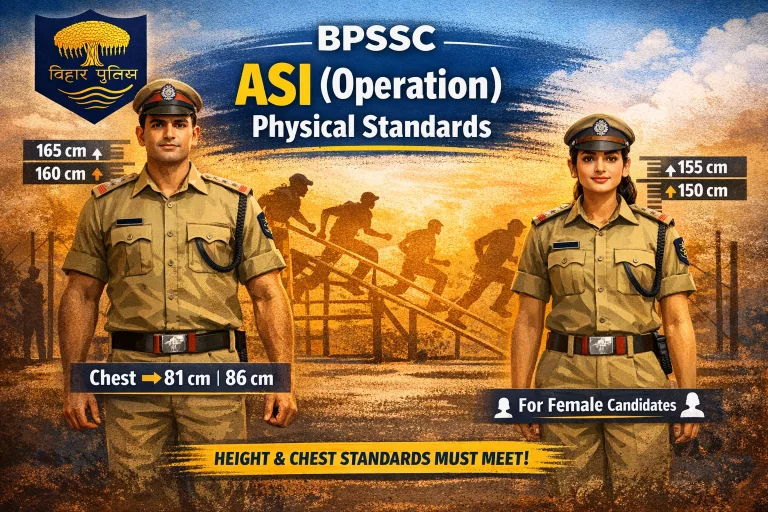
- Medical Fitness: PSUs like ONGC or Indian Oil have stringent physical standards, especially for field-based engineering roles, which are often as critical as the interview itself.
The “Sarkari” Career Path: A 10-Year Growth Map
Joining a PSU is not just a job; it is a transition into a lifelong service hierarchy. Most PSUs follow an E1 to E9 executive grading system.
| Tenure (Approx.) | Designation/Rank | Level | Key Responsibilities |
| Year 0 | Management/Graduate Trainee | Level-10 (Training) | Onboarding, site visits, and technical induction. |
| Year 1 | Assistant Manager / Officer | Level-10 | Independent handling of shifts or sub-sections. |
| Year 4 | Deputy Manager | Level-11 | Leading small teams, budgetary responsibilities. |
| Year 8 | Manager | Level-12 | Departmental oversight, policy implementation. |
| Year 12 | Senior Manager / Chief Manager | Level-13 | Regional or plant-wide strategic operations. |
Financial Anatomy: 2026 Standard (Level-10)
With the implementation of the 8th Pay Commission principles and the merger of Dearness Allowance (DA) after it crossed the 50% benchmark, PSU salaries in 2026 reflect a high-inflation-adjusted structure.
- Base Pay (Entry Level-10): Starting Basic Pay typically ranges from ₹60,000 to ₹1,80,000 for Maharatnas.
- Dearness Allowance (DA): Factored at >50% of Basic Pay (revised quarterly based on AICPI).
- House Rent Allowance (HRA): * Class X (Metros): 30%
- Class Y (Big Cities): 20%
- Class Z (Other Towns): 10%
- Perks & Allowances: Often capped at 35% of Basic Pay under the “Cafeteria Approach” (Mobile, Fuel, Professional Pursuit, etc.).
Group Discussion (GD): The Evergreen Topics
PSU GDs are rarely about “winning” an argument; they are about consensus building. Topics generally fall into three buckets:
1. Technological & Industrial Trends
- “Net Zero 2070: Can Indian PSUs lead the Green Hydrogen revolution?”
- “AI vs. Human Labor: Efficiency or Unemployment in the Manufacturing sector?”
- “The impact of Industry 5.0 on traditional Public Sector units.”
2. Social & Economic Policy
- “Privatization of PSUs: A necessity for efficiency or a loss of national assets?”
- “Cashless Economy: Bridging the digital divide in rural India.”
- “Work-Life Balance: A myth or a reality in high-pressure PSU roles?”
3. Abstract & Behavioral
- “Innovation vs. Invention: What does India need more?”
- “Ethics or Profit: The dilemma of a modern Public Sector Manager.”
Personal Interview (PI): Common Questions & Winning Responses
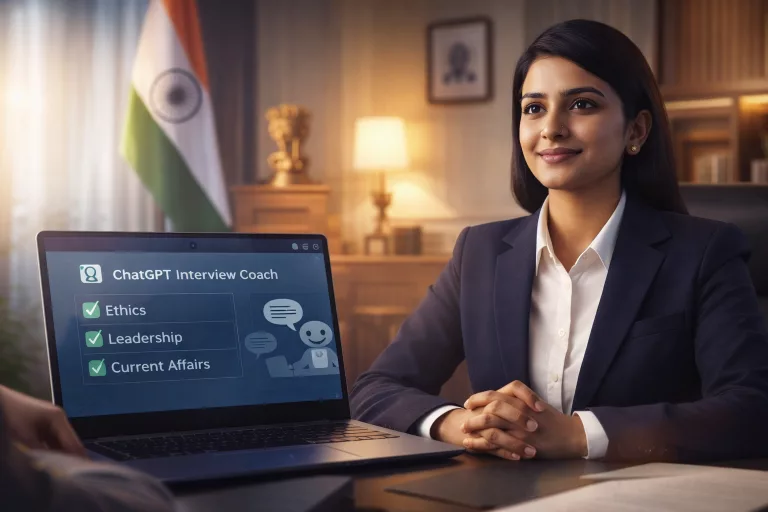
The PI panel typically consists of 5–7 members, including technical experts and an HR psychologist.
Technical & Organizational Fit
- “Why this specific PSU and not a private MNC?” * Tip: Focus on the scale of national impact and the long-term stability/diversity of the role.
- “Tell us about a time you handled a technical failure.”
- Tip: Use the STAR (Situation, Task, Action, Result) method. Focus on safety protocols.
Behavioral & Situational
- “What is your view on the Service Bond/Probation?”
- Tip: Most PSUs require a 3-year bond (often ₹3–5 Lakhs). Express commitment to the organization’s investment in your training.
- “Are you willing to work in remote, rural, or offshore locations?”
- Tip: A “Yes” is mandatory. PSUs operate where the resources are, not always where the malls are.
Competency Matrix Table: Weightage Analysis
| Assessment Component | Weightage (%) | Core Skills Tested |
| Technical Knowledge | 40% | Depth of core subjects, industrial application. |
| Communication | 20% | Clarity, active listening, articulation. |
| Leadership/GD | 15% | Teamwork, conflict resolution, persuasion. |
| General Awareness | 15% | Current affairs, PSU history, energy sector trends. |
| Psychological Fit | 10% | Stress management, integrity, adaptability. |
Expert “Masterclass” Tips
- The “Document Shield”: Ensure your OBC-NCL or EWS certificates are issued after April 1st of the current financial year. PSUs are notoriously strict with “Crucial Dates.”
- The 3-Year Rule: Understand that your first 3 years (Probation + Initial Posting) define your reputation. Focus on learning the “Manual of Procedures.”
- Institutional Research: Read the “Annual Report” of the PSU from their official website before the interview. Knowing their profit margins and CSR activities impresses the panel.
Frequently Asked Questions (FAQs)
Yes. By signing, you agree to compensate the organization for training costs if you leave before the stipulated period (usually 3 years).
Technically yes, but you must apply “Through Proper Channel” (TPC) or obtain a No Objection Certificate (NOC).
Most PSUs have a 1-year training period followed by a 1-year probation. Confirmation happens after a formal performance review.
Typically every 3 to 5 years, depending on the organizational “Transfer Policy” and the sensitivity of the post.
Only if the degree is recognized by the AICTE/UGC and the specific recruitment notification does not explicitly mandate “Full-time regular” courses.
Most have shifted to the National Pension System (NPS), where both the employee and employer contribute towards a retirement corpus.
Your candidature is typically cancelled. Some PSUs allow an appeal to a “Review Medical Board,” but the standards are non-negotiable.