Crime and Criminal Tracking Network & Systems (CCTNS)
5 Apr 2017 Vinay Yadav
UPSC CSEState PSCSSC CGLRailways
Crime and Criminal Tracking Network & Systems (CCTNS) is a planning scheme conceived in the light of the experience of a non-plan scheme namely - Commo...
• Key concept: Crime and Criminal Tracking Network & Systems (CCTNS)
• Essential for UPSC CSE Prelims, State PSCs, SSC CGL & Railway exams.
• Comprehensive analytical coverage and factual pointers provided below.
Crime and Criminal Tracking Network & Systems (CCTNS) is a planning scheme conceived in the light of the experience of a non-plan scheme namely - Common Integrated Police Application (CIPA). CCTNS is a Mission Mode Project under the National e-Governance Plan of Govt of India. CCTNS aims at creating a comprehensive and integrated system for enhancing the efficiency and effectiveness of policing through adopting of the principle of e-Governance and creation of a nationwide networking infrastructure for evolution of IT-enabled-state-of-the-art tracking system around 'Investigation of crime and detection of criminals'. An allocation of Rs. 2000 crores have been made for CCTNS Project. Cabinet Committee on Economic Affairs (CCEA) has approved the project on 19.06.2009.
Objectives of 'CCTNS'
The objectives of the Scheme can broadly be listed as follows:
Make the Police functioning citizen friendly and more transparent by automating the functioning of Police Stations.
Improve delivery of citizen-centric services through effective usage of ICT.
Provide the Investigating Officers of the Civil Police with tools, technology and information to facilitate investigation of crime and detection of criminals.
Improve Police functioning in various other areas such as Law and Order, Traffic Management etc.
Facilitate Interaction and sharing of Information among Police Stations, Districts, State/UT headquarters and other Police Agencies.
Assist senior Police Officers in better management of Police Force
Keep track of the progress of Cases, including in Courts
Reduce manual and redundant Records keeping
Under the CCTNS Project, approx. 14,000 Police Stations throughout the country has been proposed to be automated beside 6000 higher offices in police hierarchy e.g. Circles, Sub-Divisions, Districts, Range, Zones, Police Headquarters, SCRBx including scientific and technical organizations having databases required for providing assistance and information for investigation and other purposes e.g. Finger Print Bureaux, Forensic Labs etc.
Source: http://www.ncrb.gov.in/BureauDivisions/CCTNS/AboutCCTNS.htm
हिंदी में
सीसीटीएनएस के बारे में
अपराध तथा अपराधी ट्रैकिंग नेटवर्क एवं सिस्टम (सीसीटीएनएस) एक प्लान स्कीम है जो एक नॉन-प्लान स्कीम – कॉमन इंटेग्रटेड पुलिस एप्लीकेशन (CIPA) के अनुभव से विकसित हुआ है। सीसीटीएनएस भारत सरकार के राष्ट्रीय ई-गर्वनेस प्लान के अधीन एक मिशन मोड परियोजना है । 'अपराध की जाँच एवं अपराधियों की पहचान' से संबन्धित आईटी आधारित स्टेट ऑफ आर्ट ट्रैकिंग प्रणाली के विकास हेतु ई-गर्वनेस के सिद्धांत को अपनाते हुए तथा राष्ट्रव्यापी नेटवर्किंग आधारित संरचना के निर्माण द्वारा पुलिस की कार्यकुशलता तथा प्रभाव को बढ़ाने के लिए एक व्यापक एवं समेकित प्रणाली का निर्माण करना सीसीटीएनएस का उद्देश्य है । सीसीटीएनएस परियोजना के लिए भारत सरकार द्वारा 2000 करोड़ रू॰ का आवंटन किया गया है । आर्थिक मामलों की कैबिनेट समिति (सीसीईए) ने इस परियोजना को दिनांक 19.06.2009 को अनुमोदित कर दिया था ।
सीसीटीएनएस के उद्देश्य :-
इस योजना के उद्देश्य विस्तारपूर्वक निम्न प्रकार से सूचीबद्ध किये जा सकते है :
पुलिस के कार्यों को नागरिक केन्द्रित बनाना और पुलिस थानों में कार्यों को स्वचालित करके पारदर्शी बनाना ।
आईसीटी के प्रभावी प्रयोग द्वारा नागरिक केन्द्रित सेवाओं के वितरण में सुधार करना ।
सिविल पुलिस के जाँच अधिकारियों को टूल्स, तकनीकी तथा अपराध की जाँच एवं अपराधियों की पहचान को सरल बनाने के लिए सूचना प्रदान करना ।
विभिन्न प्रकार के अन्य क्षेत्र जैसे कानून एवं व्यवस्था, यातायात प्रबंधन इत्यादि में पुलिस की कार्य प्रणाली में सुधार करना ।
पुलिस थानों, जिलों, सं. शा. प्रदेश मुख्यालयों तथा अन्य पुलिस एजेंसियों में परस्पर संवाद को सरल बनाना एवं सूचनाओं को सांझा करना ।
पुलिस बलों के बेहतर प्रबंधन में वरिष्ठ पुलिस अधिकारियों की सहायता करना ।
न्यायालयों के मामलों सहित अन्य सभी मामलों की प्रगति का कार्य जारी रखना ।
नियमावली तथा अनावश्यक रिकॉर्ड के रख-रखाव को कम करना ।
वैज्ञानिक तथा तकनीकी संगठनों जैसे फिंगर प्रिंट ब्यूरो, फोरेंसिक लैब इत्यादि सहित पुलिस के पद सोपान में 6000 उच्च कार्यालयों जैसे कि मण्डल, उपमण्डल, जिला, रेंज, जोन, पुलिस मुख्यालयों, राज्य अपराध रिकॉर्ड ब्यूरो जिनके पास जाँच एवं अन्य उद्देश्यों हेतु सहायता एवं सूचना प्रदान करने के लिए अपेक्षित डाटाबेस है, इनके अतिरिक्त सीसीटीएनएस परियोजना के अधीन देशभर में लगभग 14000 पुलिस थानों को स्वचालित किये जाने का प्रस्ताव है ।
Chapter 2
Beti Bachao, Beti Padhao (BBBP)
1 Mar 2017 Vinay Yadav
UPSC CSEState PSCSSC CGLRailways
The Beti Bachao, Beti Padhao scheme was launched by Prime Minister Shri Narendra Modi on 2nd January, 2015 at Panipat, Haryana. It is a tri-ministerial eff...
• Key concept: Beti Bachao, Beti Padhao (BBBP) • Essential for UPSC CSE Prelims, State PSCs, SSC CGL & Railway exams. • Comprehensive analytical coverage and factual pointers provided below.
The Beti Bachao, Beti Padhao scheme was launched by Prime Minister Shri Narendra Modi on 2nd January, 2015 at Panipat, Haryana. It is a tri-ministerial effort of Ministries of Women and Child Development, Health & Family Welfare and Human Resource Development. Overall Goal: Celebrate the Girl Child & Enable her Education According to census data, the child sex ratio (0-6 years) in India was 927 girls per 1,000 boys in 2001, which dropped drastically to 918 girls for every 1,000 boys in 2011. This figure is further expected to reduce by 2021. Purpose:
BBBP was launched to addresses the declining Child Sex Ratio (CSR)
Focus on Issues of women empowerment over a life-cycle continuum.
Objectives:
Prevent gender biased sex selective elimination
Ensure survival & protection of the girl child
Ensure education of the girl child
Film actress Madhuri Dixit was selected as Brand Ambassador.
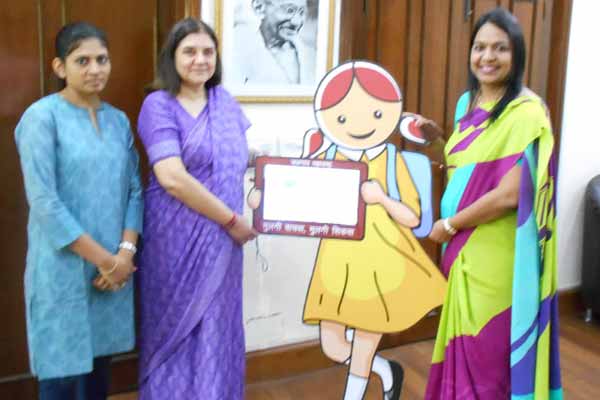
[caption id="attachment_302" align="alignright" width="300"] The Union Minister for Women and Child Development, Smt. Maneka Sanjay Gandhi felicitating Shri Raghavendra from Hyderabad, award winner of Logo Design Competition of “Beti Bachao Beti Padhao” campaign, at a press conference, in New Delhi on September 17, 2014.[/caption] Logo Designed via nationwide competition Smt.Maneka Gandhi awarded the Beti Bachao Beti Padao Logo Design winner with a Citation and Cash prize to Mr.A J Raghavendra of Hyderabad.
The BBBP program started in 100 districts that had Child-Sex-Ratio less than 918. In 2016, marking the start of the second phase of this project, the scheme was further expanded to 61 additional districts selected from 11 States/UT having CSR below 918.
[caption id="attachment_303" align="alignleft" width="300"] Sakshi Malik Brand Ambassador[/caption] In August 2016, Olympics 2016 bronze medalist Sakshi Malik was made brand ambassador of the 'Beti Bachao, Beti Padhao' initiative in Haryana Sakshi Malik is India’s bronze medalist at the Rio Olympics in 2016. Sakshi became the first Indian woman wrestler to clinch a medal at the biggest sporting extravaganza. She will be new brand ambassador for the 'Beti Bachao, Beti Padhao'(save daughters, teach daughters) campaign in Haryana.
The Beti Bachao campaign is supported by numerous medical or organisations India, including the Indian Medical Association. What can we all do as individuals:
Celebrate the birth of girl child in the family and community
Take pride in daughters and oppose the mentality of ‘Bojh’ and ‘Paraya Dhan’.
Find ways to promote equality between boys and girls.
Secure admission to & retention of the girl child in schools.
Engage men and boys to challenge gender stereotypes and roles.
Educate and sensitise our sons to respect women and girls as equal members of society.
Report any incident of sex determination test.
Strive to make neighbourhood safe & violence-free for women & girls.
Oppose dowry and child marriage within the family and community.
Advocate simple weddings.
Support women’s right to own and inherit property.
Encourage women to go out, pursue higher studies, work, do business, access public spaces freely etc.
Mind his language and be sensitive to women and girls.
Chapter 3
Rashtriya Vayoshri Yojana
24 Mar 2017 Sagar Charpe
UPSC CSEState PSCSSC CGLRailways
The Government of India will be launching a scheme for providing Physical Aids and Assisted-living Devices for Senior citizens belonging to BPL category. T...
• Key concept: Rashtriya Vayoshri Yojana
• Essential for UPSC CSE Prelims, State PSCs, SSC CGL & Railway exams.
• Comprehensive analytical coverage and factual pointers provided below.
The Government of India will be launching a scheme for providing Physical Aids and Assisted-living Devices for Senior citizens belonging to BPL category. The scheme is named as "Rashtriya Vayoshri Yojana". This scheme is scheduled to be launched on 1st April 2017 in Nellore district of Andhra Pradesh state.
The Scheme aims at providing Senior Citizens, belonging to BPL category and suffering from any of the age-related disability/infirmity viz. Low vision, Hearing impairment, Loss of teeth and Locomotor disability, with such assisted-living devices which can restore near normalcy in their bodily functions, overcoming the disability/infirmity manifested. The assistive devices shall be of high quality and conforming to the standards laid down by the Bureau of Indian Standards, wherever applicable. The expenditure for implementation of the scheme will be met from the "Senior Citizens' Welfare Fund".
The Physical Aids and Assisted-living Devices for Senior citizens will be distributed in Camp mode through the sole implementing agency, 'Artificial Limbs Manufacturing Corporation (ALIMCO)', (a PSU under M/o SJ&E). The ambitious Scheme is first of its kind in the country and is expected to benefit 5,20,000 Senior Citizens over a period of next 3 years.
The current population of senior citizens in India is 10.38 crore, and more than 70% of the population of senior citizens live in rural areas of the country. A sizeable percentage (5.2%) of the senior citizens suffers from some sort of disabilities related to old age.
Under the Scheme, the following Aids and Assisted-Living Devices will be provided to eligible elderly beneficiary senior citizens, depending upon their physical impairment:-
Walking sticks
Elbow crutches
Walkers / Crutches
Tripods / Quadpods
Hearing Aids
Wheelchair
Artificial Dentures
Spectacles
Salient features of the Scheme are as under:
Free of cost distribution of the devices, commensurate with the extent of disability/infirmity that is manifested among the eligible senior citizens.
In the case of multiple disabilities/infirmities manifested in the same person, the assistive devices will be given in respect of each disability/impairment.
The devices will help the Senior Citizens to overcome their age-related physical impairment and to lead a dignified and productive life with minimal dependence on caregivers or other members of the family.
The Scheme will be implemented through the sole implementing agency, ‘Artificial Limbs Manufacturing Corporation (ALIMCO)’, (a PSU under the Ministry of Social Justice and Empowerment).
ALIMCO will undertake one-year free maintenance of the aids & assisted living devices.
Beneficiaries in each district will be identified by the State Governments/UT Administrations through a Committee chaired by the Deputy Commissioner/District Collector.
As far as possible, 30% of the beneficiaries in each district shall be women.
The State Government/UT Administration/District Level Committee can also utilise the data of BPL beneficiaries receiving Old Age Pension under the NSAP or any other Scheme of the State/UT for identification of senior citizens belonging to BPL category.
The devices will be distributed in Camp mode.
The expected financial outlay over the next three years (i.e. up to 2019-20) is Rs. 483.6 Crores.
State/Union Territory-wise list of districts selected for implementation of the 'Scheme of Providing Physical Aids and Assisted-Living Devices to Senior Citizens in BPL category' during 2016-17
S. No
State / UT
District
1.
Andaman and Nicobar Islands
South Andaman, Middle & North Andaman
2.
Andhra Pradesh
Vishakhapatnam, Nellore
3.
Arunachal Pradesh
West Kameng, Pasinghat
4.
Assam
Kamrup, Sonipur
5.
Bihar
Buxar, West Champaran
6.
Chandigarh
Chandigarh
7.
Chhattisgarh
Raipur, Bastar
8.
Dadra and Nagar Haveli
Dadra and Nagar Haveli
9.
Daman and Diu
Daman and Diu
10.
Goa
North Goa, South Goa
11.
Gujarat
Vadodara, Ahmadabad
12.
Haryana
Karnal, Ambala
13.
Himachal Pradesh
Shimla, Hamirpur
14.
Jammu and Kashmir
Srinagar, Udhampur
15.
Jharkhand
Gumla, Ranchi
16.
Karnataka
South Bangalore, Dharwad
17.
Kerala
Kochi, Thiruvananthapuram
18.
Madhya Pradesh
Khandwa, Ujjain
19.
Maharashtra
Nagpur, Dhule
20.
Delhi
Karol Bagh, Chandni Chowk
21.
Odisha
Sundargarh, Angul
22.
Punjab
Gurdaspur, Hoshiarpur
23.
Rajasthan
Jhalawar, Bikaner
24.
Tamil Nadu
Kanyakumari, South Chennai
25.
Telangana
Hyderabad, Karimnagar
26.
Uttar Pradesh
Lucknow, Varanasi
27.
Uttarakhand
Haridwar, Almora
28.
West Bengal
Asansol, Darjeeling
29.
Manipur
Imphal (West), Imphal (East)
30.
Meghalaya
East Jaintia Hills, Ri Bhoi
31.
Mizoram
Aizwal, Champhai
32.
Nagaland
Dimapur, Kohima
33.
Tripura
Unokoti, Dhalai
34.
Lakshadweep
Lakshadweep
35.
Puducherry
Olukara, Karaikal
36.
Sikkim
East Sikkim, South Sikkim
Chapter 4
Soil Health Card Scheme
14 May 2020 Sagar Charpe
UPSC CSEState PSCSSC CGLRailways
Launch year: 2015Sector: AgricultureStatus: ActiveLaunched by (prime minister): Narendra ModiMinistry: Ministry of Agriculture & Farmers' WelfareBudget...
• Key concept: Soil Health Card Scheme
• Essential for UPSC CSE Prelims, State PSCs, SSC CGL & Railway exams.
• Comprehensive analytical coverage and factual pointers provided below.
Launch year: 2015 Sector: Agriculture Status: Active Launched by (prime minister): Narendra Modi Ministry: Ministry of Agriculture & Farmers' Welfare Budget: ₹568 crore (US$80 million)
It is a report provided to all farmers which informs of the nutrient content in the soil.
It gives crop-wise recommendations of the appropriate dosages of fertilizers and nutrients.
It will be provided once in 3 Years
This Scheme is to be implemented on 50: 50 sharing pattern between the center and the state.
What is Soil Health Card (SHC) scheme
It is a Government of India’s scheme promoted by the Department of Agriculture & Co-operation under the Ministry of Agriculture. It will be implemented through the Department of Agriculture of all the State and Union Territory Governments. A SHC is meant to give each farmer soil nutrient status of his holding and advice him on the dosage of fertilizers and also the needed soil amendments, that he should apply to maintain soil health in the long run.
What is a Soil Health Card?
SHC is a printed report that a farmer will be handed over for each of his holdings. It will contain the status of his soil with respect to 12 parameters, namely N,P,K (Macro-nutrients) ; S (Secondary- nutrient) ; Zn, Fe, Cu, Mn, Bo (Micro - nutrients) ; and pH, EC, OC (Physical parameters). Based on this, the SHC will also indicate fertilizer recommendations and soil amendment required for the farm.
How can a farmer use a SHC?
The card will contain an advisory based on the soil nutrient status of a farmer’s holding. It will show recommendations on dosage of different nutrients needed. Further, it will advise the farmer on the fertilizers and their quantities he should apply, and also the soil amendments that he should undertake, so as to realize optimal yields.
Will the farmer get a card every year and for every crop?
It will be made available once in a cycle of 3 years, which will indicate the status of soil health of a farmer’s holding for that particular period. The SHC given in the next cycle of 3 years will be able to record the changes in the soil health for that subsequent period.
What are the norms of sampling?
Soil samples will be drawn in a grid of 2.5 ha in irrigated area and 10 ha in rain- fed area with the help of GPS tools and revenue maps.
What is the ideal time for soil sampling?
Soil Samples are taken generally two times a year, after harvesting of Rabi and Kharif Crop respectively or when there is no standing crop in the field.
Who and Where will the soil sample be tested?
The soil sample will be tested as per the approved standards for all the agreed 12 parameters in the following way:
At the STLs owned by the Department of Agriculture and by their own staff.
At the STLs owned by the Department of Agriculture but by the staff of the outsourced agency.
At the STLs owned by the outsourced agency and by their staff.
At ICAR Institutions including KVKs and SAUs.
At the laboratories of the Science Colleges/Universities by the students under the supervision of a Professor/ Scientist
FAQ
How will the quality of the soil sample test be ensured?
The State Government will refer 1% of all the samples in a year to a ‘Referral Laboratory’ to analyze and certify the results of Primary Laboratory. The State The government will be supported to establish ‘Referral Laboratories as required.
What is the payment per sample?
A sum of Rs. 190 per soil sample is provided to State Governments. This covers the cost of collection of soil sample, its test, generation, and distribution of soil health card to the farmer.
Is there any software for the generation of uniform soil health cards across the country?
Yes, National Informatics Center (NIC) has developed a web portal (www.soilhealth.dac.gov.in) for generation of uniform soil health cards and fertilizer recommendation, which has four modules: a) Registration of Soil Samples. b) Testing of Samples in Soil Testing laboratory. c) Fertilizer recommendation based on Soil Test Crop Response (STCR) equations. d) MIS Reports
Which Division in the Ministry of Agriculture will guide the State Governments regarding implementation of the scheme?
Integrated Nutrient Management (INM) Division; Department of Agriculture & Cooperation will visit the States regularly and provide guidance in technical matters.
Who will draw the soil sample?
The State Government will collect samples through the staff of their Department of Agriculture or through the staff of an outsourced agency. The State Government may also involve the students of local Agriculture / Science Colleges.
How will soil samples be collected from a farmer’s field?
Soil Samples will be collected by a trained person from a depth of 15-20 cm by cutting the soil in a “V” shape. It will be collected from four corners and the centre of the field and mixed thoroughly and a part of this picked up as a sample. Areas with shade will be avoided. The sample chosen will be bagged and coded. It will then be transferred to soil test laboratory for analysis.
What is a soil test laboratory?
It is a facility for testing the soil sample for 12 parameters as indicated in reply to question number 2. This facility can be static or mobile or it can even be portable to be used in remote areas.
Chapter 5
National Food Security Mission
14 May 2020 Vinay Yadav
UPSC CSEState PSCSSC CGLRailways
Launch year: 2007Sector: AgricultureLaunched by (prime minister): Manmohan SinghMinistry: Ministry of Agriculture & Farmers' Welfare It is launched to ...
• Key concept: National Food Security Mission
• Essential for UPSC CSE Prelims, State PSCs, SSC CGL & Railway exams.
• Comprehensive analytical coverage and factual pointers provided below.
Launch year: 2007 Sector: Agriculture Launched by (prime minister): Manmohan Singh Ministry: Ministry of Agriculture & Farmers' Welfare
It is launched to enhance the production of Rice, Wheat, Pulses, Coarse Cereals and commercial crops ( Cotton, jute and Sugarcane).
Targets - Production of rice, wheat and pulses would be increased by 10, 8, 4 million tonnes respectively and Coarse cereals by 3 million tonnes.
Funding - 50:50 by Centre and State for food crops and 100% centre funding for cash crops.
It would be implemented through cluster demonstration, distribution of high yield seeds with farm mechanization, &Integrated pest management.
(Note - National Food Security Act is different from the Mission and the act is administered by the Ministry of Consumer Affairs).
Chapter 6
Pradhan Mantri Krishi Sinchayee Yojana
14 May 2020 Sagar Charpe
UPSC CSEState PSCSSC CGLRailways
Sector: AgricultureStatus: ActiveLaunched by (prime minister): Narendra ModiMinistry: Ministry of Agriculture & Farmers' WelfareBudget: US$379.8 Millio...
• Key concept: Pradhan Mantri Krishi Sinchayee Yojana
• Essential for UPSC CSE Prelims, State PSCs, SSC CGL & Railway exams.
• Comprehensive analytical coverage and factual pointers provided below.
Sector: Agriculture Status: Active Launched by (prime minister): Narendra Modi Ministry: Ministry of Agriculture & Farmers' Welfare Budget: US$379.8 Million Dollar(2600 Crore)
Pradhan Mantri Krishi Sinchayee Yojana
Main objectives are :
Extending the coverage of irrigation
Improving water use efficiency
End to end solution on source creation, distribution, management, field application and extension activities.
It is formulated by amalgamating ongoing schemes
Accelerated Irrigation Benefit Programme (AIBP) - Ministry of Water Resources, River Development & Ganga Rejuvenation (MoWR,RD&GR).
Integrated Watershed Management Programme (IWMP) - Department of Land Resources (DoLR), Ministry of Rural Developement.
On Farm Water Management (OFWM) - Department of Agriculture and Cooperation (DAC).
Implementation - Decentralised manner through State Irrigation Plan and District Irrigation Plan.
Chapter 7
National Initiative on Climate Resilient Agriculture
14 May 2020 Vinay Yadav
UPSC CSEState PSCSSC CGLRailways
The mega project has three major objectives of Strategic research, Technology demonstrations and Capacity building. It was launched by Indian Council of Ag...
• Key concept: National Initiative on Climate Resilient Agriculture
• Essential for UPSC CSE Prelims, State PSCs, SSC CGL & Railway exams.
• Comprehensive analytical coverage and factual pointers provided below.
The mega project has three major objectives of Strategic research, Technology demonstrations and Capacity building.
It was launched by Indian Council of Agriculture Research (ICAR).
Its aims to make farmers self-reliant by use of climate resilient agricultural technologies and management of natural and manmade resources for sustaining agriculture in theera of climate change.
It has four components:
Strategic research on adaptation and mitigation,
Technology demonstration to cope with current climate variability in 100 vulnerable districts,
Capacity Building
Sponsored competitive research to fill critical gaps.
Chapter 8
Small Farmer’s Agriculture-Business Consortium (SFAC)
14 May 2020 Sagar Charpe
UPSC CSEState PSCSSC CGLRailways
The Government established Small Farmers’ Agri-Business Consortium (SFAC) as a Society in 1994 to facilitate agri-business ventures by catalyzing private i...
• Key concept: Small Farmer’s Agriculture-Business Consortium (SFAC)
• Essential for UPSC CSE Prelims, State PSCs, SSC CGL & Railway exams.
• Comprehensive analytical coverage and factual pointers provided below.
The Government established Small Farmers’ Agri-Business Consortium (SFAC) as a Society in 1994 to facilitate agri-business ventures by catalyzing private investment through Venture Capital Assistance (VCA)
The Scheme envisaged a corpus contribution from Central SFAC of Rs. 50.00 lakh to each State which establishes a State Level SFAC. So far, 21 States have received funds for Central SFAC for setting up of State SFAC.
The role of State SFACs is to aggressively promote agribusiness project development in their respective States. The main functions of SFAC are:
(i) Promotion of development of small agribusiness through VCA scheme;
(ii) Helping formation and growth of Farmer Producer Organizations (FPOs) / Farmer Producer Companies (FPCs);
(iii) Improving availability of working capital and development of business activities of FPOs/FPCs through Equity Grant and Credit Guarantee Fund Scheme;
(iv) Implementation of National Agriculture Market (e-NAM) Electronic Trading platform.
At present, SFAC is implementing the following schemes:
1. Agri-Business Development (ABD) through Venture Capital Assistance (VCA) and Project Development Facility (PDF).
The Scheme aims to facilitate the promotion of agri-business projects establishing backward linkages with farmers, providing assured market to their produce, thereby generating employment and enhancing farmers’ income. SFAC partnership with various PSU banks has so far helped support 1674 projects across the country, investing a total of Rs. 495.36 Crores in venture and helping to leverage Rs. 5950.76 Crores in total project investment. This has created 81396 direct employment and linked approximately 1.53 lakhs Farmers to these units.
2. Equity Grant and Credit Guarantee Fund Scheme for Farmer Producer Companies:
The scheme has two components as given below:
(a) A grant of upto Rs. 10.00 lakh to each registered Farmer Producer Company is given to match the member equity raised by the institution. This enhances the equity base of the FPC and enable it to approach financial institutions for raising working capital. SFAC has been sanctioned Equity Grant to 127 Farmer Producer Companies amounting to Rs.7.04 Crore to enable them to leverage working capital from financial institutions.
(b) Credit Guarantee Fund (CGF) has been set up in SFAC with a corpus of Rs. 100.00 Crores. The CGF will offer a cover of 85% to loans extended by banks to Farmer Producer Companies without collateral, upto a maximum of Rs. 1.00 Crore.
Chapter 9
Krishi Vigyan Kendras (KVKs)
14 May 2020 Vinay Yadav
UPSC CSEState PSCSSC CGLRailways
Krishi Vigyan Kendras (KVKs) are agricultural extension centers created by ICAR to provide various types of farm support to the agricultural sector. It is ...
• Key concept: Krishi Vigyan Kendras (KVKs)
• Essential for UPSC CSE Prelims, State PSCs, SSC CGL & Railway exams.
• Comprehensive analytical coverage and factual pointers provided below.
Krishi Vigyan Kendras (KVKs) are agricultural extension centers created by ICAR to provide various types of farm support to the agricultural sector.
It is created to serve as a single window mechanism for addressing the technology needs of farmers and acts as a link among researchers, extension functionaries like NGOs and farmers.
The farm support includes farm advisory service including climate resilient technologies,training programme for NGOs and front line demonstration and on Farm testing.
KVK operates under the administrative control of State Agricultural University(SAU) or central institute
Chapter 10
Mera Gaon Mera Gaurav
15 May 2020 Sagar Charpe
UPSC CSEState PSCSSC CGLRailways
An innovative initiative “Mera Gaon Mera Gaurav” has been planned to promote the direct interface of scientists with the farmers to hasten the lab to land ...
• Key concept: Mera Gaon Mera Gaurav
• Essential for UPSC CSE Prelims, State PSCs, SSC CGL & Railway exams.
• Comprehensive analytical coverage and factual pointers provided below.
An innovative initiative “Mera Gaon Mera Gaurav” has been planned to promote the direct interface of scientists with the farmers to hasten the lab to land process.
The objective of this scheme is to provide farmers with required information, knowledge and advisories on regular basis by adopting villages.
The participation of small and marginal farmers in Indian agriculture is very important. Small farmers put forth their desire on various forums to have timely information on investment in agriculture, loans, availability of other basic amenities, market rates, extension activities and facilities provided by different agencies, new research findings and technologies, etc. Presently, various agencies are working in agriculture and farmers are keen to know about the services provided by them. The technologies developed and refined by Research Institutes, Agricultural Universities, private and other organisations are accepted and adopted to various extent by farming community.
Therefore, the awareness among farmers about the organisations and their programmes need to be created on regular basis.
Implementation:
Under this scheme, scientists will select villages as per their convenience and will remain in touch with the selected villages and provide information to the farmers on technical and other related aspects in a time frame through personal visits or on telephone.
Chapter 11
Rashtriya Krishi Vikas Yojana (RKVY)
15 May 2020 Vinay Yadav
UPSC CSEState PSCSSC CGLRailways
It incentives states to enhance investments in Agriculture and Allied sectors to achieve 4% growth rate.It is a State Plan scheme with 100% Centrally Spons...
• Key concept: Rashtriya Krishi Vikas Yojana (RKVY)
• Essential for UPSC CSE Prelims, State PSCs, SSC CGL & Railway exams.
• Comprehensive analytical coverage and factual pointers provided below.
It incentives states to enhance investments in Agriculture and Allied sectors to achieve 4% growth rate.
It is a State Plan scheme with 100% Centrally Sponsored Scheme.
The allocations are based up on the State plan expenditure for Agricultural sectors which is determined based on the average expenditure incurred by the State Government during the three years prior to the previous year.
The preparation of the District and State Agriculture Plans is mandatory and encourages convergence with other programmes such as NREGS.
Sub-schemes include
Bringing Green Revolution to Eastern India (BGREI)
Additional Fodder Development Programme (AFDP)
Saffron Mission
Crop Diversification Program
Livestock Health & Disease Control / Foot & Mouth Diseases (FMD)
It was launched to promote agricultural education. Under the scheme 100 centres are opened with a fund of Rs.5.35 crore. “Attracting and retaining youth i...
It was launched to promote agricultural education.
Under the scheme 100 centres are opened with a fund of Rs.5.35 crore.
“Attracting and retaining youth in Agriculture (ARYA)” is a project sanctioned by the Indian Council of Agriculture (ICAR) and is being implemented at Krishi Vigyan Kendra (KVKs).
y The main objective of the project was to provide complete knowledge and skill on processing, value addition and marketing of coconut and banana products through capacity building programmes involving research and development organizations.
Chapter 13
Pashudhan Sanjivani
15 May 2020 Sagar Charpe
UPSC CSEState PSCSSC CGLRailways
An animal wellness programme encompassing provision of Animal Health Cards - “Nakul Swasthya Patra” It also issues UID identification of animals in milk an...
• Key concept: Pashudhan Sanjivani
• Essential for UPSC CSE Prelims, State PSCs, SSC CGL & Railway exams.
• Comprehensive analytical coverage and factual pointers provided below.
An animal wellness programme encompassing provision of Animal Health Cards - “Nakul Swasthya Patra”
It also issues UID identification of animals in milk and establish a National Database for controlling the spread of animal disease and keep tracking of trade in livestock and its products.
Chapter 14
E-Pashudhan Haat Portal
15 May 2020 Vinay Yadav
UPSC CSEState PSCSSC CGLRailways
It is launched under the National Mission on Bovine Productivity for connecting breeders and farmers of indigenous breeds. This portal helps farmers to be ...
• Key concept: E-Pashudhan Haat Portal
• Essential for UPSC CSE Prelims, State PSCs, SSC CGL & Railway exams.
• Comprehensive analytical coverage and factual pointers provided below.
It is launched under the National Mission on Bovine Productivity for connecting breeders and farmers of indigenous breeds.
This portal helps farmers to be aware about breed wise information on indigenous breeds.
Farmers/breeders can sale animals of indigenous breeds through this portal
Chapter 15
Pradhan Mantri Jan Aushadhi Yojana
15 May 2020 Sagar Charpe
UPSC CSEState PSCSSC CGLRailways
It is a direct market intervention scheme of the Department of Pharmaceuticals. Its objective is to make available quality generic medicines at affordable ...
• Key concept: Pradhan Mantri Jan Aushadhi Yojana
• Essential for UPSC CSE Prelims, State PSCs, SSC CGL & Railway exams.
• Comprehensive analytical coverage and factual pointers provided below.
It is a direct market intervention scheme of the Department of Pharmaceuticals.
Its objective is to make available quality generic medicines at affordable prices to all, especially the poor, throughout the country, through outlets known as Jan Aushadhi Stores (JASs).
It also encourages doctors to prescribe generic medicines and reduces unit cost of treatment per person.
The State Governments are required to provide space in Government Hospital premises or any other suitable locations for the running of the JAS’.
Any Civil Society with experience of minimum 3 years of successful operation in welfare activities can also open the JAS outside the hospital premises.
Bureau of Pharma PSUs of India (BPPI) is the implementing agency which will provide one-time assistance in furnishing and establishment costs of the outlet.
It is a self-sustaining business model not dependent on continuous government subsidies or assistance.
Chapter 16
Regional Connectivity Scheme (RCS) - UDAN
15 May 2020 Vinay Yadav
UPSC CSEState PSCSSC CGLRailways
The objective is to facilitate regional air connectivity by making it affordable.It offers concessions to the airlines to encourage them to fly on regiona...
The objective is to facilitate regional air connectivity by making it affordable.
It offers concessions to the airlines to encourage them to fly on regional routes like levies or charges imposed by the airport operators, excise duty at 2% and VAT at 1% on aviation turbine fuel etc
Airports Authority of India (AAI) is the implementing agency.
The airfare per RCS seat should not exceed Rs 3,500 and will be determined based on the flight distance.
The selected airlines will have to commit 50% of the seats on RCS flights as RCS seats with 3-7 operational flights per week.
A Regional Connectivity Fund (RCF) will be created to subsidise operations under the RCS.
The central government will fund 80% of the losses incurred and the rest will be covered by the states.
This is provided through the Viability Gap Funding (VGF) to the selected airline operators from RCF, and state governments will be required to reimburse the applicable share. VGF will be provided for three years from the date of commencement of operations of such RCS flights.
Benefits under the Scheme will be available for a period of 10 years from the date of its notification.
RCS will be made operational only in states and at airports which are willing to provide concessions required under the Scheme.
Maharashtra is the first state to sign agreement with centre for RCS.
Chapter 17
Revenue Insurance Scheme for Plantation Crops (RISPC)
15 May 2020 Sagar Charpe
UPSC CSEState PSCSSC CGLRailways
It aims at protecting the growers from the risks such as yield loss, pest attacks and income decline caused by fall in prices through crop insurance mechan...
• Key concept: Revenue Insurance Scheme for Plantation Crops (RISPC)
• Essential for UPSC CSE Prelims, State PSCs, SSC CGL & Railway exams.
• Comprehensive analytical coverage and factual pointers provided below.
It aims at protecting the growers from the risks such as yield loss, pest attacks and income decline caused by fall in prices through crop insurance mechanism, thereby stabilizing income of growers to ensure their sustainability.
It is available only to plantation crops, for which crop insurance can no longer be availed from PMFBY.
The duration of the pilot scheme shall be one crop cycle commencing from the year 2016- 17 which may spread over 2 years.
RISPC is an improved form of the Price Stabilization Fund (PSF) Scheme which was closed in 2013.
It covers small growers of Rubber, Tea, Coffee (Robusta and Arabica), Tobacco and Cardamom having 10 ha or less landholding.
The scheme is compulsory for growers registered with the respective Commodity Boards (CBs) and it is implemented on pilot basis in 7 states.
The scheme will operate on the principle of ‘Area Approach’ and Commodity Board in consultation with the concerned State Government shall designate an area as Insurance Unit (IU), which can be a village panchayat or any other equivalent unit.
Scheme will cover income loss arising out of yield loss due to non-preventable risks viz. drought, dry spells, flood, pest and diseases, hail storm etc and price fluctuation due to fall in international/domestic prices below the average price of last 5 years excluding the current year.
Losses arising out of war and nuclear risk, malicious damage and other preventable risks are excluded.
Chapter 18
Start Up India Scheme
15 May 2020 Vinay Yadav
UPSC CSEState PSCSSC CGLRailways
It aims at fostering entrepreneurship and promoting innovation by creating an ecosystem that is conducive for growth of Start-ups.y According to the scheme...
• Key concept: Start Up India Scheme
• Essential for UPSC CSE Prelims, State PSCs, SSC CGL & Railway exams.
• Comprehensive analytical coverage and factual pointers provided below.
It aims at fostering entrepreneurship and promoting innovation by creating an ecosystem that is conducive for growth of Start-ups.
y According to the scheme, a start up is an entity that is head quartered in India which was opened less than five years ago and has an annual turnover less than 25 crore.
It provides - Simple Compliance Regime for start ups based on Self-certification. Single window clearance based on mobile App.
Start up India Hub to handhold start ups during various phases of their development
Legal support and fast-track patent examination by reducing 80% of the patent cost.
Faster exit for start ups through modified new bankruptcy code ensuring 90 days exit window.
Credit Guarantee Fund for start ups through Small Industries Development Bank of India
Providing Funding support through a Fund of Funds with a corpus of Rupees 10,000 crore
Tax exemption on capital gains invested in Fund of Funds
Tax exemption to start ups for 3 years.
Exemption from labour inspection for 3 years.
Launch of innovation hub through Atal Innovation Mission (AIM) with Self –Employment and Talent Utilization (SETU) Program of NITI Aayog
Harnessing private sector expertise for setting up incubators.
The initiative is also aimed at promoting entrepreneurship among SCs/STs, women communities.
Rural India’s version of Start up India was named the Deen Dayal Upadhyay Swaniyojan Yojana.
Chapter 19
e-Biz
15 May 2020 Sagar Charpe
UPSC CSEState PSCSSC CGLRailways
It is a part of the 27 Mission Mode Projects (MMPs) under National e-Governance Programme. The platform is to improve the business environment in the count...
• Key concept: e-Biz
• Essential for UPSC CSE Prelims, State PSCs, SSC CGL & Railway exams.
• Comprehensive analytical coverage and factual pointers provided below.
It is a part of the 27 Mission Mode Projects (MMPs) under National e-Governance Programme.
The platform is to improve the business environment in the country by enabling fast and efficient access to Government- to-Business (G2B) services through an online portal.
It enables a shift in the Governments’ service delivery approach from being departmentcentric to customer-centric with single window portal.
A business user can avail all services 24*7 online end-to-end services i.e., online submission of forms, attachments, payments, tracking of status and also obtain the license/permit from eBiz portal
Chapter 20
Niryat Bandhu Scheme
15 May 2020 Vinay Yadav
UPSC CSEState PSCSSC CGLRailways
The objective of the Niryat Bandhu Scheme is to reach out to the new and potential exporters and mentor them through orientation programmes, counselling se...
• Key concept: Niryat Bandhu Scheme
• Essential for UPSC CSE Prelims, State PSCs, SSC CGL & Railway exams.
• Comprehensive analytical coverage and factual pointers provided below.
The objective of the Niryat Bandhu Scheme is to reach out to the new and potential exporters and mentor them through orientation programmes, counselling sessions, individual facilitation, etc., for being able to get into international trade and boost exports from India
Chapter 21
Merchandise Exports from India Scheme (MEIS)
15 May 2020 Sagar Charpe
UPSC CSEState PSCSSC CGLRailways
MEIS aims to accelerate the export of Manufactured products from India.Vishesh Krishi and Gram Udyog Yojana (VKGUY) Under this scheme, Duty Credit Scrip be...
• Key concept: Merchandise Exports from India Scheme (MEIS)
• Essential for UPSC CSE Prelims, State PSCs, SSC CGL & Railway exams.
• Comprehensive analytical coverage and factual pointers provided below.
MEIS aims to accelerate the export of Manufactured products from India.
Vishesh Krishi and Gram Udyog Yojana (VKGUY)
Under this scheme, Duty Credit Scrip benefits are granted with an aim to compensate high transport costs, and to offset other disadvantages to promote exports of agricultural produce, minor forest produce etc.
The duty credit scrip is a pass that allows the holder to import commodities by not paying a specified amount in import duties.
Focus Market Scheme
The objective of this scheme is to reduce high freight cost and other duties in order to target global markets with a mission to improvise India’s acceptability in those countries as a competitor.
Focus Product Scheme
Focus Product Scheme incentivizes export of such products which have high export intensity / employment potential, in order to offset infrastructure inefficiencies and other associated costs involved in marketing of these products.
Served from India Scheme
Served From India Scheme helps to accelerate growth in export of services so as to create a powerful and unique ‘Served From India’ brand.
All Indian Service Providers who have free foreign exchange earning of at least Rs. 10 Lakhs and individual Indian Service providers with minimum foreign exchange earnings of Rs. 5 lakh in preceding financial year / current financial year shall qualify for Duty Credit Scrip.
The Duty Credit Scrip will be equivalent to 10% of foreign exchange earned during current financial year.
Chapter 22
National Optical Fibre Network
15 May 2020 Vinay Yadav
UPSC CSEState PSCSSC CGLRailways
It is to provide broadband connectivity to over two lakhs Gram Panchayats through optical fibre network with a minimum bandwidth of 100 Mbps. It is aimed t...
• Key concept: National Optical Fibre Network
• Essential for UPSC CSE Prelims, State PSCs, SSC CGL & Railway exams.
• Comprehensive analytical coverage and factual pointers provided below.
It is to provide broadband connectivity to over two lakhs Gram Panchayats through optical fibre network with a minimum bandwidth of 100 Mbps.
It is aimed to fill the connectivity gap between Gram Panchayat and Block level.
Bharat Broadband Network Limited (BBNL) is the special purpose vehicle created as a PSU for execution of NOFN.
It is funded by Universal Service Obligation Fund. The project was intended to enable the government of India to provide e-services and e-applications nationally like e-health, e-education and e-governance etc.
All the Service Providers like Telecom Service Providers (TSPs), ISPs, Cable TV operators etc. will be given non-discriminatory access to the National Optic Fibre Network and can launch various services in rural areas.
It is under the Digital India program
Chapter 23
Jeevan Pramaan
15 May 2020 Sagar Charpe
UPSC CSEState PSCSSC CGLRailways
One of the main requisites for the pensioners to avail pension is to provide life certificates. Jeevan Pramman aims to streamline the process of getting Li...
• Key concept: Jeevan Pramaan
• Essential for UPSC CSE Prelims, State PSCs, SSC CGL & Railway exams.
• Comprehensive analytical coverage and factual pointers provided below.
One of the main requisites for the pensioners to avail pension is to provide life certificates.
Jeevan Pramman aims to streamline the process of getting Life certificate and making it hassle free and easier to get.
It is a AADHAR Biometric Authentication based digital life certificates for Pensioners.
It will do away with the requirement of a pensioner having to submit a physical Life Certificate every year, in order to ensure continuity of pension being credited into their account
Submission of Digital Life Certificate also ensures authenticity of pension payments.
Chapter 24
Digi Locker
15 May 2020 Vinay Yadav
UPSC CSEState PSCSSC CGLRailways
A secure dedicated personal electronic space for storing the documents of resident Indian citizens will be created. It is to provide citizens a shareable p...
• Key concept: Digi Locker
• Essential for UPSC CSE Prelims, State PSCs, SSC CGL & Railway exams.
• Comprehensive analytical coverage and factual pointers provided below.
A secure dedicated personal electronic space for storing the documents of resident Indian citizens will be created.
It is to provide citizens a shareable private space on a public cloud.
The space can be utilized for storing personal documents like University certificates, PAN cards, voter id cards, etc., and the URI’s of the e-documents issued by various issuer departments.
It is a platform for issuance and verification of documents & certificates in a digital way, thus eliminating the use of physical documents.
There is also an associated facility for e-signing documents.
Chapter 25
National Food Security Act, 2013
15 May 2020 Sagar Charpe
UPSC CSEState PSCSSC CGLRailways
It aims to provide subsidized food grains to approximately two thirds of India’s population i.e 75% in rural areas and 50% in urban areas. It converts the ...
• Key concept: National Food Security Act, 2013
• Essential for UPSC CSE Prelims, State PSCs, SSC CGL & Railway exams.
• Comprehensive analytical coverage and factual pointers provided below.
It aims to provide subsidized food grains to approximately two thirds of India’s population i.e 75% in rural areas and 50% in urban areas.
It converts the various existing food security schemes into legal entitlements (i.e.) from welfare based approach to rights based approach.
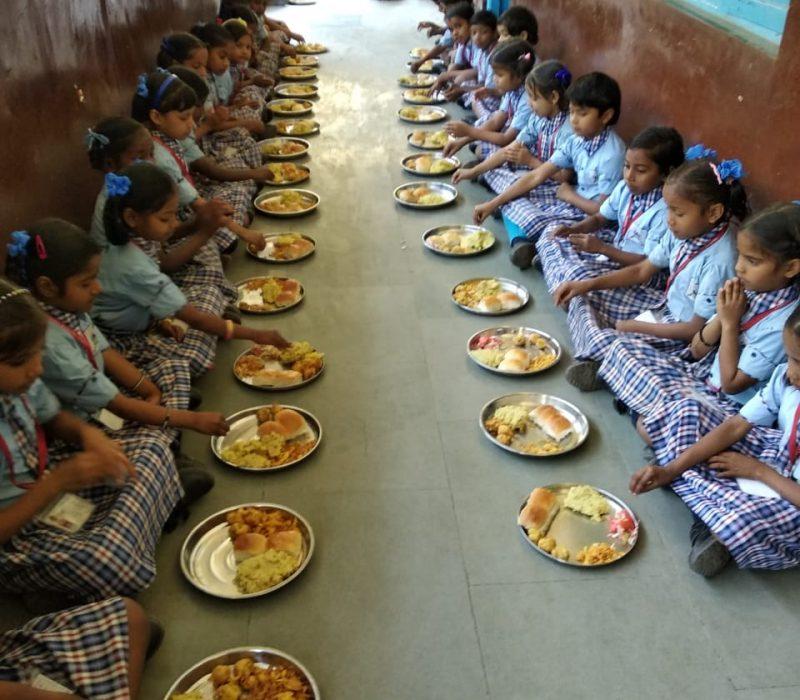
It includes the Midday Meal Scheme, ICDS scheme and the PDS. It also recognizes maternity entitlements.
Under NFSA, each beneficiaries is entitled to 5 kilograms of food grains per month at Rs.3, Rs.2, Rs.1 per kg for rice, wheat and coarse grains respectively.
However, the beneficiaries under Antyodaya Anna Yojana will keep receiving the 35 Kg per household per month at same rates.
It guarantees age appropriate meal, free of charge through local anganwadi for children up to 6 months and one free meal for children in age group 6-14 years in schools.
Every pregnant and lactating mother is entitled to a free meal at the local anganwadi as well as maternity benefits of Rs 6,000, in instalments. Maternal benefits not extend to Government employees.
The identification of eligible households is left to state governments.
Chapter 26
Jago Grahak Jago (Consumer awareness campaign)
15 May 2020 Vinay Yadav
UPSC CSEState PSCSSC CGLRailways
It is a country wide multimedia awareness campaign on various issues related to consumer rights and responsibilities across diverse subjects. The programm...
It is a country wide multimedia awareness campaign on various issues related to consumer rights and responsibilities across diverse subjects.
The programme is launched jointly in partnership with the related government departments.
This campaign is implemented through the Directorate of Audio and Visual Publicity (DAVP), the Doordarshan Network (DD) and All India Radio (AIR).
Consumer protection Act
It provides consumers with speedy and inexpensive redressal grievances mechanism and specific relief or award of compensation.
It recognizes six of the eight rights of the consumer as provided in the UN charter.
It envisages rights of consumers such as Right to Protection, Right of Information, Right of Choice, Right of Hearing, Right of Redressal and Right of Education.
Chapter 27
Antyodaya Anna Yojana
15 May 2020 Sagar Charpe
UPSC CSEState PSCSSC CGLRailways
The scheme aims to make Targeted Public Distribution System (TPDS) more focused and targeted towards the poorest section of population.Beneficiary families...
• Key concept: Antyodaya Anna Yojana
• Essential for UPSC CSE Prelims, State PSCs, SSC CGL & Railway exams.
• Comprehensive analytical coverage and factual pointers provided below.
The scheme aims to make Targeted Public Distribution System (TPDS) more focused and targeted towards the poorest section of population.
Beneficiary families under the scheme are distributed 35 kg of rice and wheat at the rates of Rs. 3 per kg and Rs. 2 per kg respectively. Coarse grains, on the other hand, are distributed at the rate of Rs. 1 per kg.
Other families that are not part of AAY but are covered under NFSA receive grains at the rate of Rs. 5 per kg.
Under the scheme, subsidies are fully borne by the central government and States/UT bear the distribution cost.
The scheme has been expanded to cover 2.50 cr households and scale of issue has been increased to 35 kg per family per month
Chapter 28
Project Mausam
15 May 2020 Vinay Yadav
UPSC CSEState PSCSSC CGLRailways
Project ‘Mausam’ is to showcase a Transnational Mixed Route (including Natural and Cultural Heritage) on the World Heritage List.It aims to understand how...
• Key concept: Project Mausam
• Essential for UPSC CSE Prelims, State PSCs, SSC CGL & Railway exams.
• Comprehensive analytical coverage and factual pointers provided below.
Project ‘Mausam’ is to showcase a Transnational Mixed Route (including Natural and Cultural Heritage) on the World Heritage List.
It aims to understand how the knowledge and manipulation of the monsoon winds has shaped interactions across the Indian Ocean and led to the spread of shared knowledge systems, traditions, technologies and ideas along maritime routes.
Archaeological Society of India (ASI) is the nodal agency and Indira Gandhi NationalCentre for the Arts (IGNCA) is its Research Unit and National Museum & IGNCA is its Associate bodies.
The project collates archaeological and historical research and document the diversity of cultural, commercial and religious interactions among the 39 Indian Ocean countries.
Goals - Reviving lost linkages with nations, Creating links to existing World Heritage sites, Redefining ‘Cultural Landscapes’, Achieving transnational nomination under World Heritage,
Chapter 29
One Rank One Pension (OROP) scheme
15 May 2020 Sagar Charpe
UPSC CSEState PSCSSC CGLRailways
The scheme promises equal pension to military personnel retiring in the same rank with the same length of service, regardless of the date of retirement.The...
• Key concept: One Rank One Pension (OROP) scheme
• Essential for UPSC CSE Prelims, State PSCs, SSC CGL & Railway exams.
• Comprehensive analytical coverage and factual pointers provided below.
The scheme promises equal pension to military personnel retiring in the same rank with the same length of service, regardless of the date of retirement.
The scheme is effective July 1, 2014, with 2013 as the base year.
Only those who retired before the plan kicked in would be entitled to OROP.
The estimated cost to exchequer is expected to be Rs.8,000 to 10,000 crore and will increase in future.
The government has proposed a review every five years.
Chapter 30
North East Rural Livelihood Project (NERLP)
15 May 2020 Vinay Yadav
UPSC CSEState PSCSSC CGLRailways
It is a central Sector scheme externally aided by World Bank and implemented in four North Eastern States namely Mizoram, Nagaland, Sikkim and Tripura.The ...
• Key concept: North East Rural Livelihood Project (NERLP)
• Essential for UPSC CSE Prelims, State PSCs, SSC CGL & Railway exams.
• Comprehensive analytical coverage and factual pointers provided below.
It is a central Sector scheme externally aided by World Bank and implemented in four North Eastern States namely Mizoram, Nagaland, Sikkim and Tripura.
The objective is to improve livelihoods of the poor, especially that of women and the disadvantaged people in the project area.
The identification of Districts for the project was done by the State Governments based on social and economic backwardness. Desired Outcomes -
Making the SHGs promoted and supported by the project sustainable,
Increasing the income level of the members of the SHGs (at least 60% of them) and disadvantaged households by 30% in real term
Providing jobs or self employment to the unemployed youths through various skill trainings, entrepreneurship development trainings, vocational trainings and management development trainings.
Chapter 31
Jalmani Programme
15 May 2020 Sagar Charpe
UPSC CSEState PSCSSC CGLRailways
This programme is launched to provide value and quality addition to the ongoing Rural Drinking Water Supply Programme to mainly address the water quality i...
• Key concept: Jalmani Programme • Essential for UPSC CSE Prelims, State PSCs, SSC CGL & Railway exams. • Comprehensive analytical coverage and factual pointers provided below.
This programme is launched to provide value and quality addition to the ongoing Rural Drinking Water Supply Programme to mainly address the water quality in rural areas.
It involves installation of Stand Alone Purification System in rural Schools
It is implemented by the State Governments through the Gram Panchayat/Village Water and Sanitation Committees/Self Help Groups.
Chapter 32
Swachh Bharat Kosh (SBK)
15 May 2020 Vinay Yadav
UPSC CSEState PSCSSC CGLRailways
It is been set up to attract Corporate Social Responsibility (CSR) funds from Corporate Sector and contributions from individuals and philanthropists to ac...
• Key concept: Swachh Bharat Kosh (SBK)
• Essential for UPSC CSE Prelims, State PSCs, SSC CGL & Railway exams.
• Comprehensive analytical coverage and factual pointers provided below.
It is been set up to attract Corporate Social Responsibility (CSR) funds from Corporate Sector and contributions from individuals and philanthropists to achieve the objective of Clean India by the year 2019.
Chapter 33
Gramin Krishi Mausam Seva (GKMS)
15 May 2020 Sagar Charpe
UPSC CSEState PSCSSC CGLRailways
The scheme is implemented by India Meteorological Department in collaboration with State Agricultural Universities /Indian Council of Agricultural Research...
• Key concept: Gramin Krishi Mausam Seva (GKMS)
• Essential for UPSC CSE Prelims, State PSCs, SSC CGL & Railway exams.
• Comprehensive analytical coverage and factual pointers provided below.
The scheme is implemented by India Meteorological Department in collaboration with State Agricultural Universities /Indian Council of Agricultural Research etc.
It issues crop and location specific weather based agro advisories for the benefit of farming community.
The Agro-meteorological Advisory Services (AAS) under the GKMS is operated to prepare biweekly weather based bulletins.
The information is transmitted through multimedia channels and SMS to help farmers plan farm operations accordingly.
Chapter 34
Digital India
15 May 2020 Vinay Yadav
UPSC CSEState PSCSSC CGLRailways
It is a programme to transform India into digital empowered society and knowledge economy.The scheme is coordinated by the department of Electronics and IT...
• Key concept: Digital India
• Essential for UPSC CSE Prelims, State PSCs, SSC CGL & Railway exams.
• Comprehensive analytical coverage and factual pointers provided below.
It is a programme to transform India into digital empowered society and knowledge economy.
The scheme is coordinated by the department of Electronics and IT and implemented by all government departments.
The scheme is to be monitored by a Digital India committee comprised of several ministers.
The programme will be implemented in phases from the current year till 2018.
Digital India has three core components. These includes
The creation of digital infrastructure,
Delivering services digitally,
Digital literacy
9 Key points of Digital India Programme are
Universal Access to Phones
Broadband Highways
Public Internet Access Programme
e-Governance – Reforming government through Technology
e-Kranti – Electronic delivery of services
Information for All
Electronics Manufacturing – Target NET ZERO Imports
IT for jobs
Early Harvest Programmes
It is an umbrella programme which includes the hitherto National Optical Fiber Network (NOFN) to connect 2,50,000gram Panchayats by providing internet connectivity to all citizens.
Digital India includes development of an electronic development fund and envisages NetZero Electronics Import Target by 2020.
Chapter 35
Pradhan Mantri Gramin Digital Saksharta Abhiyan (PMGDISHA)
15 May 2020 Sagar Charpe
UPSC CSEState PSCSSC CGLRailways
It is the new scheme to make rural households digitally literate by 2019. This scheme is initiated under Digital India Programme and expected to be one of...
• Key concept: Pradhan Mantri Gramin Digital Saksharta Abhiyan (PMGDISHA)
• Essential for UPSC CSE Prelims, State PSCs, SSC CGL & Railway exams.
• Comprehensive analytical coverage and factual pointers provided below.
It is the new scheme to make rural households digitally literate by 2019.
This scheme is initiated under Digital India Programme and expected to be one of the largest digital literacy programs in the world.
It would empower the citizens by providing them access to information, knowledge and skills for operating computers/digital access devices.
Chapter 36
National Action Plan on Climate Change
15 May 2020 Vinay Yadav
UPSC CSEState PSCSSC CGLRailways
National Action Plan on Climate Change (NAPCC) is a comprehensive action plan which outlines measures on climate change related adaptation and mitigation w...
• Key concept: National Action Plan on Climate Change
• Essential for UPSC CSE Prelims, State PSCs, SSC CGL & Railway exams.
• Comprehensive analytical coverage and factual pointers provided below.
National Action Plan on Climate Change (NAPCC) is a comprehensive action plan which outlines measures on climate change related adaptation and mitigation while simultaneously advancing development.
It effectively pulls together a number of the government’s existing national plans on water, renewable energy, energy efficiency agriculture and others and bundled with additional ones into a set of eight missions.
The Prime Minister’s Council on Climate Change is in charge of the overall implementation of the plan.
Eight core Missions of NAPCC
National Solar Mission – It has a goal of increasing production of photo-voltaic to 1000 MW/year; and a goal of deploying at least 1000 MW of solar thermal power generation.
National Mission for Enhanced Energy Efficiency
National Mission on Sustainable Habitat
National Water Mission - the plan sets a goal of a 20% improvement in water use efficiency through pricing and other measures.
National Mission for Sustaining the Himalayan Ecosystem
National Mission for a “Green India”: Goals include the afforestation of 6 million hectares of degraded forest lands and expanding forest cover from 23% to 33% of India’s territory.
National Mission for Sustainable Agriculture
National Mission on Strategic Knowledge for Climate Change
Chapter 37
National Mission for Green India
15 May 2020 Sagar Charpe
UPSC CSEState PSCSSC CGLRailways
It aims at protecting; restoring and enhancing India’s diminishing forest cover and responding to climate change by a combination of adaptation and mitigat...
• Key concept: National Mission for Green India
• Essential for UPSC CSE Prelims, State PSCs, SSC CGL & Railway exams.
• Comprehensive analytical coverage and factual pointers provided below.
It aims at protecting; restoring and enhancing India’s diminishing forest cover and responding to climate change by a combination of adaptation and mitigation measures.
Mission Goals -
To increase forest/tree cover to the extent of 5 million hectares (mha) and improve quality of forest/tree cover on another 5 mha of forest/non-forest lands,
To improve/enhance eco-system services like carbon sequestration and storage, hydrological services, biodiversity and provisioning services like fuel, fodder, and timber and non-timber forest produces (NTFPs),
To increase forest based livelihood income of about 3 million households.
Chapter 38
National Mission for Sustainable Agriculture (NMSA)
15 May 2020 Vinay Yadav
UPSC CSEState PSCSSC CGLRailways
It seeks to transform Indian agriculture into a climate resilient production system through suitable adaptation and mitigation measures in domains of both ...
• Key concept: National Mission for Sustainable Agriculture (NMSA)
• Essential for UPSC CSE Prelims, State PSCs, SSC CGL & Railway exams.
• Comprehensive analytical coverage and factual pointers provided below.
It seeks to transform Indian agriculture into a climate resilient production system through suitable adaptation and mitigation measures in domains of both crops and animal husbandry.
Features -
Promotes location specific integrated/Composite Farming Systems;
Conserve natural resources through appropriate soil and moisture conservation measures;
Adopt comprehensive soil health management practices;
Optimize utilization of water resources through efficient water management to expand coverage for achieving ‘more crop per drop;
Develop capacity of farmers & stakeholders
Chapter 39
Pradhan Mantri MUDRA Yojana
15 May 2020 Sagar Charpe
UPSC CSEState PSCSSC CGLRailways
The programme was launched to give access to cheap credit to poor and small fledgling businesspersons. It will provide loans from public sector, regional,...
• Key concept: Pradhan Mantri MUDRA Yojana
• Essential for UPSC CSE Prelims, State PSCs, SSC CGL & Railway exams.
• Comprehensive analytical coverage and factual pointers provided below.
The programme was launched to give access to cheap credit to poor and small fledgling businesspersons.
It will provide loans from public sector, regional, rural, State and urban cooperative banks to non-farm income generating enterprises in manufacturing, trading and services whose credit needs are below Rs.10 lakh.
PMMY can be availed under three categories — Shishu, which will cover loans up to Rs. 50,000; Kishor for loans above Rs. 50,000 and up to Rs.5 lakh; Tarun for loans above Rs.5 lakh and up to Rs.10 lakh.
Mudra debit cards are issued to borrowers. Using these, they can withdraw the loan from any ATM in India, as and when they need the money.
Chapter 40
Krishi Kalyan Cess (KKC)
15 May 2020 Vinay Yadav
UPSC CSEState PSCSSC CGLRailways
It is a levy/tax imposed by the Union Government on all services, which are liable to service tax, at the rate of 0.5% for financing improvement of agricu...
• Key concept: Krishi Kalyan Cess (KKC)
• Essential for UPSC CSE Prelims, State PSCs, SSC CGL & Railway exams.
• Comprehensive analytical coverage and factual pointers provided below.
It is a levy/tax imposed by the Union Government on all services, which are liable to service tax, at the rate of 0.5% for financing improvement of agriculture and welfare of farmers.
The proceeds are first credited to the Consolidated Fund of India and the Central Government may, after due appropriation made by Parliament, utilise the money for such specified purposes as it may consider necessary.
KKC is different from the Krishi Kalyan Surcharge (KKS). Surcharge levied at 7.5% of the undisclosed income will be called as KKS, which is also to be used for agriculture and rural economy.
Chapter 41
Sovereign Gold Bond Scheme
18 May 2020 Sagar Charpe
UPSC CSEState PSCSSC CGLRailways
Sovereign Gold Bonds (SGBs) are government securities denominated in grams of gold.They are substitutes for holding physical gold.Investors have to pay th...
• Key concept: Sovereign Gold Bond Scheme • Essential for UPSC CSE Prelims, State PSCs, SSC CGL & Railway exams. • Comprehensive analytical coverage and factual pointers provided below.
Sovereign Gold Bonds (SGBs) are government securities denominated in grams of gold.
They are substitutes for holding physical gold.
Investors have to pay the issue price in any of our branches or through Internet Banking.
The bonds will be redeemed to the customer’s account on maturity. The Bond is issued by Reserve Bank on behalf of Government of India.
The risks and costs of storage of physical gold are eliminated.
Investors are assured of the market value of gold at the time of maturity and periodical interest
Chapter 42
National Pension Scheme
18 May 2020 Vinay Yadav
UPSC CSEState PSCSSC CGLRailways
NPS is a government approved pension scheme for Indian citizens in the 18-60 age group.While central and state government employees have to subscribe to N...
• Key concept: National Pension Scheme • Essential for UPSC CSE Prelims, State PSCs, SSC CGL & Railway exams. • Comprehensive analytical coverage and factual pointers provided below.
NPS is a government approved pension scheme for Indian citizens in the 18-60 age group.
While central and state government employees have to subscribe to NPS, it’s optional for others.
The NPS is regulated by the Pension Funds Regulatory Development Authority(PFRDA)
Chapter 43
Aam Admi Bima Yojana (AABY)
18 May 2020 Sagar Charpe
UPSC CSEState PSCSSC CGLRailways
AABY is a Government of India Social Security Scheme administered through Life Insurance Corporation of India (LIC).It provides Death and Disability cover...
• Key concept: Aam Admi Bima Yojana (AABY)
• Essential for UPSC CSE Prelims, State PSCs, SSC CGL & Railway exams.
• Comprehensive analytical coverage and factual pointers provided below.
AABY is a Government of India Social Security Scheme administered through Life Insurance Corporation of India (LIC).
It provides Death and Disability cover to persons between the age group of 18 yrs to 59 yrs.
It is a group insurance scheme providing insurance cover for a sum of Rs 30,000/- on natural death, Rs. 75,000/- on death due to accident, Rs. 37,500/- for partial permanent disability due to accident and Rs. 75,000/- for total permanent disability due to accident.
The total annual premium under the scheme is Rs. 200/- per beneficiary of which 50% is contributed from the Social Security Fund created by the Central Government and maintained by LIC. The balance is contributed by the State Government / Nodal Agency / Individual.
Chapter 44
Project Shaksham
18 May 2020 Vinay Yadav
UPSC CSEState PSCSSC CGLRailways
The project is for creation of a New Indirect Tax Network (System Integration) of the Central Board of Excise and Customs. The project will help in Implem...
• Key concept: Project Shaksham
• Essential for UPSC CSE Prelims, State PSCs, SSC CGL & Railway exams.
• Comprehensive analytical coverage and factual pointers provided below.
The project is for creation of a New Indirect Tax Network (System Integration) of the Central Board of Excise and Customs.
The project will help in
Implementation of Goods and Services Tax (GST),
Extension of the Indian Customs Single Window Interface for Facilitating Trade (SWIFT) and Other taxpayer-friendly initiatives under Digital India and Ease of Doing Business of Central Board of Excise and Customs.
It is to ensure readiness of CBEC’s IT systems by April, 1, 2017, when GST is to be introduced.
Chapter 45
Varishtha Pension Bima Yojana
18 May 2020 Sagar Charpe
UPSC CSEState PSCSSC CGLRailways
It is a part of Government’s commitment for financial inclusion and social security.The scheme will be implemented through Life Insurance Corporation of I...
• Key concept: Varishtha Pension Bima Yojana
• Essential for UPSC CSE Prelims, State PSCs, SSC CGL & Railway exams.
• Comprehensive analytical coverage and factual pointers provided below.
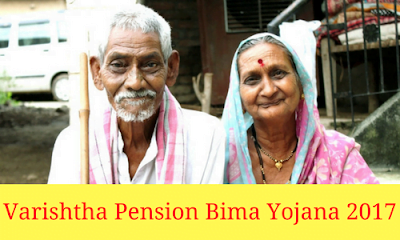
It is a part of Government’s commitment for financial inclusion and social security.
The scheme will be implemented through Life Insurance Corporation of India (LIC).
It is to provide social security to elderly persons aged 60 years and above by giving an assured pension at a guaranteed rate of 8% per annum for 10 years.
The differential return, i.e., the difference between the return generated by LIC and the assured return of 8% per annum would be borne by Government of India as subsidy on an annual basis.
Chapter 46
Atal Pension Yojana (APY)
18 May 2020 Vinay Yadav
UPSC CSEState PSCSSC CGLRailways
APY will be focussed on all citizens in the unorganised sector, who join the National Pension System (NPS) administered by the Pension Fund Regulatory and...
• Key concept: Atal Pension Yojana (APY)
• Essential for UPSC CSE Prelims, State PSCs, SSC CGL & Railway exams.
• Comprehensive analytical coverage and factual pointers provided below.
APY will be focussed on all citizens in the unorganised sector, who join the National Pension System (NPS) administered by the Pension Fund Regulatory and Development Authority (PFRDA).
It is open to all bank account holders who are not members of any statutory social security scheme.
It mainly targets on unorganised sector workers.
Under the APY, the subscribers would receive the fixed pension ranging from Rs. 1000 -Rs. 5000 per month, at the age of 60 years, depending on their contributions.
The age of joining APY is 18 years to 40 years. Therefore, minimum period of contribution by the subscriber under APY would be 20 years or more.
The Central Government would also co-contribute 50% of the subscriber’s contribution or Rs. 1000 per annum, whichever is lower for a period of 5 years upto 2020.
Chapter 47
Pradhan Mantri Suraksha Bima Yojana (PMJJBY)
18 May 2020 Sagar Charpe
UPSC CSEState PSCSSC CGLRailways
It is aimed at providing accidental insurance cover at an highly affordable premium of Rs.12 per year.The Scheme will be available to people in the age gr...
It is aimed at providing accidental insurance cover at an highly affordable premium of Rs.12 per year.
The Scheme will be available to people in the age group 18 to 70 years with a savings bank account who give their consent to join and enable auto-debit on an annual renewal basis.
The risk coverage available will be Rs. 2 lakh for accidental death and permanent total disability and Rs. 1 lakh for permanent partial disability.
It is offered by Public Sector General Insurance Companies or any other General Insurance Company who are willing to offer the product on similar terms.
Individuals can exit and re-join the scheme subjecting to conditions.
It has simplified procedures and the documentary requirements.
It serves the goal of financial inclusion by achieving penetration of insurance down to the weaker sections of the society, ensuring their or their family’s financial security, which otherwise gets pulled to the ground in case of any unexpected and unfortunate acciden
Chapter 48
Pradhan Mantri Kisan Samman Nidhi Scheme
18 May 2020 Vinay Yadav
UPSC CSEState PSCSSC CGLRailways
The Scheme is effective from 1.12.2018. Pradhan Mantri Kisan Samman Nidhi (PM-KISAN) is a Central Sector scheme with 100% funding from Government of India...
• Key concept: Pradhan Mantri Kisan Samman Nidhi Scheme
• Essential for UPSC CSE Prelims, State PSCs, SSC CGL & Railway exams.
• Comprehensive analytical coverage and factual pointers provided below.
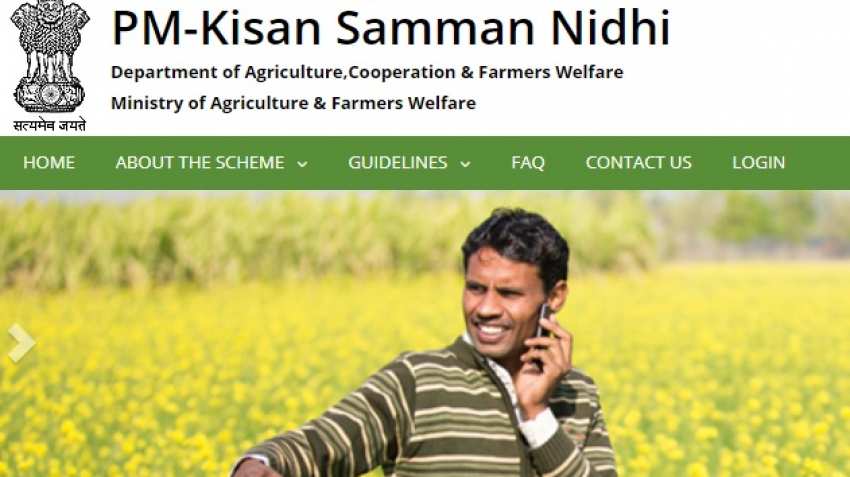
The Scheme is effective from 1.12.2018.
Pradhan Mantri Kisan Samman Nidhi (PM-KISAN) is a Central Sector scheme with 100% funding from Government of India.
Under the Scheme an income support of Rs.6000/- per year is provided to all farmer families across the country in three equal installments of Rs.2000/- each every four months.
Definition of family for the Scheme is husband, wife and minor children.
The entire responsibility of identification of beneficiary farmer families rests with the State / UT Governments.
The fund is directly transferred to the bank accounts of the beneficiaries.
Farmers covered under the Exclusion Criteria of the Operational Guidelines are not eligible for the benefit of the Scheme.
For enrollment, the farmer is required to approach the local patwari / revenue officer / Nodal Officer (PM-Kisan) nominated by the State Government.
The Common Service Centres (CSCs) have also been authorized to do registration of the farmers for the Scheme upon payment of fees. Farmers can also do their self-registration through the Farmers Corner in the portal.
Farmers can also edit their names in PM-Kisan database as per their Aadhaar database / card through the Farmers Corner in the portal. Farmers can also know the status of their payment through the Farmers Corner in the portal.
Beneficiary: Farmers
Benefits: 6000 per annum
How To Apply For enrolment, the farmer is required to approach the local Agriculture Assistant / revenue officer / Nodal Officer (PM-Kisan) nominated by the State Government.
Feedback Website Policies Contact Us Help Web Information Manager
Chapter 49
Pradhan Mantri Jeevan Jyoti Bima Yojana (PMJJBY)
18 May 2020 Sagar Charpe
UPSC CSEState PSCSSC CGLRailways
It offers coverage for death due to any reason and is available to people in the age group of 18 to 50 years ( life cover upto age 55) having a savings ba...
It offers coverage for death due to any reason and is available to people in the age group of 18 to 50 years ( life cover upto age 55) having a savings bank account who give their consent to join and enable auto-debit.
A life cover of Rs. 2 lakhs is available for a one year period at a premium of Rs.330/- per annum per member and is renewable every year.
It is administered through LIC and other Indian private Life Insurance companies.
A person can join PMJJBY with one Insurance company with one bank account only.
Eligible persons can join the scheme without giving self-certification of good health.
A death certificate and simple claim form is required to submit and the claim amount will be transferred to nominees account
Chapter 50
Stand Up India Scheme
18 May 2020 Vinay Yadav
UPSC CSEState PSCSSC CGLRailways
It is to promote entrepreneurship among Scheduled Caste/Schedule Tribe and Women.The schemes provides for composite loans by banks between Rs. 10 lakh and...
• Key concept: Stand Up India Scheme
• Essential for UPSC CSE Prelims, State PSCs, SSC CGL & Railway exams.
• Comprehensive analytical coverage and factual pointers provided below.
It is to promote entrepreneurship among Scheduled Caste/Schedule Tribe and Women. The schemes provides for composite loans by banks between Rs. 10 lakh and upto Rs.100 lakh for setting up a new enterprise in the non-farm sector.
These loans would be eligible for refinance and credit guarantee cover.
Chapter 51
Google Tax
18 May 2020 Sagar Charpe
UPSC CSEState PSCSSC CGLRailways
The Google Tax was announced to introduce a tax on the income as accrue to a foreign e-commerce company outside of India.Any person or entity that makes a...
• Key concept: Google Tax
• Essential for UPSC CSE Prelims, State PSCs, SSC CGL & Railway exams.
• Comprehensive analytical coverage and factual pointers provided below.
The Google Tax was announced to introduce a tax on the income as accrue to a foreign e-commerce company outside of India.
Any person or entity that makes a payment exceeding Rs.1 lakh in a financial year to a non-resident technology company will need to withhold 6% tax on the gross amount being paid as an equalisation levy or Google tax.
This tax, however, is only applicable when the payment has been made to avail certain B2B services from these technology companies.
Chapter 52
Mega Food Parks
18 May 2020 Vinay Yadav
UPSC CSEState PSCSSC CGLRailways
The Scheme aims at providing a mechanism to link agricultural production to the market by bringing together farmers, processors and retailers The food par...
• Key concept: Mega Food Parks
• Essential for UPSC CSE Prelims, State PSCs, SSC CGL & Railway exams.
• Comprehensive analytical coverage and factual pointers provided below.
The Scheme aims at providing a mechanism to link agricultural production to the market by bringing together farmers, processors and retailers
The food parks aims to ensure maximizing value addition, minimizing wastage, increasing farmers’ income and creating employment opportunities particularly in rural sector.
It is based on “Cluster” approach and envisages a well-defined processing zone containing state-of-the art processing facilities with support infrastructure and well-established supply chain.
Pattern of Assistance -
In General areas - one time capital grant of 50% of the project cost subject to a maximum of Rs.50 crore.
In Hilly & Difficult terrain - Capital grant of 75% of the project cost subject to a maximum of Rs. 50 crore in North East Regions
Chapter 53
National Health Mission
18 May 2020 Sagar Charpe
UPSC CSEState PSCSSC CGLRailways
The broad objectives of National Health Mission includes the following The broad objectives of National Health Mission includes the following Reduce MMR t...
• Key concept: National Health Mission
• Essential for UPSC CSE Prelims, State PSCs, SSC CGL & Railway exams.
• Comprehensive analytical coverage and factual pointers provided below.
The broad objectives of National Health Mission includes the following
The broad objectives of National Health Mission includes the following
Reduce MMR to 1/1000 live births
Reduce IMR to 25/1000 live births
Reduce TFR to 2.1
Prevention and reduction of anaemia in women aged 15–49 years
Prevent and reduce mortality & morbidity from communicable, non- communicable; injuries and emerging diseases
Reduce household out-of-pocket expenditure on total health care expenditure
Reduce annual incidence and mortality from Tuberculosis by half
Reduce prevalence of Leprosy to <1/10000 population and incidence to zero in all districts
Annual Malaria Incidence to be <1/1000
Less than 1 per cent microfilaria prevalence in all districts
Kala-azar Elimination by 2015, <1 case per 10000 population in all blocks
The Mission has two sub missions such as National Rural Health Mission and National Urban Health Mission.
Public health being a state subject, support is being provided under NHM to the States/UTs for strengtheningtheir health care delivery systems
Chapter 54
National Rural Health Mission
18 May 2020 Vinay Yadav
UPSC CSEState PSCSSC CGLRailways
NRHM aims to provide Reproductive, Maternal, Newborn, Child and Health and Adolescent (RMNCH+A) services to the rural deprived people through its network o...
• Key concept: National Rural Health Mission
• Essential for UPSC CSE Prelims, State PSCs, SSC CGL & Railway exams.
• Comprehensive analytical coverage and factual pointers provided below.
NRHM aims to provide Reproductive, Maternal, Newborn, Child and Health and Adolescent (RMNCH+A) services to the rural deprived people through its network of ASHA, ANMs and AWWs.
It focus on providing fully functional, community owned and decentralised health delivery system in rural areas.
NRHM, also called NRHM-RCH Flexipool is one of the components of NHM and is for all towns and villages below the population of 50,000.
Various initiatives under NRHM
Accredited social health activists
JananiSurakshaYojana
JananiShishuSurakshaKaryakram (JSSK)
RashtriyaBalSwasthyaKaryakram (RBSK)
Mainstreaming AYUSH – revitalizing local health traditions.
Chapter 55
ASHA, ANM and AWW
18 May 2020 Sagar Charpe
UPSC CSEState PSCSSC CGLRailways
Accrediated Social Health Activist (ASHA) is a trained female community health activist who acts as a interface between the community and the public health...
• Key concept: ASHA, ANM and AWW
• Essential for UPSC CSE Prelims, State PSCs, SSC CGL & Railway exams.
• Comprehensive analytical coverage and factual pointers provided below.
Accrediated Social Health Activist (ASHA) is a trained female community health activist who acts as a interface between the community and the public health system.
ASHA must be women resident of the village who is literate with formal education upto class eight and preferably in the age group of 25-45 years.
Auxiliary Nurse Midwife (ANM) is a resource person for ASHA and provides on-job training and guidance and ensures that ASHA gets the compensation for performance.
Anganwadi Worker (AWW) guides ASHA in performing activities such as organising Health Day at Anganwadi Centre and AWW is a depot holder for drug kits and will be issuing it to ASHA
Chapter 56
Janani Suraksha Yojana
18 May 2020 Vinay Yadav
UPSC CSEState PSCSSC CGLRailways
The objective of the JSY is to reduce maternal and infant mortality by promoting institutional delivery among pregnant women by providing conditional cash ...
• Key concept: Janani Suraksha Yojana
• Essential for UPSC CSE Prelims, State PSCs, SSC CGL & Railway exams.
• Comprehensive analytical coverage and factual pointers provided below.
The objective of the JSY is to reduce maternal and infant mortality by promoting institutional delivery among pregnant women by providing conditional cash assistance of Rs.1400.
There is no bar on age of mother, number of children or type of institution i.e a government or accredited private health facility.
Financial assistance under JSY is available to all pregnant women in states that have low institutional delivery rates, namely, UP, Uttarakhand, Bihar, Jharkhand, MP, Chhattisgarh, Assam, Rajasthan, Odisha, and J&K. They are categorized as Low Performing States (LPS)
In High Performing States (HPS), where the levels of institutional delivery are satisfactory, pregnant women from BPL/SC/ST households only are entitled for JSY benefit. The scheme also provides performance based incentives to ASHAs
Chapter 57
Janani Shishu Suraksha Karyakram (JSSK)
18 May 2020 Sagar Charpe
UPSC CSEState PSCSSC CGLRailways
The scheme entitles all pregnant women delivering in public health institutions to an absolutely free and no expense delivery including C- section.All expe...
• Key concept: Janani Shishu Suraksha Karyakram (JSSK)
• Essential for UPSC CSE Prelims, State PSCs, SSC CGL & Railway exams.
• Comprehensive analytical coverage and factual pointers provided below.
The scheme entitles all pregnant women delivering in public health institutions to an absolutely free and no expense delivery including C- section.
All expenses are borne by the government.
A pregnant woman is also entitled to free transport from home to the government health facility.
Entitlements include free drugs and consumables, free diagnostic, free blood, free diet up to 3 days for normal delivery and 7 days for C-section.
Similar entitlements have been put in place for all sick newborns accessing public health institutions for healthcare till 30 days after birth.
It also provides for free transport from home to institution, between facilities in case of a referral and drop back home.
This initiative will also help in reducing maternal and infant mortality and morbidity.
Chapter 58
Rashtriya Bal Swasthya Karyakram (RBSK)
18 May 2020 Vinay Yadav
UPSC CSEState PSCSSC CGLRailways
RBSY envisages Child Health Screening and Early Intervention Services and subsumes the existing school health programme. The scheme aims at early identific...
• Key concept: Rashtriya Bal Swasthya Karyakram (RBSK)
• Essential for UPSC CSE Prelims, State PSCs, SSC CGL & Railway exams.
• Comprehensive analytical coverage and factual pointers provided below.
RBSY envisages Child Health Screening and Early Intervention Services and subsumes the existing school health programme.
The scheme aims at early identification and early intervention for children from birth to 18 years to cover 4 ‘D’s viz. Defects at birth, Deficiencies, Diseases, Development delays including disability.
The 0 - 6 years age group will be specifically managed at District Early Intervention Center (DEIC) level while for 6 -18 years age group, managed at existing public health facilities.
DEIC will act as referral linkages for both the age groups.
Children under 6 years will be screened by Mobile Block Health teamsat the Anganwadi centre and those between 6-18 years will be screened at the local schools at least once a year in government and government aided schools
Chapter 59
Rashtriya Kishor Swasthya Karyakram (RKSK)
18 May 2020 Sagar Charpe
UPSC CSEState PSCSSC CGLRailways
It is a health programme for adolescents, which focuses on age groups 10-19 years with universal coverage Key Principles are adolescent participation and l...
• Key concept: Rashtriya Kishor Swasthya Karyakram (RKSK)
• Essential for UPSC CSE Prelims, State PSCs, SSC CGL & Railway exams.
• Comprehensive analytical coverage and factual pointers provided below.
It is a health programme for adolescents, which focuses on age groups 10-19 years with universal coverage
Key Principles are adolescent participation and leadership, Equity and inclusion, Gender Equity and strategic partnerships with other sectors and stakeholders.
Focus areas -
.Improve nutrition - Reduce the prevalence of malnutrition and iron-deficiency anaemia (IDA) among adolescent girls and boys.
Improve sexual and reproductive health
Enhance mental health
Prevent injuries and violence
Prevent substance misuse
Address Non-Communicable diseases such as hypertension, stroke, cardio-vascular diseases and diabetes.
Thus it envisions enabling all adolescents in India to realize their full potential by making informed and responsible decisions related to their health and well-being and by accessing the services.
Chapter 60
National Urban Health Mission
18 May 2020 Vinay Yadav
UPSC CSEState PSCSSC CGLRailways
To meet health care needs of the urban population with the focus on urban poor, slum dwellers, by making available to them essential primary health care se...
• Key concept: National Urban Health Mission
• Essential for UPSC CSE Prelims, State PSCs, SSC CGL & Railway exams.
• Comprehensive analytical coverage and factual pointers provided below.
To meet health care needs of the urban population with the focus on urban poor, slum dwellers, by making available to them essential primary health care services and Reducing their out of pocket expenses for treatment.
It seeks to strengthen the existing health care service delivery system converging with various schemes implemented by the Ministries of Urban Development, Housing & Urban Poverty Alleviation, Human Resource Development and Women & Child Development.
It works in partnership with community and local bodies and NGOs and District health action plan is prepared.
NUHM would cover all State capitals, district headquarters and cities/towns with a population of more than50000.
Centre-state funding pattern will be 75:25 for all the states and 90:10 for Special Category s States
Chapter 61
Pradhan Mantri Swasthya Suraksha Yojana (PMSSY)
18 May 2020 Sagar Charpe
UPSC CSEState PSCSSC CGLRailways
The scheme aims to correct regional imbalances in the availability of affordable/ reliable tertiary healthcare services and also to augment facilities for ...
The scheme aims to correct regional imbalances in the availability of affordable/ reliable tertiary healthcare services and also to augment facilities for quality medical education in the country.
It has two components
Setting up of AIIMS like institutions and
Upgradation of Government medical college institutions
Chapter 62
Rashtriya Swasthya Bima Yojana (RSBY)
18 May 2020 Vinay Yadav
UPSC CSEState PSCSSC CGLRailways
The main objective of this scheme is to Provide financial protection against catastrophic health costsImprove access to quality health care for below pover...
• Key concept: Rashtriya Swasthya Bima Yojana (RSBY)
• Essential for UPSC CSE Prelims, State PSCs, SSC CGL & Railway exams.
• Comprehensive analytical coverage and factual pointers provided below.
The main objective of this scheme is to
Provide financial protection against catastrophic health costs
Improve access to quality health care for below poverty line households and other vulnerable groups in the unorganized sector
It is a centrally sponsored health insurance scheme designed to target Below Poverty Line (BPL) households and unorganized workers like covering construction workers, street vendors etc.
The premium cost is shared by Centre and the State.
The beneficiaries are entitled to hospitalization coverage up to Rs. 30,000/- per annum on family floater basis i.e can be utilised by any family member.
The coverage extends to maximum five members of the family which includes the head of household, spouse and up to three dependents including the provision to pay transport expense.
The beneficiaries need to pay only Rs.30 as registration fee for a year.
Beneficiaries get a biometric-enabled smart card containing their fingerprints and photographs and this Single central smart card also to include other welfare schemes like Aam Aadmi Bima Yojana and national old age pension scheme.
Earlier the scheme was under the Ministry of Labour and Employment
Chapter 63
Rashtriya Arogya Nidhi (RAN)
18 May 2020 Sagar Charpe
UPSC CSEState PSCSSC CGLRailways
It aims to provide financial assistance to BPL patients, who are suffering from major life threatening diseases, to receive medical treatment at any of the...
• Key concept: Rashtriya Arogya Nidhi (RAN)
• Essential for UPSC CSE Prelims, State PSCs, SSC CGL & Railway exams.
• Comprehensive analytical coverage and factual pointers provided below.
It aims to provide financial assistance to BPL patients, who are suffering from major life threatening diseases, to receive medical treatment at any of the 13 listed super specialty institutes or government hospitals.
The central government/state government/PSU employees are not eligible.
The financial assistance to such patients is provided in the form of ‘one-time grant’, which is released to the Medical Superintendent of the Hospital in which the treatment has is being received.
The States are needed to create their own State Illness Assistance funds in which central government contribute 50% of the fund and the fund is granted to Medical superintendent for treatment.
The State government can grant up to Rs. 1.5 lakh in each individual case in their state and forward the cases that exceed Rs.1.5 lakh to RAN headquarters.
A “Revolving Fund” which has been set up in 12 Central Government hospitals/institutes.
These hospitals can sanction financial assistance up to Rs.5 lakh, but beyond Rs.5 lakh it has to be referred to RAN headquarters
Chapter 64
Mission Indradhanush
18 May 2020 Vinay Yadav
UPSC CSEState PSCSSC CGLRailways
The mission aims to cover all those children by 2020 who are either unvaccinated, or are partially vaccinated against seven vaccine preventable diseases.It...
• Key concept: Mission Indradhanush
• Essential for UPSC CSE Prelims, State PSCs, SSC CGL & Railway exams.
• Comprehensive analytical coverage and factual pointers provided below.
The mission aims to cover all those children by 2020 who are either unvaccinated, or are partially vaccinated against seven vaccine preventable diseases.
It includes diphtheria, whooping cough, tetanus, polio, tuberculosis, measles and hepatitis B.
It aims to fully immunize children under the age of two years and pregnant women with all available vaccines.
The Mission is being implemented in 201 high focus districts in the country in the first phase which has nearly 50% of all unvaccinated or partially vaccinated children.
The campaign is part of the Universal Immunisation Programme by 2020.
The Ministry will be technically supported by WHO, UNICEF, Rotary International and other donor partners.
Chapter 65
Mission Parivar Vikas
18 May 2020 Sagar Charpe
UPSC CSEState PSCSSC CGLRailways
The aim of the mission is to accelerate access to high quality family planningThe focus of this initiative will be on improving access to contraceptives th...
• Key concept: Mission Parivar Vikas
• Essential for UPSC CSE Prelims, State PSCs, SSC CGL & Railway exams.
• Comprehensive analytical coverage and factual pointers provided below.
The aim of the mission is to accelerate access to high quality family planning
The focus of this initiative will be on improving access to contraceptives through delivering assured services, dovetailing with new promotional schemes, ensuring commodity security, building capacity (service providers), creating an enabling environment along with close monitoring and implementation.
It will be implemented initially in 145 districts where Total Fertility Rate is highest.
These 145 districts are in the states of Uttar Pradesh, Bihar, Rajasthan, Madhya Pradesh, Chhattisgarh, Jharkhand and Assam
Chapter 66
Project Sunrise
18 May 2020 Vinay Yadav
UPSC CSEState PSCSSC CGLRailways
The project is to tackle the increasing HIV prevalence in the North-Eastern states. It aims to diagnose 90 per cent of such drug addicts with HIV and put t...
• Key concept: Project Sunrise
• Essential for UPSC CSE Prelims, State PSCs, SSC CGL & Railway exams.
• Comprehensive analytical coverage and factual pointers provided below.
The project is to tackle the increasing HIV prevalence in the North-Eastern states.
It aims to diagnose 90 per cent of such drug addicts with HIV and put them under treatment by 2020.
It will cover one lakh people living with HIV/AIDS by giving them treatment and care facilities free of cost.
It will be implemented in addition to the existing projects of the National AIDS Control Organization (NACO).
The project has been sponsored by US based Centre for Disease Control and would be implemented by Family Health International 360
Chapter 67
National Deworming Mission
18 May 2020 Sagar Charpe
UPSC CSEState PSCSSC CGLRailways
According to WHO, India has the highest burden of Soil-Transmitted Helminths (STH) in the world The mission is aimed to protect children in the ages of 1-1...
• Key concept: National Deworming Mission
• Essential for UPSC CSE Prelims, State PSCs, SSC CGL & Railway exams.
• Comprehensive analytical coverage and factual pointers provided below.
According to WHO, India has the highest burden of Soil-Transmitted Helminths (STH) in the world
The mission is aimed to protect children in the ages of 1-19 years from intestinal worms i.e Helminths.
Albendazole tablets will be given to all targeted children through Anganwadi centres and all schools.
National Deworming day is observed on 10th February.
Chapter 68
Pradhan Mantri Surakshit Matritva Abhiyan
18 May 2020 Vinay Yadav
UPSC CSEState PSCSSC CGLRailways
Under the scheme, the pregnant ladies who are in 2nd/3rd trimesters will be given free health check-up and required treatment for free on every month.The h...
• Key concept: Pradhan Mantri Surakshit Matritva Abhiyan
• Essential for UPSC CSE Prelims, State PSCs, SSC CGL & Railway exams.
• Comprehensive analytical coverage and factual pointers provided below.
Under the scheme, the pregnant ladies who are in 2nd/3rd trimesters will be given free health check-up and required treatment for free on every month.
The health check-up includes a minimum package of prenatal care/antenatal care services i.e care given during pregnancy and medicines such as IFA supplements, calcium supplements etc would be provided to all pregnant women.
The service will be completely free at designated government health facilities.
The programme follows a systematic approach for engagement with private sector.
Thus it aims to improve the quality and coverage of Antenatal Care (ANC) including diagnostics and counselling services as part of the Reproductive Maternal Neonatal Child and Adolescent Health (RMNCH+A) Strategy
Chapter 69
Universal Immunization Programme (UIP)
18 May 2020 Vinay Yadav
UPSC CSEState PSCSSC CGLRailways
The UIP basket has vaccines for ten diseases i.e BCG for TB, OPV for poliomyelitis, monovalent measles vaccine for measles, Rota Virus vaccine for Diarrhoe...
• Key concept: Universal Immunization Programme (UIP)
• Essential for UPSC CSE Prelims, State PSCs, SSC CGL & Railway exams.
• Comprehensive analytical coverage and factual pointers provided below.
The UIP basket has vaccines for ten diseases i.e BCG for TB, OPV for poliomyelitis, monovalent measles vaccine for measles, Rota Virus vaccine for Diarrhoea, JEV for Japanese Encephalitis & Pentavalent Vaccine for DPT (diphtheria, pertussis i.e whooping cough & tetanus) and Hepatitis B & Pneumonia due to Hib.
Measles-rubella vaccine (MR) is added now to the UIP.
India has set a target of eliminating measles and controlling congenital rubella syndrome (CRS), caused by the rubella virus, by 2020
Chapter 70
National Ayush Mission
18 May 2020 Sagar Charpe
UPSC CSEState PSCSSC CGLRailways
Objectives – To provide cost effective and equitable AYUSH health care.To revitalize and strengthen the AYUSH systemsTo improve educational institutions ca...
• Key concept: National Ayush Mission
• Essential for UPSC CSE Prelims, State PSCs, SSC CGL & Railway exams.
• Comprehensive analytical coverage and factual pointers provided below.
Objectives –
To provide cost effective and equitable AYUSH health care.
To revitalize and strengthen the AYUSH systems
To improve educational institutions capable of imparting quality AYUSH education
To promote the adoption of Quality standards of AYUSH drugs and making available the sustained supply of AYUSH raw-materials.
Beneficiaries - Patients due to low cost medicine and increased access. Components of the Mission -
Mandatory Components (80% of the Resource pool)
AYUSH Services
Ayush Educational institutions
Quality control of ASU &H Drugs
Medicinal Plants
Flexible components (20% of resource pool)
Ayush Wellness centres including yoga & Naturopathy
IEC activities
Tele-medicine
Sports Medicine through AYUSH
Innovations in AYUSH including Public Private Partnership
Interest subsidy component for Private AYUSH educational Institutions
Reimbursement of Testing charges
Research & Development in areas related to Medicinal Plants
Market Promotion, Market intelligence & buy back interventions
Crop Insurance for Medicinal Plants
Voluntary certification scheme: Project based.
The resource allocation to the States/UTs is proposed on the basis of population, backwardness and performance of the State/UT.
Dedicated MIS monitoring and evaluation cell would be established at Centre/State level.
Grant-in Aid will be transferred through treasury route to State Governments which in turn will transfer the funds to the State AYUSH Society along with State Share
Chapter 71
Crime and Criminal Tracking Network and Systems (CCTNS)
18 May 2020 Sagar Charpe
UPSC CSEState PSCSSC CGLRailways
It is a Mission Mode Project (MMP) under the National e-Governance Plan of Govt. of India.It is aimed to create a comprehensive and integrated system for e...
• Key concept: Crime and Criminal Tracking Network and Systems (CCTNS)
• Essential for UPSC CSE Prelims, State PSCs, SSC CGL & Railway exams.
• Comprehensive analytical coverage and factual pointers provided below.
It is a Mission Mode Project (MMP) under the National e-Governance Plan of Govt. of India.
It is aimed to create a comprehensive and integrated system for enhancing the efficiency and effectiveness of Police.
A nationwide networked infrastructure for evolution of IT-enabled state-of-the-art tracking system around “investigation of crime and detection of criminals” will be created to automate police functions at police Station and higher levels.
It will also create facilities and mechanism to provide public services like registration of online complaints, ascertaining the status of case registered at the police station, verification of persons etc
Chapter 72
Pradhan Mantri Awas Yojana - Housing for All (URBAN)
18 May 2020 Vinay Yadav
UPSC CSEState PSCSSC CGLRailways
It envisions Housing for All by 2022 and it subsumed Rajiv Awas Yojana and Rajiv Rinn Yojana. It seeks to address the housing requirement of urban poor inc...
• Key concept: Pradhan Mantri Awas Yojana - Housing for All (URBAN)
• Essential for UPSC CSE Prelims, State PSCs, SSC CGL & Railway exams.
• Comprehensive analytical coverage and factual pointers provided below.
It envisions Housing for All by 2022 and it subsumed Rajiv Awas Yojana and Rajiv Rinn Yojana.
It seeks to address the housing requirement of urban poor including slum dwellers through following programme
Slum rehabilitation with participation of private developers.
Promotion of Affordable Housing for weaker section through Credit Linked Subsidy
Affordable Housing in Partnership with Public & Private sectors
Subsidy for beneficiary-led individual house construction
It covers all 4041 statutory towns as per Census 2011 with focus on 500 Class I cities in three phases.
Centre and State will be funding in the ratio of 75:25 and in case of North Eastern and special category States in the ratio of 90:10
Beneficiaries – Urban poor who does not own a pucca house, Economically Weaker Section (EWS) and Lower Income Groups (LIG – eligible only for credit linked subsidy scheme).
States/UTs have flexibility to redefine the annual income criteria with the approval of Ministry.
Under the mission, a beneficiary can avail of benefit of one component only.
HUDCO and NHB have been identified as Central Nodal Agencies (CNAs) to channelize this subsidy to the lending institutions.
Credit Linked Subsidy – It is an interest subsidy available to a loan amounts upto Rs 6 lakhs at the rate of 6.5 % for tenure of 20 years or during tenure of loan whichever is lower.
The houses will be allocated preferably in the name of Women in the family.
Rajiv Awas Yojana - It envisages a “Slum Free India” with inclusive and equitable cities in which every citizen has access to basic civic infrastructure and social amenities and decent shelter.
Rajiv Rinn Yojana - Rajiv Rinn Yojana (RRY) is an instrument to address the housing needs of the EWS/LIG segments in urban areas, through enhanced credit flow.
Chapter 73
Jawaharlal Nehru National Urban Renewal Mission (JNNURM)
18 May 2020 Vinay Yadav
UPSC CSEState PSCSSC CGLRailways
It aims at integrated development of slums through projects for providing shelter, basic services and other related civic amenities with a view to providin...
• Key concept: Jawaharlal Nehru National Urban Renewal Mission (JNNURM)
• Essential for UPSC CSE Prelims, State PSCs, SSC CGL & Railway exams.
• Comprehensive analytical coverage and factual pointers provided below.
It aims at integrated development of slums through projects for providing shelter, basic services and other related civic amenities with a view to providing utilities to the urban poor.
It has two components - Basic Services for Urban poor (BSUP) and Integrated Housing and Slum Development Programme (IHSDP).
Cities identified based on urban population (Census 2001), cultural and tourist importance was covered under BSUP and the remaining cities were covered under IHSDP
Reforms taken under JNNURM
Earmarking of 25% of municipal budget for the urban poor for provision of basic services including affordable housing to the urban poor.
Implementation of 7- Point Charter, namely provision of land tenure, affordable housing, water, sanitation, education, health and social security to the poor in a time-bound manner ensuring convergence with other programmes.
Reservation of 25% of developed land in all housing projects, public or private, critical for slum improvement.
Chapter 74
Rashtriya Madhyamik Shiksha Abhiyan (RMSA)
18 May 2020 Vinay Yadav
UPSC CSEState PSCSSC CGLRailways
It is a centrally sponsored scheme with the objective to enhance access to secondary education. Initiatives under RMSA Shaala Siddhi - It is a web portal d...
• Key concept: Rashtriya Madhyamik Shiksha Abhiyan (RMSA)
• Essential for UPSC CSE Prelims, State PSCs, SSC CGL & Railway exams.
• Comprehensive analytical coverage and factual pointers provided below.
It is a centrally sponsored scheme with the objective to enhance access to secondary education.
Initiatives under RMSA
Shaala Siddhi - It is a web portal developed by the National University of Educational Planning and Administration (NUEPA) to enable schools to evaluate their performance in 7 key domains under the prescribed framework.
Shaala Darpan - It is an e-Governance platform that covers all the KendriyaVidyalayas, to improve quality of learning, efficiency of school administration, governance of schools & service delivery.
e-PATHSHALA - It is a joint initiative of Ministry of Human Resource Development (MHRD) and National Council of Educational Research and Training (NCERT) to disseminate all educational e-resources including textbooks, audio, video and non-print materials
Kala utsav - To promote Arts (Music, Theatre, Dance, Visual Arts and Crafts) in education in secondary stage of the education to bring art in an inclusive environment.
Seema Darshan -It is an initiative by HRD in collaboration with Ministry of Defence and Ministry of Home Affairs for the students of Kendriya Vidyalayas and Navodaya Vidyalayas to provide an opportunity for the children to experience the border environment and to foster patriotism among the students.
Chapter 75
All School Monitoring Individual Tracing Analysis (ASMITA)
18 May 2020 Sagar Charpe
UPSC CSEState PSCSSC CGLRailways
It is launched under Shala Asmita Yojana (SAY).SAY aims to track the educational journey of school students from Class I to Class XII across the 15 lakhs p...
• Key concept: All School Monitoring Individual Tracing Analysis (ASMITA)
• Essential for UPSC CSE Prelims, State PSCs, SSC CGL & Railway exams.
• Comprehensive analytical coverage and factual pointers provided below.
It is launched under Shala Asmita Yojana (SAY).
SAY aims to track the educational journey of school students from Class I to Class XII across the 15 lakhs private and government schools in the country.
ASMITA will be an online database which will carry information of student attendance and enrolment, learning outcomes, mid-day meal service and infrastructural facilities among others.
Students will be tracked through their Aadhaar numbers and incase those not having unique number will be provided with it.
Chapter 76
Tithi Bojan
18 May 2020 Vinay Yadav
UPSC CSEState PSCSSC CGLRailways
It is a community participatory model followed by the Gujarat government in the mid-day meal programme. Food is voluntarily served among school children by...
• Key concept: Tithi Bojan
• Essential for UPSC CSE Prelims, State PSCs, SSC CGL & Railway exams.
• Comprehensive analytical coverage and factual pointers provided below.
It is a community participatory model followed by the Gujarat government in the mid-day meal programme.
Food is voluntarily served among school children by Villagers.
Chapter 77
Impacting Research Innovation And Technology (IMPRINT) India
18 May 2020 Sagar Charpe
UPSC CSEState PSCSSC CGLRailways
It is an IIT and IISc joint initiative to develop a roadmap for research to solve major engineering and technology challenges in technology domains relevan...
• Key concept: Impacting Research Innovation And Technology (IMPRINT) India
• Essential for UPSC CSE Prelims, State PSCs, SSC CGL & Railway exams.
• Comprehensive analytical coverage and factual pointers provided below.
It is an IIT and IISc joint initiative to develop a roadmap for research to solve major engineering and technology challenges in technology domains relevant to India.
It aims at direct research in the premier institutions into areas of social relevance.
Chapter 78
Uchchtar Aavishkar Abhiyan
18 May 2020 Vinay Yadav
UPSC CSEState PSCSSC CGLRailways
It aims to promote industry-specific need-based research in the educational institutions to keep up the competitiveness of the Indian industry in the globa...
• Key concept: Uchchtar Aavishkar Abhiyan
• Essential for UPSC CSE Prelims, State PSCs, SSC CGL & Railway exams.
• Comprehensive analytical coverage and factual pointers provided below.
It aims to promote industry-specific need-based research in the educational institutions to keep up the competitiveness of the Indian industry in the global market.
All the IITs have been encouraged to work with the industry to identify areas where innovation is required.
Chapter 79
Rashtriya Uchchatar Shiksha Abhiyan (RUSA)
18 May 2020 Sagar Charpe
UPSC CSEState PSCSSC CGLRailways
It is a centrally sponsored scheme aiming to provide strategic funding to higher educational institutions and improve the overall quality of existing state...
• Key concept: Rashtriya Uchchatar Shiksha Abhiyan (RUSA)
• Essential for UPSC CSE Prelims, State PSCs, SSC CGL & Railway exams.
• Comprehensive analytical coverage and factual pointers provided below.
It is a centrally sponsored scheme aiming to provide strategic funding to higher educational institutions and improve the overall quality of existing state institutions by ensuring that all institutions conform to prescribed norms and standard.
Its target achievement is to raise the gross enrolment ratio to 32% by the end of 2017.
BHUVAN - RUSA PORTAL - The National Remote Sensing Centre (NRSC) of ISRO has developed a mobile application for uploading geo-tagged photographs and associated details captured by the educational institutions in this portal as part of the implementation of RUSA.
Chapter 80
SWAYAM
18 May 2020 Vinay Yadav
UPSC CSEState PSCSSC CGLRailways
Study Webs of Active Learning For Young Aspiring Minds is an indigenous IT platform for hosting the Massive Open Online Courses (MOOCs). Professors of cent...
• Key concept: SWAYAM
• Essential for UPSC CSE Prelims, State PSCs, SSC CGL & Railway exams.
• Comprehensive analytical coverage and factual pointers provided below.
Study Webs of Active Learning For Young Aspiring Minds is an indigenous IT platform for hosting the Massive Open Online Courses (MOOCs).
Professors of centrally funded institutions like IITs, IIMs, central universities will offer online courses to citizens of India through this platform.
Chapter 81
Swayam Prabha
18 May 2020 Sagar Charpe
UPSC CSEState PSCSSC CGLRailways
It is the project for telecasting high quality educational programmes through DTH channels. The programme will cover IIT-PAL which assist the students in t...
• Key concept: Swayam Prabha
• Essential for UPSC CSE Prelims, State PSCs, SSC CGL & Railway exams.
• Comprehensive analytical coverage and factual pointers provided below.
It is the project for telecasting high quality educational programmes through DTH channels.
The programme will cover IIT-PAL which assist the students in the classes 11 and 12 aspiring to join IITs by encouraging scientific thinking.
Chapter 82
Vittiya Saksharata Abhiyan (VISAKA)
18 May 2020 Vinay Yadav
UPSC CSEState PSCSSC CGLRailways
It is to actively engage the youths/students of Higher Education Institutions to encourage them to use a digitally enabled cashless economic system for tra...
• Key concept: Vittiya Saksharata Abhiyan (VISAKA)
• Essential for UPSC CSE Prelims, State PSCs, SSC CGL & Railway exams.
• Comprehensive analytical coverage and factual pointers provided below.
It is to actively engage the youths/students of Higher Education Institutions to encourage them to use a digitally enabled cashless economic system for transfer of funds
Chapter 83
Ishan Uday
18 May 2020 Sagar Charpe
UPSC CSEState PSCSSC CGLRailways
Scholarships for undergraduates from northeast. Under the scheme ten thousand fresh scholarships are to be provided for general degree course, technical an...
• Key concept: Ishan Uday
• Essential for UPSC CSE Prelims, State PSCs, SSC CGL & Railway exams.
• Comprehensive analytical coverage and factual pointers provided below.
Scholarships for undergraduates from northeast.
Under the scheme ten thousand fresh scholarships are to be provided for general degree course, technical and professional courses including medical and para-medical courses and will be given through Direct Benefit Transfer (DBT) to the beneficiary student
Ishan Vikas - Select students from northeast to be taken to IITs, NITs etc. for internships/exposure
Chapter 84
Unnat Bharat
18 May 2020 Vinay Yadav
UPSC CSEState PSCSSC CGLRailways
It aimed at providing rural India with professional resource support from institutes of higher education Connecting institutions of higher education, inclu...
• Key concept: Unnat Bharat
• Essential for UPSC CSE Prelims, State PSCs, SSC CGL & Railway exams.
• Comprehensive analytical coverage and factual pointers provided below.
It aimed at providing rural India with professional resource support from institutes of higher education
Connecting institutions of higher education, including IITs, NITs and Indian Institutes of Science Education & Research (IISERs) etc. with local communities to address the development challenges through appropriate technologies.
Chapter 85
Deendayal Upadhyay Shramev Jayate Karyakram
19 May 2020 Sagar Charpe
UPSC CSEState PSCSSC CGLRailways
The scheme is launched to provide conducive environment for industrial development. Various initiatives under the scheme includes -ShramSuvidha Portal - Al...
• Key concept: Deendayal Upadhyay Shramev Jayate Karyakram
• Essential for UPSC CSE Prelims, State PSCs, SSC CGL & Railway exams.
• Comprehensive analytical coverage and factual pointers provided below.
The scheme is launched to provide conducive environment for industrial development.
Various initiatives under the scheme includes -
ShramSuvidha Portal -
Allocation of Unique labour identification number (LIN) to labour to facilitate online registration.
This portal will help timely redressal of grievances.
Single Harmonized Form to make filing complaints simple.
Filing of self-certified and simplified Single Online Return by the industry.
Labour inspector to upload inspection report within 72 hours.
Random Labour Inspection scheme - A computerized list of inspections will be generated randomly to reduce inspector raj. Inspector has to upload report within 72 hours
Universal Account Number (UAN) for Employee Provident Fund (EPF) -
An UAN is allotted to EPF subscribers to make Provident Fund account more portable and universally accessible by centrally compiling & digitizing their information.
The portability of the Social Security Benefits to the labour of organised sector across the jobs and geographic areas will be ensured.
Apprenticeship Protsahan Yojana -
It envisages on imparting on-the-job training to apprentices.
Government will reimburse 50 percent of stipend paid by employers to increase employability of youth by giving them skills.
Revamped Rashtriya Swasthya Bima Yojana - Introduction of convergence of social security schemes namely Aam Admi Bima Yojna and National Old Age Penskion Scheme on RSBY smart card through improved IT framework
Chapter 86
Pradhan Mantri Rojgar Protsahan Yojana
19 May 2020 Vinay Yadav
UPSC CSEState PSCSSC CGLRailways
It is to promote/incentivize employment generation.Central Government will be paying the 8.33% EPS contribution of the employer for the new employment. All...
• Key concept: Pradhan Mantri Rojgar Protsahan Yojana • Essential for UPSC CSE Prelims, State PSCs, SSC CGL & Railway exams. • Comprehensive analytical coverage and factual pointers provided below.
It is to promote/incentivize employment generation.
Central Government will be paying the 8.33% EPS contribution of the employer for the new employment.
All industries registered with Employees’ Provident Fund Organization (EPFO) can apply for availing benefits under the scheme.
It is targeted for employees earning wages less than Rs. 15,000/- per month.
The scheme will be in operation for a period of 3 years and GOI will continue to pay and all new eligible employees will be covered till 2019-20
Chapter 87
Swavalamban Scheme
19 May 2020 Sagar Charpe
UPSC CSEState PSCSSC CGLRailways
Under the scheme, GOI will contribute Rs.1000 per year to each Nation Pension Scheme- Swavalamban account opened in the year 2010-2013 for five years.The s...
• Key concept: Swavalamban Scheme
• Essential for UPSC CSE Prelims, State PSCs, SSC CGL & Railway exams.
• Comprehensive analytical coverage and factual pointers provided below.
Under the scheme, GOI will contribute Rs.1000 per year to each Nation Pension Scheme- Swavalamban account opened in the year 2010-2013 for five years.
The scheme is voluntary and open to eligible citizens in the age group of 18-60 years.
Eligible individuals in the unorganized sector can open an account through their Aggregator and get an Individual subscriber Account.
The account is regulated by Pension Fund Regulatory Development Authorities (PFRDA).
There is no minimum amount required per annum or per contribution and subscriber is free to choose the amount he/she wants to invest every year.
Subscriber should not be covered under any other social security schemes like Employees’ Provident Fund and Miscellaneous Provision Act, The Coal Mines Provident Fund and Miscellaneous Provision Act etc.
The existing subscribers of Swavalamban Scheme would be automatically migrated to APY, unless they opt out
Chapter 88
A Scheme for Promotion of Innovation, Rural Industry & Intrepreneurship (ASPIRE)
19 May 2020 Vinay Yadav
UPSC CSEState PSCSSC CGLRailways
The scheme is launched with an objective to set up a network of technology centers, incubation centres to accelerate entrepreneurship and also to promote s...
• Key concept: A Scheme for Promotion of Innovation, Rural Industry & Intrepreneurship (ASPIRE)
• Essential for UPSC CSE Prelims, State PSCs, SSC CGL & Railway exams.
• Comprehensive analytical coverage and factual pointers provided below.
The scheme is launched with an objective to set up a network of technology centers, incubation centres to accelerate entrepreneurship and also to promote start-ups for innovation and entrepreneurship in rural and agriculture based industry.
The planned outcomes of ASPIRE are setting up Technology Business Incubators (TBI), Livelihood Business Incubators (LBI) and creation of a Fund of Funds for such initiatives with SIDBI.
Chapter 89
Swabhimaan
19 May 2020 Sagar Charpe
UPSC CSEState PSCSSC CGLRailways
Swabhimaan is a campaign which aims to bring banking services to large rural areas. This campaign is to be operated by the Ministry of Finance and the Indi...
• Key concept: Swabhimaan
• Essential for UPSC CSE Prelims, State PSCs, SSC CGL & Railway exams.
• Comprehensive analytical coverage and factual pointers provided below.
Swabhimaan is a campaign which aims to bring banking services to large rural areas.
This campaign is to be operated by the Ministry of Finance and the Indian Banks’Association (IBA) to bring banking within the reach of the masses of the Indian population.
Chapter 90
Scheme of Fund for Regeneration of Traditional Industries (SFURTI)
19 May 2020 Vinay Yadav
UPSC CSEState PSCSSC CGLRailways
SFURTI is to organize the traditional industries and artisans into clusters to make them competitive and provide support for their long term sustainability...
• Key concept: Scheme of Fund for Regeneration of Traditional Industries (SFURTI)
• Essential for UPSC CSE Prelims, State PSCs, SSC CGL & Railway exams.
• Comprehensive analytical coverage and factual pointers provided below.
SFURTI is to organize the traditional industries and artisans into clusters to make them competitive and provide support for their long term sustainability by way of enhancing the marketability of products, improving the skills of artisans, making provision for common facilities and strengthening the cluster governance systems
Chapter 91
Prime Minister’s Employment Generation Programme (PMEGP)
19 May 2020 Sagar Charpe
UPSC CSEState PSCSSC CGLRailways
PMEGP is the flagship programme of the government offering credit linked subsidy to establish new enterprises for generating continuous and sustainable emp...
• Key concept: Prime Minister’s Employment Generation Programme (PMEGP)
• Essential for UPSC CSE Prelims, State PSCs, SSC CGL & Railway exams.
• Comprehensive analytical coverage and factual pointers provided below.
PMEGP is the flagship programme of the government offering credit linked subsidy to establish new enterprises for generating continuous and sustainable employment opportunities in Rural and Urban areas of the country.
Chapter 92
Sudoor Drishti
19 May 2020 Sagar Charpe
UPSC CSEState PSCSSC CGLRailways
It is a project launched by the Indian Bureau of Mines in collaboration with National Remote Sensing Centre (NRSC) and Department of Space for monitoring o...
• Key concept: Sudoor Drishti
• Essential for UPSC CSE Prelims, State PSCs, SSC CGL & Railway exams.
• Comprehensive analytical coverage and factual pointers provided below.
It is a project launched by the Indian Bureau of Mines in collaboration with National Remote Sensing Centre (NRSC) and Department of Space for monitoring of Mining activity through satellite.
Bhuvan-based services will be used for the monitoring of periodic changes of the mining areas within mining lease boundary and development of mobile app for field data collection to verify the ground realities.
Chapter 93
Nai Manzil
19 May 2020 Vinay Yadav
UPSC CSEState PSCSSC CGLRailways
It aims to engage constructively with Poor Minority youth and help them obtain sustainable and gainful employment opportunities that can facilitate them to...
• Key concept: Nai Manzil
• Essential for UPSC CSE Prelims, State PSCs, SSC CGL & Railway exams.
• Comprehensive analytical coverage and factual pointers provided below.
It aims to engage constructively with Poor Minority youth and help them obtain sustainable and gainful employment opportunities that can facilitate them to be integrated with mainstream economic activities.
Integrated Skill Training is being provided to the youth in market driven skills.
The other objectives include, raise awareness and sensitization in health and life skills, Mobilize school drop-out minority youths with formal education and certification upto level 8th or 10th through National Institute of Open Schooling (NIOS) or other State open schooling systems.
It was launched for the first time in J&K in 2016, where girls from minority communities are being imparted three-month skill development training in seven identified sectors relevant to the region
Chapter 94
Nai Roshni
19 May 2020 Sagar Charpe
UPSC CSEState PSCSSC CGLRailways
It is a scheme for leadership development among Minority Women. The objective is to empower and instil confidence among minority women by providing knowled...
• Key concept: Nai Roshni
• Essential for UPSC CSE Prelims, State PSCs, SSC CGL & Railway exams.
• Comprehensive analytical coverage and factual pointers provided below.
It is a scheme for leadership development among Minority Women.
The objective is to empower and instil confidence among minority women by providing knowledge, tools and techniques for interacting with Government systems, banks and other institutions at all levels.
Chapter 95
Maulana Azad National Academy for Skills (MANAS)
19 May 2020 Vinay Yadav
UPSC CSEState PSCSSC CGLRailways
MANAS is a skill development architecture aimed at providing an all India Level training framework. The training framework is based upon tie-ups with Natio...
• Key concept: Maulana Azad National Academy for Skills (MANAS)
• Essential for UPSC CSE Prelims, State PSCs, SSC CGL & Railway exams.
• Comprehensive analytical coverage and factual pointers provided below.
MANAS is a skill development architecture aimed at providing an all India Level training framework.
The training framework is based upon tie-ups with National/International training organizations (on PPP mode) for imparting training to the minority population, for skills that are currently in demand.
It will also provide concessional credit for minority community after meeting their Skilling eeds for expanding their existing businesses and setting up new businesses
Chapter 96
Hunar Haat
19 May 2020 Sagar Charpe
UPSC CSEState PSCSSC CGLRailways
Hunar Haat (Skill Haat) is an exhibition of handicrafts, embroidery etc made by the artisans from the Minority Communities organized by the Ministry of Min...
• Key concept: Hunar Haat
• Essential for UPSC CSE Prelims, State PSCs, SSC CGL & Railway exams.
• Comprehensive analytical coverage and factual pointers provided below.
Hunar Haat (Skill Haat) is an exhibition of handicrafts, embroidery etc made by the artisans from the Minority Communities organized by the Ministry of Minority Affairs.
They will be provided free of cost stall, the arrangements for their transport and their daily expenses.
Two such Haats has been conducted so far and the Ministry has been working to establish “Hunar Hub” in all the states where programmes such as “Hunar Haat” and other cultural events will be organized.
Chapter 97
USTAAD
19 May 2020 Vinay Yadav
UPSC CSEState PSCSSC CGLRailways
Upgrading the Skills in Training in Traditional Arts/Crafts for Development (USTAAD) is a 100% central sector scheme. The scheme aimed at capacity building...
• Key concept: USTAAD
• Essential for UPSC CSE Prelims, State PSCs, SSC CGL & Railway exams.
• Comprehensive analytical coverage and factual pointers provided below.
Upgrading the Skills in Training in Traditional Arts/Crafts for Development (USTAAD) is a 100% central sector scheme.
The scheme aimed at capacity building and updating the traditional skills of master craftsmen/artisans. These trained master craftsmen/artisan will train the minority youths in various specific traditional arts/crafts.
Under the Scheme, skill development programme will be provided for all important traditional arts/crafts being practiced by minority communities, for their development and market linkages
Chapter 98
Surya Mitra Scheme
19 May 2020 Sagar Charpe
UPSC CSEState PSCSSC CGLRailways
The scheme is aimed at creating 50,000 trained solar photovoltaic technicians by March 2020.The course is a 600 hours (i.e. 3 months) skill development pro...
• Key concept: Surya Mitra Scheme
• Essential for UPSC CSE Prelims, State PSCs, SSC CGL & Railway exams.
• Comprehensive analytical coverage and factual pointers provided below.
The scheme is aimed at creating 50,000 trained solar photovoltaic technicians by March 2020.
The course is a 600 hours (i.e. 3 months) skill development program designed to create skilled manpower in installation, commissioning, and Operation & Maintenance of solar power plants and equipment.
The objective is to provide employability and entrepreneurship to rural and urban youth & women. Special emphasis is given to skill youth from SC/ST/OBC categories.
The qualification required to participate in the program is ITI (Electrical & Wireman) / Diploma in Engineering (Electrical, Electronics & Mechanical).
Higher qualified participants such as B.Techetc are not eligible for this programme.
The programme is 100% funded by GOI and implemented by National Institute for Solar Energy (NISE) across the country.
In addition, short term training programmes for small hydro, entrepreneurship development, operation & maintenance of solar energy devices and boiler operations in co-generation plants have been organized.
National Institute of Solar Energy (NISE) is an autonomous institution of Ministry of New & Renewable Energy (MNRE)).
Chapter 99
Solar City
19 May 2020 Sagar Charpe
UPSC CSEState PSCSSC CGLRailways
The basic aim is to motivate the local Governments for adopting renewable energy technologies and energy efficiency measures.The Solar City aims at minimum...
• Key concept: Solar City
• Essential for UPSC CSE Prelims, State PSCs, SSC CGL & Railway exams.
• Comprehensive analytical coverage and factual pointers provided below.
The basic aim is to motivate the local Governments for adopting renewable energy technologies and energy efficiency measures.
The Solar City aims at minimum 10% reduction in projected demand of conventional energy at the end of five years.
In a Solar City all types of renewable energy based projects will be installed.
Chapter 100
Panchayat Empowerment and Accountability Incentive Scheme
19 May 2020 Vinay Yadav
UPSC CSEState PSCSSC CGLRailways
It is a central sector scheme aimed at incentivization of States for devolving funds, functions and functionaries (3Fs) to Panchayats and incentivization o...
• Key concept: Panchayat Empowerment and Accountability Incentive Scheme
• Essential for UPSC CSE Prelims, State PSCs, SSC CGL & Railway exams.
• Comprehensive analytical coverage and factual pointers provided below.
It is a central sector scheme aimed at incentivization of States for devolving funds, functions and functionaries (3Fs) to Panchayats and incentivization of Panchayats to put in place accountability systems to make their functioning transparent and efficient.
The scheme is 100% centrally funded.
State Governments/UTs are ranked on a Devolution Index which measures the extent of devolution of 3Fs by States to Panchayats.
Based on the index, the best performing states and panchayats have been incentivized since 2011.
Chapter 101
Pradhan Mantri Ujjawala Yojana
19 May 2020 Sagar Charpe
UPSC CSEState PSCSSC CGLRailways
This Scheme aims to provide free LPG connections to Women from BPL Households by providing financial support of Rs 1600 for each new LPG connection.The ide...
• Key concept: Pradhan Mantri Ujjawala Yojana
• Essential for UPSC CSE Prelims, State PSCs, SSC CGL & Railway exams.
• Comprehensive analytical coverage and factual pointers provided below.
This Scheme aims to provide free LPG connections to Women from BPL Households by providing financial support of Rs 1600 for each new LPG connection.
The identification of eligible BPL families will be made in consultation with the State Governments and the Union Territories based on the socio-economic and caste census data.
Providing LPG connections to BPL households will ensure universal coverage of cooking gas in the country which will empower women and protect their health.
It aims to address serious health hazards associated with cooking based on fossil fuels.
Non-communicable diseases such as heart disease, stroke, chronic obstructive pulmonary disease and lung cancer and Indoor air pollution causing acute respiratory illnesses in young children is addressed through this scheme.
It will also provide employment for rural youth in the supply chain of cooking gas
Chapter 102
PAHAL
19 May 2020 Vinay Yadav
UPSC CSEState PSCSSC CGLRailways
Direct Benefit Transfer for LPG consumer (DBTL) scheme called, `PAHAL’ aims to reduce leakage of subsidy, reduce intermediaries and eliminate duplicate LPG...
• Key concept: PAHAL
• Essential for UPSC CSE Prelims, State PSCs, SSC CGL & Railway exams.
• Comprehensive analytical coverage and factual pointers provided below.
Direct Benefit Transfer for LPG consumer (DBTL) scheme called, `PAHAL’ aims to reduce leakage of subsidy, reduce intermediaries and eliminate duplicate LPG connections by introducing direct cash transfer of subsidies.
LPG consumers, who join the scheme, will get the LPG cylinders at market price and receive the subsidy directly into their bank accounts.
The scheme required the consumer to mandatorily have a bank account linked with Aadhaar number for availing LPG Subsidy.
If they do not possess Aadhaar number, they will have to link their bank account directly with their 17 digit LPG ID
Chapter 103
Deendayal Upadhyay Gram Jyoti Yojana (DDUGJY)
19 May 2020 Sagar Charpe
UPSC CSEState PSCSSC CGLRailways
It is the flagship programme of Ministry of Power to provide 24X7 power supply to rural areas.It focuses on feeder separation (rural households & agric...
It is the flagship programme of Ministry of Power to provide 24X7 power supply to rural areas.
It focuses on feeder separation (rural households & agricultural) and strengthening of sub-transmission & distribution infrastructure including metering at all levels in rural areas.
This will help in providing round the clock power to rural households and adequate power to agricultural consumers.
Rajiv Gandhi Grameen Vidyutikaran Yojana (RGGVY) has been subsumed in it.
Integrated Power Development Scheme (IPDS) - It is to provide 24x7 power supply in the urban area.
Remote Village Electrification Programme (RVEP) is a scheme implemented by Ministry of New & Renewable energy in various states to provide basic lighting through Renewable Energy Sources in un-electrified villages and hamlets of electrified census villages.
Chapter 104
National LED Programme
19 May 2020 Vinay Yadav
UPSC CSEState PSCSSC CGLRailways
It is to ensure promotion of energy efficiency in the country.It has two components - Domestic Efficient Lighting Programme (DELP) and Street Lighting Nati...
• Key concept: National LED Programme
• Essential for UPSC CSE Prelims, State PSCs, SSC CGL & Railway exams.
• Comprehensive analytical coverage and factual pointers provided below.
It is to ensure promotion of energy efficiency in the country.
It has two components - Domestic Efficient Lighting Programme (DELP) and Street Lighting National Programme (SLNP).
DELP - UJALA Scheme was launched to provide LED bulbs to domestic consumers.
SLNP - It aims to replace conventional street light with smart and energy efficient LED street lights by March, 2019
Chapter 105
UJALA Scheme
19 May 2020 Sagar Charpe
UPSC CSEState PSCSSC CGLRailways
UJALA – Unnat Jyoti by Affordable LEDs for All is an energy efficiency scheme to promote efficient lighting, enhance awareness on using efficient equipment...
• Key concept: UJALA Scheme
• Essential for UPSC CSE Prelims, State PSCs, SSC CGL & Railway exams.
• Comprehensive analytical coverage and factual pointers provided below.
UJALA – Unnat Jyoti by Affordable LEDs for All is an energy efficiency scheme to promote efficient lighting, enhance awareness on using efficient equipment which reduce electricity bills and help preserve environment.
Under this scheme, LED bulbs at 40% of the market price will be distributed to every grid connected consumer.
It is implemented by the Electricity Distribution Company and Energy Efficiency Services Limited (EESL)
Chapter 106
Coal Mitra Web Portal
19 May 2020 Vinay Yadav
UPSC CSEState PSCSSC CGLRailways
The portal is designed to bring about flexibility in Utilization of Domestic Coal. The portal helps to transfer the domestic coal reserves to more cost eff...
• Key concept: Coal Mitra Web Portal
• Essential for UPSC CSE Prelims, State PSCs, SSC CGL & Railway exams.
• Comprehensive analytical coverage and factual pointers provided below.
The portal is designed to bring about flexibility in Utilization of Domestic Coal.
The portal helps to transfer the domestic coal reserves to more cost efficient State/Centre owned or private sector generating stations, leading to lower generation costs and ultimately lesser cost of electricity for the consumers.
Chapter 107
Ujwal DISCOM Assurance Yojana (UDAY)
19 May 2020 Sagar Charpe
UPSC CSEState PSCSSC CGLRailways
It is to provide financial and operational turnaround of power distribution companies and aims at long term affordable and accessible 24x7 power supply to ...
• Key concept: Ujwal DISCOM Assurance Yojana (UDAY)
• Essential for UPSC CSE Prelims, State PSCs, SSC CGL & Railway exams.
• Comprehensive analytical coverage and factual pointers provided below.
It is to provide financial and operational turnaround of power distribution companies and aims at long term affordable and accessible 24x7 power supply to all.
It has target of making all DISCOMs profitable by 2018-19 through four initiatives such as Improving operational efficiencies of Discoms, Reduction of cost of power, Reduction in interest cost of Discoms, Enforcing financial discipline on DISCOMs through alignment with state finances.
Under this programme, States shall take over 75% of DISCOM debt over two years i.e 50% of DISCOM debt shall be taken over in 2015-16 and 25% in 2016-17.
Government of India will not include the debt taken over by the states as per the above scheme in the calculation of fiscal deficit of respective states in the financial years 2015- 16 and 2016-17.
Chapter 108
Mobile Applications launched by Ministry of Power
19 May 2020 Vinay Yadav
UPSC CSEState PSCSSC CGLRailways
Grameen Vidyutikaran (GARV) app to help citizens track rural electrification under DDUGJY.Vidyut Pravah app to provide real time information of electricity...
• Key concept: Mobile Applications launched by Ministry of Power
• Essential for UPSC CSE Prelims, State PSCs, SSC CGL & Railway exams.
• Comprehensive analytical coverage and factual pointers provided below.
Grameen Vidyutikaran (GARV) app to help citizens track rural electrification under DDUGJY.
Vidyut Pravah app to provide real time information of electricity price and availability.
URJA (Urban Jyoti Abhiyaan) app for Urban Power Distribution Sector to enhance Consumer Connect, Project Monitoring of projects and providing information on the monthly performance on parameters like Consumer complaints redressal, Release of New service connection etc.
E-Tarang app to monitor the real time status of Transmission System.
E-Trans app to help in better price discovery in respect of Inter State Transmission projects.
Chapter 109
Avataran
19 May 2020 Sagar Charpe
UPSC CSEState PSCSSC CGLRailways
Avataran is an umbrella program consists of 7 missions such as,Mission 25 Tonne - It aims to increase revenue by augmenting carrying capacity.Mission Zero ...
• Key concept: Avataran
• Essential for UPSC CSE Prelims, State PSCs, SSC CGL & Railway exams.
• Comprehensive analytical coverage and factual pointers provided below.
Avataran is an umbrella program consists of 7 missions such as,
Mission 25 Tonne - It aims to increase revenue by augmenting carrying capacity.
Mission Zero Accident - It comprises of two sub missions such as Elimination of unmanned level crossings on broad Gauge in the next 3-4 years and Equipping 100% of the High Density Network with Train Collision Avoidance System (TCAS).
Mission PACE (Procurement and Consumption Efficiency)
It aims to improve procurement and consumption practices to improve the quality of goods and services.
Mission Raftaar - It targets doubling of average speeds of freights trains and increasing the average speed of super fast mail/express trains by 25 kmph in the next 5 years. It will complement Mission 25 Tonne to increase throughput of the railway system.
Mission Hundred - Under this mission, at least a hundred sidings will be commissionedin the next 2 years. Siding refers to low-speed track section / track branch distinct from a running line.
Mission beyond book-keeping - It will establish an accounting system where outcomes can be tracked to inputs.
Mission Capacity Utilisation - It proposes to prepare a blueprint for making full use of the huge new capacity that will be created through two Dedicated Freight Corridors between Delhi-Mumbai and Delhi-Kolkata scheduled to be commissioned by 2019.
Chapter 110
Alternate Train Accommodation Scheme – VIKALP
19 May 2020 Vinay Yadav
UPSC CSEState PSCSSC CGLRailways
The scheme aims to facilitate waitlisted passengers to get an alternative train accommodation within 12 hours of the original train. The waitlisted passeng...
The scheme aims to facilitate waitlisted passengers to get an alternative train accommodation within 12 hours of the original train.
The waitlisted passengers will get confirmed accommodation in next alternative train if they opt for it while booking..
No extra charges will be paid by the passenger to avail this scheme or any refund provided for the difference of fare.
Chapter 111
Clone train services
19 May 2020 Sagar Charpe
UPSC CSEState PSCSSC CGLRailways
The proposed service will run’ on high-demand routes within an hour of a scheduled train’s departure to accommodate those on its waiting list. The idea is ...
• Key concept: Clone train services
• Essential for UPSC CSE Prelims, State PSCs, SSC CGL & Railway exams.
• Comprehensive analytical coverage and factual pointers provided below.
The proposed service will run’ on high-demand routes within an hour of a scheduled train’s departure to accommodate those on its waiting list.
The idea is to ensure that they reach their destination around the same time they had originally envisaged.
Chapter 112
Rail Safety Fund
19 May 2020 Vinay Yadav
UPSC CSEState PSCSSC CGLRailways
The new rail safety fund called “Rashtriya Rail SanrakshaKosh” to be utilized for track improvement, bridge rehabilitation work, improved inspection work e...
• Key concept: Rail Safety Fund
• Essential for UPSC CSE Prelims, State PSCs, SSC CGL & Railway exams.
• Comprehensive analytical coverage and factual pointers provided below.
The new rail safety fund called “Rashtriya Rail SanrakshaKosh” to be utilized for track improvement, bridge rehabilitation work, improved inspection work etc.
It is a non-lapsable fund created by Ministry of Finance, since the union and railway budgets will be merged for the first time.
It receives fund from this year budget allocation and also from the Central Road Fund.
The Central Road Fund is collected by levying Cess on diesel and petrol for safety-related work.
The Rail Safety Fund was setup based on the recommendation of a committee headed by Anil Kakodkar, former chairman of Atomic Energy Commission Chairman.
Chapter 113
Antyodaya Express
19 May 2020 Sagar Charpe
UPSC CSEState PSCSSC CGLRailways
The Antyodaya Express was announced during the 2016 Railway Budget.All the coaches are unreserved. Deen Dayalu coacheshave also been announced that provide...
• Key concept: Antyodaya Express
• Essential for UPSC CSE Prelims, State PSCs, SSC CGL & Railway exams.
• Comprehensive analytical coverage and factual pointers provided below.
The Antyodaya Express was announced during the 2016 Railway Budget.
All the coaches are unreserved.
Deen Dayalu coacheshave also been announced that provides many facilities that would make the journey of a second-class train traveller more comfortable
Chapter 114
Bharatmala
19 May 2020 Vinay Yadav
UPSC CSEState PSCSSC CGLRailways
It is an umbrella program that will subsume unfinished parts of National Highway Development Program (NHDP). It also focus on the new initiatives like deve...
• Key concept: Bharatmala
• Essential for UPSC CSE Prelims, State PSCs, SSC CGL & Railway exams.
• Comprehensive analytical coverage and factual pointers provided below.
It is an umbrella program that will subsume unfinished parts of National Highway Development Program (NHDP).
It also focus on the new initiatives like development of Border and International connectivity roads, Coastal & port connectivity roads, National Corridors Efficiency improvements, Economic corridors development and others.
Chapter 115
Setu Bharatam
19 May 2020 Sagar Charpe
UPSC CSEState PSCSSC CGLRailways
It is a program for building bridges for safe and seamless travel on National Highways. The aim is to make National Highways free of railway level crossing...
• Key concept: Setu Bharatam
• Essential for UPSC CSE Prelims, State PSCs, SSC CGL & Railway exams.
• Comprehensive analytical coverage and factual pointers provided below.
It is a program for building bridges for safe and seamless travel on National Highways.
The aim is to make National Highways free of railway level crossings by 2019 by building Railway Over Bridges/ Under Passes and old & worn down bridges to be improved by replacement/widening/strengthening
Chapter 116
Char Dham Highway Project
19 May 2020 Vinay Yadav
UPSC CSEState PSCSSC CGLRailways
The Char Dham highway development project is an initiative to improve connectivity to the Char Dham pilgrimage centres in the Himalayas i.e Gangotri, Yamun...
• Key concept: Char Dham Highway Project
• Essential for UPSC CSE Prelims, State PSCs, SSC CGL & Railway exams.
• Comprehensive analytical coverage and factual pointers provided below.
The Char Dham highway development project is an initiative to improve connectivity to the Char Dham pilgrimage centres in the Himalayas i.e Gangotri, Yamunotri, Kedarnath and Badrinath.
This objective is to provide 900 km highway roads with paved shoulders, provision for landslide mitigation and other road safety measures, which will provide all weather road connectivity for pilgrims and for movement of defence forces.
Generally the Char Dham pilgrimage centre four pilgrimage sites in India i.e Badrinath, Dwarka, Puri and Rameswaran but the Gangotri, Yamunotri, Kedarnath and Badrinath in Uttarkhand state were known as Chota Char Dham
Chapter 117
Logistic Efficiency Enhancement Programme (LEEP)
19 May 2020 Sagar Charpe
UPSC CSEState PSCSSC CGLRailways
The programme is aimed at enhancing the freight transportation in India through improving cost, time, tracking and transferability of consignments through ...
• Key concept: Logistic Efficiency Enhancement Programme (LEEP)
• Essential for UPSC CSE Prelims, State PSCs, SSC CGL & Railway exams.
• Comprehensive analytical coverage and factual pointers provided below.
The programme is aimed at enhancing the freight transportation in India through improving cost, time, tracking and transferability of consignments through infrastructure, procedural and Information Technology (IT) interventions.
The parks are expected to serve four key functions - freight aggregation and distribution, multimodal freight movement, storage and warehousing, and value-added services such as custom clearances.
Chapter 118
INFRACON
19 May 2020 Vinay Yadav
UPSC CSEState PSCSSC CGLRailways
It is the National Portal that acts as a bridge between consultancy firms working in the road engineering and construction sector and domain experts and ke...
• Key concept: INFRACON
• Essential for UPSC CSE Prelims, State PSCs, SSC CGL & Railway exams.
• Comprehensive analytical coverage and factual pointers provided below.
It is the National Portal that acts as a bridge between consultancy firms working in the road engineering and construction sector and domain experts and key personnel who are deployed both for project preparation and supervision.
Chapter 119
Deen Dayal Antyodaya Yojana - NRLM
19 May 2020 Vinay Yadav
UPSC CSEState PSCSSC CGLRailways
National Rural Livelihood Mission/Aajeevika has been subsumed into Deen Dayal Antyodaya Yojana (DAY).The Scheme is assisted by investment from World Bank.I...
• Key concept: Deen Dayal Antyodaya Yojana - NRLM
• Essential for UPSC CSE Prelims, State PSCs, SSC CGL & Railway exams.
• Comprehensive analytical coverage and factual pointers provided below.
National Rural Livelihood Mission/Aajeevika has been subsumed into Deen Dayal Antyodaya Yojana (DAY).
The Scheme is assisted by investment from World Bank.
It aims at creating efficient and effective institutional platforms of the rural poor, enabling them to increase household income through sustainable livelihood enhancements and improved access to financial services.
Features -
Universal Social Mobilisation - At least one woman member from each identified rural poor household, is to be brought under the Self Help Group (SHG) network.
Participatory identification of Poor - Target Group is identified through the Participatory Identification of Poor (PIP) method and it is delinked from BPL.The responsibility of identification of poor must be vetted by the Gram Sabha and approved by the Gram Panchayat.
Community Funds as Resources - NRLM provides Revolving Fund (RF) and Community Investment Fund (CIF) as resources in perpetuity to the institutions of the poor to strengthen their institutional and financial management capacity.
Financial Inclusion - It promotes financial literacy among the poor.
Livelihoods – It also promotes existing livelihood portfolio of the poor through its 3 pillars‘Vulnerability reduction and livelihoods enhancement’, ‘employment’ and ‘enterprises’.
Partnerships with NGOs and linkages with Panchayat Raj Institutions
Chapter 120
Deen Dayal Upadhyaya Grameen Kaushalya Yojana (DDU-GKY)
19 May 2020 Sagar Charpe
UPSC CSEState PSCSSC CGLRailways
DDU-GKY is tasked with the dual objectives of adding diversity to the incomes of rural poor families and cater to the career aspirations of rural youth.It ...
• Key concept: Deen Dayal Upadhyaya Grameen Kaushalya Yojana (DDU-GKY)
• Essential for UPSC CSE Prelims, State PSCs, SSC CGL & Railway exams.
• Comprehensive analytical coverage and factual pointers provided below.
DDU-GKY is tasked with the dual objectives of adding diversity to the incomes of rural poor families and cater to the career aspirations of rural youth.
It aims at transforming rural poor youth into an economically independent and globally relevant workforce.
It focused on rural youth between the ages of 15 and 35 years from poor families.
Special initiatives under DDU-GKY -
Himayat : A special scheme for the youth (rural & urban) of Jammu & Kashmir.
Roshni: A special initiative for the rural youth of poor families in 27 Left-wing Extremist (LWE) districts across 9 states.
Chapter 121
Pradhan Mantri Awas Yojana - Gramin
19 May 2020 Sagar Charpe
UPSC CSEState PSCSSC CGLRailways
It replaces Indira Awas Yojana (IAY), which was launched as a sub scheme of Jawahar Rozgar Yojana in 1985.IAY aims at helping rural people below the povert...
It replaces Indira Awas Yojana (IAY), which was launched as a sub scheme of Jawahar Rozgar Yojana in 1985.
IAY aims at helping rural people below the poverty-line (BPL) in construction of dwelling units and upgradation of existing unserviceable kutcha houses by providing assistance in the form of full grant.
Beneficiaries are people belonging to SCs/STs, freed bonded labourers and non-SC/ST categories, widows or next-of-kin of defence personnel killed in action, ex-servicemen and retired members of the paramilitary forces, Disabled persons and Minorities.
It will be implemented in rural areas across the country except Delhi and Chandigarh
Government to construct 1 crorepucca (permanent) houses for the rural poor in the next three years.
The project will be implemented in a span of three years and expected to boost job creation in rural areas.
Beneficiaries of the rural houses would be chosen according to data taken from the Socio-Economic Caste Census of 2011
An allowance of Rs. 120,000 in plain areas and Rs. 130,000 in hilly areas will be provided for construction of homes
The unit size will be enhanced from the existing 20 sq.mt. to up to 25 sq.mt. including a dedicated area for hygienic cooking.
Funds will be transferred electronically directly to the account of the beneficiary.
The beneficiary would be facilitated to avail loan of up to Rs.70,000 for construction of the house which is optional
Chapter 122
National Rurban Mission (NRuM)
19 May 2020 Vinay Yadav
UPSC CSEState PSCSSC CGLRailways
NRuM is also called as Shyama Prasad Mukharjee Rurban mission and aimed at strengthening rural areas by provisioning of economic, social and physical infra...
• Key concept: National Rurban Mission (NRuM)
• Essential for UPSC CSE Prelims, State PSCs, SSC CGL & Railway exams.
• Comprehensive analytical coverage and factual pointers provided below.
NRuM is also called as Shyama Prasad Mukharjee Rurban mission and aimed at strengthening rural areas by provisioning of economic, social and physical infrastructure facilities
The objective is to stimulate local economic development, enhance basic services, and create well planned Rurban clusters i.e Smart Villages.
Smart village is an area which possesses the economic characteristics and lifestyles of an urban area while retaining its essential rural area features.
It follows cluster based approach and the State Governments would identify ‘geographically Contiguous Gram Panchayats with a population of about 25000 to 50000 in plain and coastal areas and a population of 5000 to 15000 in desert, hilly or tribal areas.
These clusters would be developed by provisioning of economic activities, developing skills & local entrepreneurship and providing infrastructure amenities.
It provides Skill development training, Digital literacy, mobile health unit, electronic delivery of citizen centric services, e-gram connectivity, public transport, inter village road connectivity etc.
The funding will be through various schemes of the government through public -private partnerships. y In addition to it, there will be critical gap funding of 30% of project cost as central Government share for clusters.
Chapter 123
Pradhan Mantri Gram Sadak Yojana (PMGSY)
19 May 2020 Sagar Charpe
UPSC CSEState PSCSSC CGLRailways
PMGSY aimed at providing all-weather road connectivity to unconnected habitations.A habitation which was earlier provided all-weather connectivity would no...
PMGSY aimed at providing all-weather road connectivity to unconnected habitations.
A habitation which was earlier provided all-weather connectivity would not be eligible even if the present condition of the road is bad.
It is a 100% Centrally Sponsored Scheme and 50% of the Cess on High Speed Diesel (HSD) is earmarked for this Programme.
The target year of achieving 100% rural road connectivity under PMGSY is 2019.
The unit of this programme is habitation and not revenue villages.
Major District Roads, State Highways and National Highways cannot be covered under the PMGSY, even if they happen to be in rural areas.
All habitations with a population of 500 persons and above in the plain areas and 250 persons and above in hill states, the tribal and the desert areas will be connected by PMGSY
Chapter 124
Sansad Adarsh Gram Yojana (SAGY)
19 May 2020 Sagar Charpe
UPSC CSEState PSCSSC CGLRailways
SAGY is a village development project under which each Member of Parliament will take the responsibility of developing physical and institutional infrastru...
• Key concept: Sansad Adarsh Gram Yojana (SAGY)
• Essential for UPSC CSE Prelims, State PSCs, SSC CGL & Railway exams.
• Comprehensive analytical coverage and factual pointers provided below.
SAGY is a village development project under which each Member of Parliament will take the responsibility of developing physical and institutional infrastructure and improve the standard of living in three villages by 2019.
Lok Sabha MP chooses these villages from the constituency he represents and the Rajya Sabha MP chooses it from the state he represent.
Thereafter, five such Adarsh Grams will be selected and developed by 2024.
Gram Panchayat would be the basic unit for development.
MPs cannot pick villages which belong to themselves or their spouses
The scheme requires MP to draft a village development plan, identify gaps in funding and mobilizing MPLAD funds to create additional resources specifically from CSR initiatives of various corporate houses, in areas of sanitation and water supply.
District Collectors will carry ground-level surveys along with monthly review meetings to monitor progress .
At the State-level, Chief Secretaries will head empowered committee on the same and the Minister for Rural Development and Secretary, Rural Development, will chair two national-level committees to track the scheme.
Chapter 125
National Social Assistance Program (NSAP)
19 May 2020 Vinay Yadav
UPSC CSEState PSCSSC CGLRailways
It is a social security and welfare programme to provide support to aged persons, widows, disabled persons and bereaved families on death of primary bread ...
• Key concept: National Social Assistance Program (NSAP)
• Essential for UPSC CSE Prelims, State PSCs, SSC CGL & Railway exams.
• Comprehensive analytical coverage and factual pointers provided below.
It is a social security and welfare programme to provide support to aged persons, widows, disabled persons and bereaved families on death of primary bread winner, belonging to below poverty line households.
It comprises of five schemes, namely - (1) Indira Gandhi National Old Age Pension Scheme (IGNOAPS), (2) Indira Gandhi National Widow Pension Scheme (IGNWPS), (3) Indira Gandhi National Disability Pension Scheme (IGNDPS), (4) National Family Benefit Scheme NFBS) and (5) Annapurna.
Under NSAP 100% Central Assistance is extended to the States/UTs to provide the benefits in accordance with the norms, guidelines and conditions laid down by the Central Government.
Chapter 126
Neeranchal Watershed Program
19 May 2020 Sagar Charpe
UPSC CSEState PSCSSC CGLRailways
Neeranchal is a World Bank assisted National Watershed Management Project. Neeranchal is designed to further strengthen and provide technical assistance to...
• Key concept: Neeranchal Watershed Program
• Essential for UPSC CSE Prelims, State PSCs, SSC CGL & Railway exams.
• Comprehensive analytical coverage and factual pointers provided below.
Neeranchal is a World Bank assisted National Watershed Management Project.
Neeranchal is designed to further strengthen and provide technical assistance to the Watershed Component of PMKSY (Pradhan Mantri Krishi Sinchayee Yojana)
Chapter 127
Annapurna Scheme
19 May 2020 Vinay Yadav
UPSC CSEState PSCSSC CGLRailways
The scheme is under the Ministry of Rural development and Department of Food and Public Distribution allocates food grains as per the requirements of Minis...
• Key concept: Annapurna Scheme
• Essential for UPSC CSE Prelims, State PSCs, SSC CGL & Railway exams.
• Comprehensive analytical coverage and factual pointers provided below.
The scheme is under the Ministry of Rural development and Department of Food and Public Distribution allocates food grains as per the requirements of Ministry of Rural Development.
Senior citizens of 65 years of age or above who are not getting pension under the National Old Age Pension Scheme (NOAPS) are provided 10 kg of food grains per person per month free of cost
Chapter 128
National Initiative for Development and Harnessing Innovations(NIDHI)
19 May 2020 Sagar Charpe
UPSC CSEState PSCSSC CGLRailways
NIDHI is an umbrella program for nurturing ideas and innovations (knowledge-based and technology-driven) into successful startups. It aims to take forward ...
• Key concept: National Initiative for Development and Harnessing Innovations(NIDHI)
• Essential for UPSC CSE Prelims, State PSCs, SSC CGL & Railway exams.
• Comprehensive analytical coverage and factual pointers provided below.
NIDHI is an umbrella program for nurturing ideas and innovations (knowledge-based and technology-driven) into successful startups.
It aims to take forward student innovations in IEDC (Innovation and Entrepreneurship Development Centres) programme to commercialization stage and to accelerate the journey of idea to prototype by providing initial funding assistance.
Chapter 129
Visiting Advanced Joint Research (VAJRA) Faculty scheme
19 May 2020 Vinay Yadav
UPSC CSEState PSCSSC CGLRailways
It enables NRIs and overseas scientific community to participate and contribute to research and development in India.It will be implemented by a statutory ...
• Key concept: Visiting Advanced Joint Research (VAJRA) Faculty scheme
• Essential for UPSC CSE Prelims, State PSCs, SSC CGL & Railway exams.
• Comprehensive analytical coverage and factual pointers provided below.
It enables NRIs and overseas scientific community to participate and contribute to research and development in India.
It will be implemented by a statutory bodycalled Science and Engineering Research Board (SERB).
Public funded academic institutions and national laboratories are eligible to host the VAJRA Faculty.
The Faculty can also be allowed to participate in other academic activities as agreed to by the host institution and the Faculty.
The residency period of the VAJRA Faculty in India would be for a minimum of 1 month and a maximum of 3 months a year.
Chapter 130
Pradhan Mantri Kaushal VikasYojana
19 May 2020 Vinay Yadav
UPSC CSEState PSCSSC CGLRailways
It is an outcome based skill certification scheme implemented by National Skill Development Corporation (NSDC). The objective is to enable a large number ...
• Key concept: Pradhan Mantri Kaushal VikasYojana
• Essential for UPSC CSE Prelims, State PSCs, SSC CGL & Railway exams.
• Comprehensive analytical coverage and factual pointers provided below.
It is an outcome based skill certification scheme implemented by National Skill Development Corporation (NSDC).
The objective is to enable a large number of Indian youth to take up industry-relevant skill training that will help them in securing a better livelihood.
Individuals with prior learning experience or skills will also be assessed and certified under Recognition of Prior Learning (RPL).
Training and Assessment fees are completely paid by the Government.
The Various components are short term training, recognition of prior learning, special projects, kaushal and rozgarmela, placement guidelines and monitoring guidelines
Chapter 131
Sugamya Bharat Abhiyan
19 May 2020 Vinay Yadav
UPSC CSEState PSCSSC CGLRailways
Department of Empowerment of Persons with Disabilities (DEPwD) has formulated the Accessible India Campaign i.e Sugamya Bharat Abhiyan.It is a nation-wide ...
• Key concept: Sugamya Bharat Abhiyan
• Essential for UPSC CSE Prelims, State PSCs, SSC CGL & Railway exams.
• Comprehensive analytical coverage and factual pointers provided below.
Department of Empowerment of Persons with Disabilities (DEPwD) has formulated the Accessible India Campaign i.e Sugamya Bharat Abhiyan.
It is a nation-wide campaign for achieving universal accessibility for PwDs.
It aims to enable persons with disabilities to gain universal access, equal opportunity for development, independent living and participation in an inclusive society in all aspects of life.
It is in line with the UN Convention on the Rights of Persons with Disabilities (UNCRPD) to which India is a signatory.
The campaign targets three separate verticals for achieving universal accessibility namely the built up environment, transportation eco-system and information & c ommunication eco-system.
DEPwD is collaborating with Ministry of Home, Ministry of Health and Family Welfare, Ministry of Information & Broadcasting and Ministry of Tourism for this.
Targets under the campaign - Envisages making all railway stations of A1, A & B categories and the international airports fully accessible to the disabled.
Conducts accessibility audit of all the international airports, domestic airports, major railway stations.
Seeks to convert at least 10% of government owned public transport carriers in the country fully accessible carriers for disabled persons by March 2018.
At least 50% of all public documents by the Central and State Governments to meet accessibility standards for persons with disabilities by March 2018
Chapter 132
Deendayal Disabled Rehabilitation Scheme (DDRS)
19 May 2020 Sagar Charpe
UPSC CSEState PSCSSC CGLRailways
It is to create an enabling environment to ensure equal opportunities, equity, social justice and empowerment of persons with disabilities.It encourage vol...
• Key concept: Deendayal Disabled Rehabilitation Scheme (DDRS)
• Essential for UPSC CSE Prelims, State PSCs, SSC CGL & Railway exams.
• Comprehensive analytical coverage and factual pointers provided below.
It is to create an enabling environment to ensure equal opportunities, equity, social justice and empowerment of persons with disabilities.
It encourage voluntary action for ensuring effective implementation of the people with disabilities (equal opportunities and protection of rights) act of 1995.
The definition of disability includes Blindness, Low vision, Leprosy-cured, Hearing impairment, Loco motor disability, Mental retardation and Mental illness.
Parents/guardians and voluntary organisations are encouraged to provide rehabilitation services.
To provide financial assistance to facilitate delivery of various services to voluntary organizations’ grants-in-aid to NGOS.
Chapter 133
Pilgrimage Rejuvenation and Spiritual Augmentation Drive (PRASAD)
19 May 2020 Vinay Yadav
UPSC CSEState PSCSSC CGLRailways
It is to identify and develop pilgrimage tourist destination on the principles of high tourist visits, competetiveness and sustainability in an integrated ...
• Key concept: Pilgrimage Rejuvenation and Spiritual Augmentation Drive (PRASAD)
• Essential for UPSC CSE Prelims, State PSCs, SSC CGL & Railway exams.
• Comprehensive analytical coverage and factual pointers provided below.
It is to identify and develop pilgrimage tourist destination on the principles of high tourist visits, competetiveness and sustainability in an integrated manner to enrich tourist experience and enhance employment opportunities.
Under the PRASAD scheme thirteen sites have been identified for development, namely: Amritsar, Ajmer, Dwaraka, Mathura, Varanasi, Gaya, Puri, Amaravati, Kanchipuram, Vellankanni, Kedarnath, Kamakhya and Patna.
Under the ‘PRASAD’ scheme the focus is on development and beautification of the identified pilgrimage destinations.
Whereas, in the ‘Spiritual Circuit’ identified under the SwadeshDarshan scheme, the thrust is on development of particular thematic circuit consisting of various religious/ spiritual destination in a State and Union Territory.
NoteHRIDAY Cities covers all PRASAD sites except Kedarnath and Kamakhya and instead it includes Warangal, Badami and Patna. HRIDAY comes under the Ministry of Urban Developmen
Chapter 134
Vanbandhu Kalyan Yojana
19 May 2020 Sagar Charpe
UPSC CSEState PSCSSC CGLRailways
It is launched for the holistic development and welfare of tribal population in India by plugging the infrastructure gaps and lags in human development ind...
• Key concept: Vanbandhu Kalyan Yojana
• Essential for UPSC CSE Prelims, State PSCs, SSC CGL & Railway exams.
• Comprehensive analytical coverage and factual pointers provided below.
It is launched for the holistic development and welfare of tribal population in India by plugging the infrastructure gaps and lags in human development indices.
The scheme focuses on
Provision for a better standard of living and quality of life
Improving access to and quality of education
Generating resources for long-term and sustainable growth
Bridging infrastructural gaps
Protection of tribal culture and heritage.
Chapter 135
Atal Mission for Rejuvenation and Urban Transformation (AMRUT)
20 May 2020 Vinay Yadav
UPSC CSEState PSCSSC CGLRailways
The focus of the Mission is on infrastructure creation that has a direct link to provision of better services to the citizens.It ensures that every househ...
• Key concept: Atal Mission for Rejuvenation and Urban Transformation (AMRUT)
• Essential for UPSC CSE Prelims, State PSCs, SSC CGL & Railway exams.
• Comprehensive analytical coverage and factual pointers provided below.
The focus of the Mission is on infrastructure creation that has a direct link to provision of better services to the citizens.
It ensures that every household has access to a tap with assured supply of water and a sewerage connection.
It proposes to increase the amenity value of cities by developing greenery and well maintained open and reduce pollution by switching to public transport or constructing facilities.
500 cities will be covered under the Scheme
All Cities and Towns with a population of over 1 lakh with notified Municipalities, including Cantonment Boards (Civilian areas),
All Capital Cities/Towns of States/ UTs, not covered in above,
All Cities/ Towns classified as Heritage Cities by MoUD under the HRIDAY Scheme,
Thirteen Cities and Towns on the stem of the main rivers with a population above 75,000 and less than 1 lakh, and
Ten Cities from hill states, islands and tourist destinations (not more than one from each State).
This scheme is a new avatar of the Jawaharlal Nehru National Urban Renewal Mission (JNNURM).
Unlike JNNURM, AMRUT will not appraise individual projects and appraise only State Annual Action plans.
It is a centrally Sponsored Scheme and funds will be allocated to states and Union territories.
The states will transfer funds to Urban Local Bodies within 7 days of transfer by central government and no diversion of funds.
Central assistance will be to the extent of 50% of project cost for cities and towns with a population of up to 10 lakhs and one-third of the project cost for those with a population of above 10 lakhs.
(Note: Some of the inadmissible components under AMRUT are Power, Telecom, Health, Education and Wage employment programme and staff component and Purchase of land for projects or project related works, Staff salaries of both the States/ULBs. The list is not exhaustive.)
Chapter 136
Smart Cities
20 May 2020 Sagar Charpe
UPSC CSEState PSCSSC CGLRailways
The objective is to promote sustainable and inclusive cities that provide core infrastructure and give a decent quality of life to its citizens, a clean an...
• Key concept: Smart Cities
• Essential for UPSC CSE Prelims, State PSCs, SSC CGL & Railway exams.
• Comprehensive analytical coverage and factual pointers provided below.
The objective is to promote sustainable and inclusive cities that provide core infrastructure and give a decent quality of life to its citizens, a clean and sustainable environment and application of ‘Smart’ Solutions.
The focus is on creating a replicable model which are meant to set examples that can be replicated both within and outside the Smart City, catalyzing the creation of similar Smart Cities in various regions and parts of the country.
Core infrastructure elements
Water Supply
Assured electricity supply
Sanitation, including solid waste managemen
Efficient urban mobility and public transport
Affordable housing, especially for the poor
Robust IT connectivity and digitalization
Good governance, especially e-Governance and citizen participation
Sustainable environment
Safety and security of citizens, particularly women, children and the elderly
Health and education.
Components of Smart Cities Mission - City improvement (Retrofitting), City renewal (Redevelopment), City extension plus a Pan-city initiative in which Smart Solutions are applied covering larger parts of the city.
Approach - Area-based development.
Selection Process – Each state will get at least one smart city.
Each aspiring city competes for selection as a smart city in what is called a ‘City Challenge’.There are two stages in the selection process.
The State/UT begins with short listing the potential smart cities.
The first stage of the competition will be intra-state based on the criteria specified and the highest scoring potential smart cities will be recommended to MoUD.
The 100 such potential smart cities nominated by all the States and UTs will prepare Smart City Plans which will be rigorously evaluated in the Stage-2 of the competition for prioritizing cities for financing.
The chosen ones will get Central fund of Rs 500 crorein the course of 5 years.
Implementation -By SPVs which will be promoted by the State/UT and the Urban Local Body (ULB) jointly both having 50:50 equity shareholding.
Chapter 137
Jal Kranti Abhiyan
20 May 2020 Sagar Charpe
UPSC CSEState PSCSSC CGLRailways
Water scarcity has become a major issue in India, and the government has launched several initiatives to address the problem. One such initiative is the Ja...
• Key concept: Jal Kranti Abhiyan
• Essential for UPSC CSE Prelims, State PSCs, SSC CGL & Railway exams.
• Comprehensive analytical coverage and factual pointers provided below.
Water scarcity has become a major issue in India, and the government has launched several initiatives to address the problem. One such initiative is the Jal Kranti Abhiyan, which aims to revolutionize water management in the country. In this article, we'll take a closer look at what Jal Kranti Abhiyan is, its objectives, and the impact it has made so far.
Jal Kranti Abhiyan is being celebrated to consolidate water conservation and management in the country through a holistic and integrated approach involving all stakeholders, making it a mass movement.
What is Jal Kranti Abhiyan?
Jal Kranti Abhiyan
Jal Kranti Abhiyan is a national movement launched by the Government of India to create awareness among the people about the importance of water and to conserve and manage water resources effectively. The movement was launched on June 5, 2015, on the occasion of World Environment Day.
The main aim of Jal Kranti Abhiyan is to bring about a revolution in the way water is managed and used in India. The movement is focused on creating a "people's movement" to conserve water and promote its sustainable use.
Objectives of Jal Kranti Abhiyan
The primary objective of Jal Kranti Abhiyan is to raise awareness among the people about the importance of water conservation and management. The movement aims to create a mass movement to save water and promote its sustainable use.
Some of the key objectives of Jal Kranti Abhiyan are:
To create awareness among the people about the importance of water conservation and management.
To promote water conservation practices such as rainwater harvesting, watershed management, and efficient irrigation methods.
To create a mass movement to save water and promote its sustainable use.
To increase the efficiency of water use in agriculture, industry, and domestic sectors.
To improve the availability of drinking water and sanitation facilities in rural areas.
To rejuvenate traditional water bodies and water harvesting structures.
Key features of Jal Kranti Abhiyan
Jal Kranti Abhiyan has several key features that make it a unique initiative. Some of these features are:
People's movement: Jal Kranti Abhiyan is a people's movement, which means that it relies on the participation of the people to achieve its objectives. The movement aims to create awareness among the people and involve them in the conservation and management of water resources.
Focus on traditional water harvesting structures: The initiative emphasizes the importance of traditional water harvesting structures such as ponds, wells, and tanks. The movement aims to rejuvenate these structures and promote their sustainable use.
Integration of different government schemes: Jal Kranti Abhiyan integrates different government schemes such as the National Rural Drinking Water Programme, National Rural Livelihood Mission, and Mahatma Gandhi National Rural Employment Guarantee Scheme to achieve its objectives.
Involvement of stakeholders: The initiative involves different stakeholders such as NGOs, civil society organizations, and private sector organizations to achieve its objectives.
Implementation of Jal Kranti Abhiyan
Jal Kranti Abhiyan is being implemented at the national, state, and district levels.
At the national level, the Ministry of Water Resources, River Development and Ganga Rejuvenation is responsible for the overall implementation of the initiative. The ministry has set up a national steering committee to oversee the implementation of Jal Kranti Abhiyan.
At the state level, the state governments are responsible for the implementation of the initiative. The state governments have set up state-level steering committees to oversee the implementation of Jal Kranti Abhiyan.
At the district level, the district administrations are responsible for the implementation of the initiative. The district administrations have set up district-level steering committees to oversee the implementation of Jal Kranti Abhiyan.
The implementation of Jal Kranti Abhiyan involves several activities such as creating awareness among the people, promoting water conservation practices, rejuvenating traditional water harvesting structures, and improving the availability of drinking water and sanitation facilities.
Impact of Jal Kranti Abhiyan
Jal Kranti Abhiyan has made a significant impact on water conservation and management in India. The initiative has created awareness among the people about the importance of water conservation and management.
The movement has rejuvenated several traditional water harvesting structures such as ponds, wells, and tanks. The initiative has also promoted the use of efficient irrigation methods, which has led to the efficient use of water in agriculture.
Jal Kranti Abhiyan has also improved the availability of drinking water and sanitation facilities in rural areas. The initiative has focused on providing drinking water and sanitation facilities to schools, anganwadis, and other public places.
Challenges and roadblocks faced by Jal Kranti Abhiyan
Jal Kranti Abhiyan has faced several challenges and roadblocks in its implementation. One of the major challenges is the lack of participation from the people. The success of the initiative depends on the participation of the people, and the lack of participation has hindered the implementation of Jal Kranti Abhiyan.
Another challenge is the lack of funds for the initiative. The implementation of Jal Kranti Abhiyan requires significant funds, and the lack of funds has hindered the implementation of the initiative.
Future prospects of Jal Kranti Abhiyan
Jal Kranti Abhiyan has the potential to bring about a revolution in the way water is managed and used in India. The initiative has created awareness among the people about the importance of water conservation and management.
The movement has rejuvenated several traditional water harvesting structures and promoted the use of efficient irrigation methods. Jal Kranti Abhiyan has also improved the availability of drinking water and sanitation facilities in rural areas.
However, to achieve its objectives, Jal Kranti Abhiyan needs to overcome the challenges it faces. The initiative needs to increase the participation of the people and secure sufficient funds for its implementation.
FAQs
What is Jal Kranti Abhiyan?
Jal Kranti Abhiyan is a national movement launched by the Government of India to create awareness among the people about the importance of water conservation and management.
What are the objectives of Jal Kranti Abhiyan?
The objectives of Jal Kranti Abhiyan are to create a mass movement to save water and promote its sustainable use, rejuvenate traditional water harvesting structures, improve the availability of drinking water and sanitation facilities, and integrate different government schemes for water conservation and management.
What is the future of Jal Kranti Abhiyan?
Jal Kranti Abhiyan has the potential to bring about a revolution in the way water is managed and used in India. However, to achieve its objectives, the initiative needs to overcome the challenges it faces by increasing the participation of the people and securing sufficient funds for its implementation.
Chapter 138
Urban Reform Incentive Fund
20 May 2020 Sagar Charpe
UPSC CSEState PSCSSC CGLRailways
The Urban Reform Incentive Fund (URIF) in India aims to provide States with incentives to undertake essential urban sector reforms. The Ministry has propos...
• Key concept: Urban Reform Incentive Fund
• Essential for UPSC CSE Prelims, State PSCs, SSC CGL & Railway exams.
• Comprehensive analytical coverage and factual pointers provided below.
The Urban Reform Incentive Fund (URIF) in India aims to provide States with incentives to undertake essential urban sector reforms.
The Ministry has proposed to increase Reform Incentive Fund from Rs 500 crore during 2017-18 to over Rs 3,000 crore per year over the next three years.
The reforms to be undertaken by the States to receive incentives under URIF improve the responsiveness of local real estate markets, increase resource mobilization in Urban Local Bodies (ULBs), provide rigorous accounting of the management of public funds
The incentives given to the states will be on a grant basis.
URIF receive funds from International Bank for Reconstruction and Development (IBRD) and Government of India
Chapter 139
Integrated Child Development Scheme (ICDS)
20 May 2020 Vinay Yadav
UPSC CSEState PSCSSC CGLRailways
ICDS is a centrally sponsored scheme implemented by state governments and union territories.It aims at providing supplementary nutrition, immunization and ...
• Key concept: Integrated Child Development Scheme (ICDS)
• Essential for UPSC CSE Prelims, State PSCs, SSC CGL & Railway exams.
• Comprehensive analytical coverage and factual pointers provided below.
ICDS is a centrally sponsored scheme implemented by state governments and union territories.
It aims at providing supplementary nutrition, immunization and pre-school education to the children.
Objectives - To prevent and reduce young child under-nutrition (% underweight children 0-3 years) by 10 percentage points, enhance early development and learning outcomes in all children 0-6 years of age, improve care and nutrition of girls and women and reduce Anaemia prevalence in young children, girls and women by one fifth by the end of 12th five year plan.
Beneficiaries - Children in the age group of 0-6 years, Pregnant women and Lactating mothers.
Services under ICDS - It offers a package of six services such as Supplementary Nutrition, Pre-school non-formal education, Nutrition & health education, Immunization, Health check-up and Referral services.
The services are offered at Anganwadi Centres through Anganwadi Workers (AWWs) and Anganwadi Helpers (AWHS) at grassroots level.
All components of ICDS except Supplementary Nutrition Programme (SNP) are financed through a 60:40 ratio (central : state). The Supplementary Nutrition Programme (SNP) component was funded through a 50:50 ratio.
The North East states have a 90:10 ratio.
Chapter 140
SABLA - Rajiv Gandhi Scheme for Empowerment of Adolescent Girls
20 May 2020 Sagar Charpe
UPSC CSEState PSCSSC CGLRailways
SABLA is a centrally sponsored scheme to empower adolescent girls of 11-18 years and it is implemented through the State Governments/UTs.Objectives: Enable...
• Key concept: SABLA - Rajiv Gandhi Scheme for Empowerment of Adolescent Girls
• Essential for UPSC CSE Prelims, State PSCs, SSC CGL & Railway exams.
• Comprehensive analytical coverage and factual pointers provided below.
SABLA is a centrally sponsored scheme to empower adolescent girls of 11-18 years and it is implemented through the State Governments/UTs.
Objectives: Enable the adolescent girls for self-development and empowerment, Improve their nutrition and health status, Promote awareness about health, hygiene, nutrition, adolescent reproductive and sexual health (arsh) and family and child care and to educate, skill and make them ready for life’s challenges.
It provides an integrated package of services such as
Nutrition provision
Iron and Folic Acid (IFA) supplementation
Health check-up and Referral services
Nutrition & Health Education (NHE)
Counseling/Guidance on family welfare, Adolescent Reproductive and Sexual Health (ARSH) , child care practices and home management
Life Skill Education and accessing public services
Vocational training for girls aged 16 and above under National Skill Development Program (NSDP)
All Components except nutrition provision will get 100% financial assistance from the Central Government. The nutrition provision will be funded by Central government up to the extent of 50%.
Chapter 141
SAKSHAM - Rajiv Gandhi Scheme for Empowerment of Adolescent Boys
20 May 2020 Vinay Yadav
UPSC CSEState PSCSSC CGLRailways
It aims holistic development of Adolescent Boys, on the pattern of SABLA.It would aim at the all-round development of Adolescent Boys to make them self-rel...
• Key concept: SAKSHAM - Rajiv Gandhi Scheme for Empowerment of Adolescent Boys
• Essential for UPSC CSE Prelims, State PSCs, SSC CGL & Railway exams.
• Comprehensive analytical coverage and factual pointers provided below.
It aims holistic development of Adolescent Boys, on the pattern of SABLA.
It would aim at the all-round development of Adolescent Boys to make them self-reliant, gender-sensitive and aware citizens, when they grow up.
The scheme will focus on all Adolescent Boys between 11 to 18 years and will primarily focus on out-of-school boys.
The main objectives of SAKSHAM includes
To make the Adolescent Boys gender sensitive, self-development and empowerment.
To address the health needs i.e. the physical, mental and emotional health of ABs.
To create sensitized Ahimsa Messengers to address Violence against Women.
To provide relevant information and vocational skills through National Skill Development Program (NSDP) for future work-participation.
To promote awareness about health, hygiene, nutrition and Adolescent Reproductive & Sexual Health (ARSH) and family and child care.
The scheme will utilize the structures made under ICDS (Integrated Child Development Services Scheme).
The Anganwadi centers are the central points to deliver the services, and if the Anganwadi infrastructure is inadequate, it will be provided by the local Panchayat or Municipal Committee.
Chapter 142
Beti Bachao Beti Padhao Scheme (BBBPS)
20 May 2020 Vinay Yadav
UPSC CSEState PSCSSC CGLRailways
The scheme is launched to address the issue of decline in CSR in 100 gender critical districts and to provide convergent efforts to ensure survival, protec...
• Key concept: Beti Bachao Beti Padhao Scheme (BBBPS)
• Essential for UPSC CSE Prelims, State PSCs, SSC CGL & Railway exams.
• Comprehensive analytical coverage and factual pointers provided below.
The scheme is launched to address the issue of decline in CSR in 100 gender critical districts and to provide convergent efforts to ensure survival, protection and education of the girl child.
The objectives of the Scheme are
Prevent gender biased sex selective elimination
Ensure survival & protection of the girl child
Ensure education of the girl child
The initiative has two major components,
Mass Communication Campaign
Multi-sectoral action in 100 selected districts (as a pilot) with adverse
CSR, covering all States and UTs
It involves coordinated efforts from Ministry of WCD, Ministry of Health and Family Welfare and Ministry of HRD.
Chapter 143
Digital Gudda Guddi Board
20 May 2020 Sagar Charpe
UPSC CSEState PSCSSC CGLRailways
It is a platform for dissemination of Information, Education and Communication (IEC) Material on BBBP, to update monthly birth statistics. The digital boar...
• Key concept: Digital Gudda Guddi Board
• Essential for UPSC CSE Prelims, State PSCs, SSC CGL & Railway exams.
• Comprehensive analytical coverage and factual pointers provided below.
It is a platform for dissemination of Information, Education and Communication (IEC) Material on BBBP, to update monthly birth statistics.
The digital board displays audio video material as well as still frames for disseminating information and is being displayed at important state offices
Chapter 144
National Mission For Empowerment Of Women (NMEW)/ Mission Poorna Shakti
20 May 2020 Vinay Yadav
UPSC CSEState PSCSSC CGLRailways
It aims to achieve holistic empowerment of women through convergence of schemes/programmes of different Ministries/Department of Government of India as wel...
• Key concept: National Mission For Empowerment Of Women (NMEW)/ Mission Poorna Shakti
• Essential for UPSC CSE Prelims, State PSCs, SSC CGL & Railway exams.
• Comprehensive analytical coverage and factual pointers provided below.
It aims to achieve holistic empowerment of women through convergence of schemes/programmes of different Ministries/Department of Government of India as well as State Governments.
Chapter 145
Priyadarshini Scheme
20 May 2020 Sagar Charpe
UPSC CSEState PSCSSC CGLRailways
It is a women Empowerment and Livelihoods Programme in the Mid Gangetic PlainsThe focus of the project is on livelihood enhancement, the beneficiaries will...
• Key concept: Priyadarshini Scheme
• Essential for UPSC CSE Prelims, State PSCs, SSC CGL & Railway exams.
• Comprehensive analytical coverage and factual pointers provided below.
It is a women Empowerment and Livelihoods Programme in the Mid Gangetic Plains
The focus of the project is on livelihood enhancement, the beneficiaries will be empowered to address their political, legal, health problems issues through rigorous capacity building.
Chapter 146
Mahila E-Haat
20 May 2020 Sagar Charpe
UPSC CSEState PSCSSC CGLRailways
It is an initiative for meeting aspirations and needs of women.It is a bilingual portal provides unique direct online marketing platform leveraging technol...
• Key concept: Mahila E-Haat
• Essential for UPSC CSE Prelims, State PSCs, SSC CGL & Railway exams.
• Comprehensive analytical coverage and factual pointers provided below.
It is an initiative for meeting aspirations and needs of women.
It is a bilingual portal provides unique direct online marketing platform leveraging technology for supporting women entrepreneurs/SHGs/ NGOs for showcasing their products / services.
Chapter 147
Dhanalakshmi Scheme
20 May 2020 Vinay Yadav
UPSC CSEState PSCSSC CGLRailways
The objective of the scheme is to provide a set of financial incentives for families to encourage them to retain a girl child, educate her and prevent chil...
• Key concept: Dhanalakshmi Scheme
• Essential for UPSC CSE Prelims, State PSCs, SSC CGL & Railway exams.
• Comprehensive analytical coverage and factual pointers provided below.
The objective of the scheme is to provide a set of financial incentives for families to encourage them to retain a girl child, educate her and prevent child marriage.
The scheme provides for cash transfers to the family of the girl child on fulfilling certain specific conditions like immunization, enrolment and retention in school, insurance cover etc
Chapter 148
Atal Innovation Mission (AIM)
20 May 2020 Vinay Yadav
UPSC CSEState PSCSSC CGLRailways
It will be an Innovation Promotion Platform involving academics, entrepreneurs, and researchers drawing upon national and international experiences to fost...
• Key concept: Atal Innovation Mission (AIM)
• Essential for UPSC CSE Prelims, State PSCs, SSC CGL & Railway exams.
• Comprehensive analytical coverage and factual pointers provided below.
It will be an Innovation Promotion Platform involving academics, entrepreneurs, and researchers drawing upon national and international experiences to foster a culture of innovation, R&D in India
The platform will also promote a network of world-class innovation hubs and grand challenges for India.
Chapter 149
Swachh Swasth Sarvatra
20 May 2020 Sagar Charpe
UPSC CSEState PSCSSC CGLRailways
It is an inter-ministerial joint initiative between the Ministry of Drinking Water and Sanitation and the Ministry of Health and Family Welfare. It leverag...
• Key concept: Swachh Swasth Sarvatra
• Essential for UPSC CSE Prelims, State PSCs, SSC CGL & Railway exams.
• Comprehensive analytical coverage and factual pointers provided below.
It is an inter-ministerial joint initiative between the Ministry of Drinking Water and Sanitation and the Ministry of Health and Family Welfare.
It leverages achievements of two complementary programmes – Swachh Bharat Mission (SBM) and Kayakalp – of the Ministry of Drinking Water and Sanitation and Ministry of Health and Family & Welfare, respectively.
The three key components of Swachh Swasth Sarvatra are:
Community Health Centres (CHCs) in ODF blocks supported to achieve Kayakalp certification
Gram Panchayat of Kayakalp Primary Health Centres (PHCs) prioritized to become ODF
Training in WASH (Water, Sanitation and Hygiene) of CHC/PHC nominees
It is a much needed programme to achieve open defecation free India by 2019
Chapter 150
Middle Income Group Scheme
20 May 2020 Vinay Yadav
UPSC CSEState PSCSSC CGLRailways
It provides legal services to the middle income group citizens i.e. citizens whose gross income is not exceeding Rs.60,000/- p.m. or Rs. 7,50,00/- per annu...
• Key concept: Middle Income Group Scheme
• Essential for UPSC CSE Prelims, State PSCs, SSC CGL & Railway exams.
• Comprehensive analytical coverage and factual pointers provided below.
It provides legal services to the middle income group citizens i.e. citizens whose gross income is not exceeding Rs.60,000/- p.m. or Rs. 7,50,00/- per annum.
It was introduced by Supreme Court of India.
The Scheme will be applicable for case intended to be filed in Supreme Court.
A Society (Governing Body) will be created with Chief Justice of India as patron-in-chief, the Attorney General as ex-officio vice-president, the Solicitor General as honorary Secretary and other senior advocates as members
Chapter 151
SVAMITVA Scheme
6 Oct 2022 Vinay Yadav
UPSC CSEState PSCSSC CGLRailways
SVAMITVA Scheme - An Integrated Property Validation Solution for Rural India Hon'ble PM Narendra Modi launched the SVAMITVA Scheme (Survey of Villages Abad...
• Key concept: SVAMITVA Scheme
• Essential for UPSC CSE Prelims, State PSCs, SSC CGL & Railway exams.
• Comprehensive analytical coverage and factual pointers provided below.
SVAMITVA Scheme - An Integrated Property Validation Solution for Rural India
Hon'ble PM Narendra Modi launched the SVAMITVA Scheme (Survey of Villages Abadi and Mapping with Improvised Technology in Village Areas) on National Panchayat Day 24th April 2020 with the aim of survey of inhabited areas of villages using technology to provide an integrated solution for property validation in rural India.
The scheme's intent is to provide the 'record of rights' to village household owners so that they can use their houses as financial assets to take loans and other financial benefits from Banks.
Objective of SVAMITVA Scheme
To maintain accurate land records for rural development planning.
To reduce property disputes, legal cases, and false land acquisition of rural India.
To bring financial stability to the people of rural India by enabling them to use their property as a financial asset for taking loans and other financial benefits.
Creation of survey infrastructure and GIS maps that can be leveraged by any department for their use.
To prepare better-quality Gram Panchayat Development Plan (GPDP) by using GIS maps.
The program is currently being implemented in six states - Haryana, Karnataka, Madhya Pradesh, Maharashtra, Uttar Pradesh and Uttarakhand. The aim of the government is to cover all 6.62 lakh villages in the country by the end of financial year 2023-24.
Details of SVAMITVA Scheme
The scheme is funded by the Central Government of India and Rs 79.65 crores have been allotted for the pilot phase of the project in about 1 lakh villages across 8 states.
Under this scheme SVAMITVA Property cards will be issued to the landowners by the Government authorities, these property cards have all the records of the land owned by the landowners.
The residential area of the village is demarcated and each rural property is marked with limestone (chunna).
Then, drones are used for large scale mapping of rural abadi areas. Based on these images, a GIS database is created, and village maps — Gram Manchitra — are drawn.
Drone Surveying technology and Continuously Operating Reference Station (CORS) will be used for demarcation of rural residential areas.
The mapping of areas using drones will done gradually in different phases for a period of 4 years, starting from 2020, and ending in 2024.
Benefits of SVAMITVA Scheme
A clarity on property rights/ownership will be attained through this project.
No illegal attempt of land acquisition of someone else’s property in the village will be practiced once documents are gathered and strict rules are implemented.
Through regular inspections, and survey via drones will give the Government and the authorities a clearer idea of the land/property distribution.
The SVAMITVA Property card can also be used as a temporary identity for the land-owners and land records.
Official documents for the property will be provided to the land owners so that they can use it for further financial purposes.
Scheme Implementation Process
Drone Survey.
Chunna Marking.
Mapping
Data processing.
Final Map generation.
Property card preparation.
Property card distribution.
The Government is constantly working for the development of the rural Indian population and the SVAMITVA Scheme is also an initiative for the same which will definitely bring some change in Rural India.
FAQs
What is a Svamitva scheme?
Scheme is a reformative step towards establishment of clear ownership of property in rural inhabited (Abadi) areas, by mapping of land parcels using drone technology and providing 'Record of Rights' to village household owners with issuance of legal ownership cards
Is Svamitva a centrally sponsored scheme?
SVAMITVA is a Central Sector Scheme of the Ministry of Panchayati Raj that was nation-wide launched by the Hon'ble Prime Minister on National Panchayati Raj Day, 24th April 2021 after the successful completion of the pilot phase of the scheme (2020-2021) in 9 states.
What is the main aim of the scheme Svamitva for rural India?
The main aim of Svamitva scheme is to bring financial stability to the citizens in rural India by enabling them to use their property as a financial asset for taking loans and other financial benefits. Creation of accurate land records for rural planning.
What is SVAMITVA?
Survey of Villages And Mapping with Improvised Technology in Village Areas (SVAMITVA ) is a Central Sector Scheme. It was launched on National Panchayati Raj Day in 2020.
 The Union Minister for Women and Child Development, Smt. Maneka Sanjay Gandhi felicitating Shri Raghavendra from Hyderabad, award winner of Logo Design Competition of “Beti Bachao Beti Padhao” campaign, at a press conference, in New Delhi on September 17, 2014.[/caption]
 Sakshi Malik Brand Ambassador[/caption]