JKPSC Assistant Architect Syllabus 2026 | Comprehensive Guide & PDF
Contents
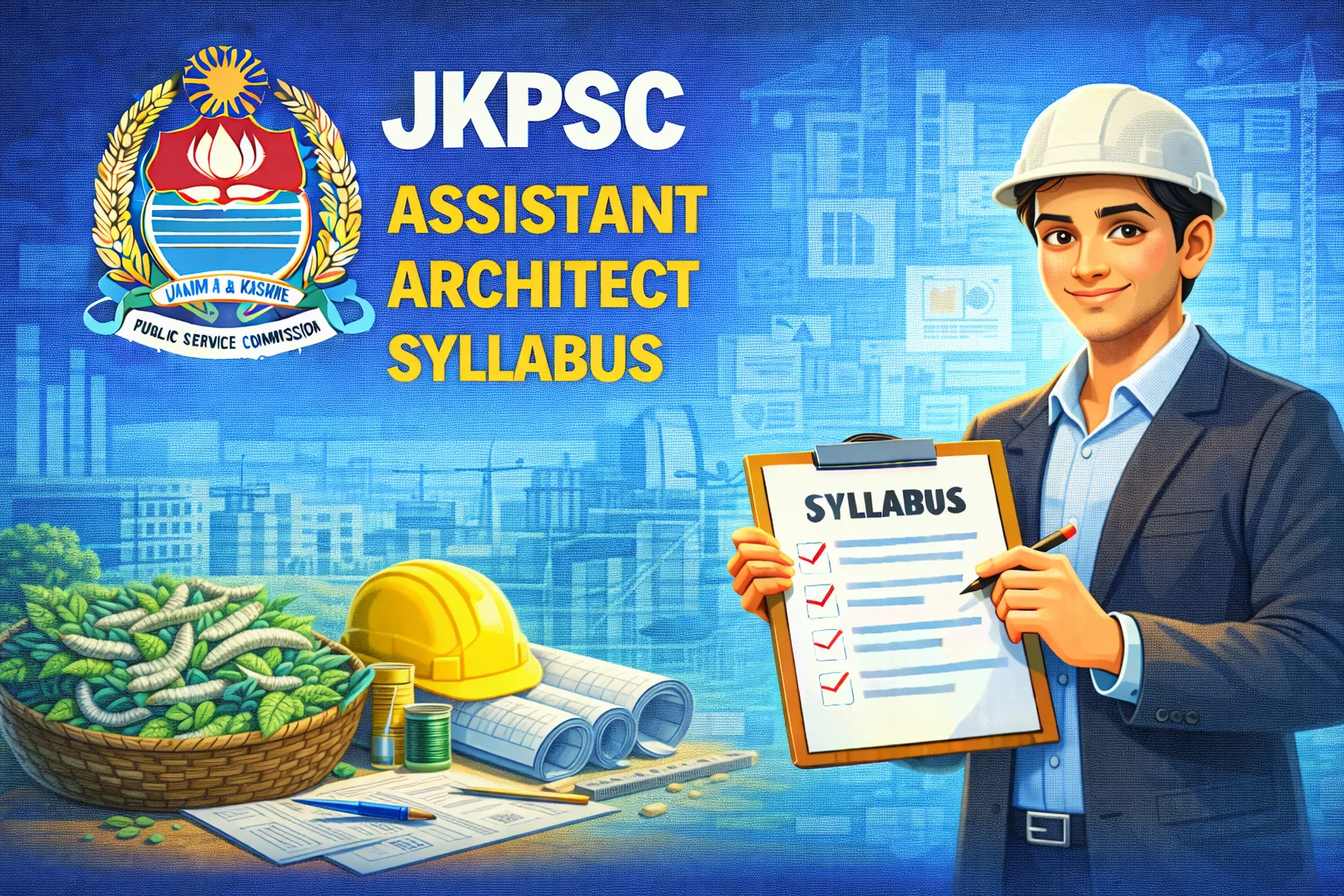
Prepare for the Jammu & Kashmir Public Service Commission (JKPSC) recruitment with our comprehensive guide to the Assistant Architect Syllabus. This Gazetted-level position within the Housing and Urban Development Department requires a deep understanding of design theory, construction management, and the unique architectural heritage of the J&K region.
JKPSC Assistant Architect: Recruitment Overview
The selection process for the Assistant Architect post is designed to identify professionals capable of balancing aesthetic form with functional, structural, and environmental requirements. The exam assesses candidates across 24 distinct subject areas, ranging from classical history to cutting-edge sustainable technologies.
Core Selection Framework
| Feature | Details |
| Exam Standard | Professional Degree Level (B.Arch) |
| Focus Areas | Hill Architecture, Urban Renewal, and Building Services |
| Key Legislation | Architects Act 1972/1983, NBC (2016) |
| J&K Specifics | Mughal Gardens in Kashmir and Vernacular Hill Architecture |
Comprehensive Syllabus Breakdown
The syllabus is structured into technical, theoretical, and management modules to ensure holistic professional competence.
1. Core Architectural Principles
- Architectural Design: Understanding the interdependence of form, function, structure, and site-planning. This includes anthropometrics and urban renewal issues.
- Theory of Design: Elements of design (space, line, texture) and principles like scale, balance, and proportion.
- Building Climatology: Study of climate as a determinant of built form, including global wind movements and pressure belts.
2. Construction & Material Science
- Building Construction: Traditional and modern details of foundations, frame structures, and high-rise systems like space frames and air frames.
- Building Materials: Properties of stones, fire bricks, high-performance concrete, industrial timber, and innovative materials like 3-D printed items and ETFE polymers.
- Structural Systems: Theoretical understanding of cable structures, pneumatic structures, and various arched roof types.
3. Specialized Engineering & Services
- Building Services: Advanced systems including HVAC, Fire Control (as per NBC 2016), and Integrated Building Management Systems (BMS).
- Disaster Management: Earthquake-resistant design principles and management of post-disaster scenarios.
- Lighting & Interior Design: Photometric terms, lighting automation, and aesthetic composition of interiors.
4. Planning & Conservation
- Town Planning: Evolution of settlements from River Valley civilizations to modern town-planning policies in India.
- Hill Architecture: Specialized focus on the vernacular architecture of Jammu and Kashmir, Himachal Pradesh, and the Aravalli hills.
- Architectural Conservation: Definitions of cultural heritage and intervention methods like restoration and adaptive use.
Study of Master Architects
A critical part of the syllabus involves analyzing the contributions of 20th-century masters who shaped Indian architecture.
- International Influence: Le Corbusier (Chandigarh works) and Louis Kahn.
- Indian Visionaries: Charles Correa, B.V. Doshi, Raj Rewal, Laurie Baker, and Anant Raje.
Professional & Legal Standards
Candidates must be well-versed in the legalities of the profession:
- Professional Practice: Role of the Council of Architecture and the Indian Institute of Architects.
- Project Management: Use of CPM, PERT, and “Line of Balance” methods for repetitive building types.
- Environmental Policy: GRIHA & LEED rating systems and the Energy Conservation Act (2001).
Official Syllabus PDF Download
Ensure you have the latest annexure for your reference:
Official Download:JKPSC Assistant Architect Syllabus PDF
Preparation Strategy for J&K Aspirants
- Prioritize J&K Context: Deeply study the “Hill Architecture” and “Mughal Gardens” sections, as these are region-specific and highly weighted.
- Master Technical Softwares: Review the features of AutoCAD, Revit, Archi-CAD, and 3D-Studio Max.
- Regulatory Proficiency: Focus on Building Bye-Laws, NBC 2016, and the Architects Act 1972/1983.
Frequently Asked Questions (FAQs)
Candidates should be familiar with presentation and modeling software such as SketchUp, Photoshop, AutoCAD, Revit, and Archi-CAD.
Yes. There is a dedicated section on Sustainable Architecture covering Green Building ratings (GRIHA/LEED) and Solar-Passive design strategies.
Absolutely. Section 22 focuses on “Hill Architecture,” specifically covering the vernacular expressions and challenges faced in Jammu and Kashmir.