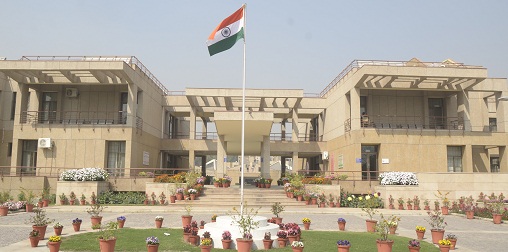
About Delhi School of Journalism

Official Address
Contact Information
- 9811098070
- Visit Official Website
Expired / Closed Notifications
Delhi School of Journalism Recruitment 2026: Career Guide & Vacancy Details
The Delhi School of Journalism (DSJ) is a prominent autonomous institution focused on imparting quality education in journalism. While not a Public Sector Undertaking (PSU) or a financial institution, DSJ recruits professionals for administrative, academic, and support roles. Understanding the recruitment landscape is key for aspiring candidates.
Key Highlights
| Organization | Industry | Recruitment Mode | Standard Salary | Location |
|---|---|---|---|---|
| Delhi School of Journalism | Education / Media Training | Merit-based/Interview | As per 7th CPC / Institute Norms | New Delhi |
Why work at Delhi School of Journalism Recruitment 2026: Career Guide & Vacancy Details?
Working at the Delhi School of Journalism offers a fulfilling career for individuals passionate about education and media. DSJ provides a stable work environment, opportunities for professional development within an academic setting, and the chance to contribute to shaping the future of journalism in India. The institution values academic rigor and professional integrity, making it an attractive employer for those seeking a meaningful career path with good job security.
Career Opportunities & Roles
DSJ typically hires for a range of roles, including:
- Academic Positions: Assistant Professor, Associate Professor, Professor in various journalism specializations (e.g., Print, Broadcast, Digital Media, Public Relations).
- Administrative Positions: Registrar, Section Officer, Assistant Registrar, Accountant, Stenographer, Office Assistant.
- Technical/Support Staff: IT Support, Librarians, Lab Assistants (for media labs).
- Research Fellows/Associates: For specific research projects related to media and communication.
Eligibility Criteria (2026 Standards)
While specific criteria vary by position, general eligibility includes:
- Educational Qualification: For academic posts, a Master's degree (and often a Ph.D.) in Journalism or a related field is usually required. For administrative and support roles, Bachelor's or Master's degrees in relevant disciplines are generally sought.
- Age Limit: Typically, the age limit for entry-level administrative posts ranges from 18-27 years, with relaxations for OBC (3 years), SC/ST (5 years), and Persons with Disabilities (10 years) as per government norms. For academic positions, age limits are usually higher or not strictly specified, focusing more on experience and qualifications.
- Experience: Academic positions often require prior teaching or research experience. Administrative roles might require specific experience in government or institutional administration.
- Nationality: Must be an Indian citizen.
Selection Procedure
The selection process at DSJ is generally based on merit and suitability for the role:
- Shortlisting: Applications are initially screened based on the eligibility criteria, academic qualifications, and experience mentioned in the advertisement.
- Written Examination: For certain administrative or non-academic posts, a written test may be conducted to assess general aptitude, subject knowledge, and language proficiency.
- Interview: Candidates who are shortlisted (either directly or after a written test) are called for a personal interview. This stage assesses communication skills, subject matter expertise, problem-solving abilities, and overall fit for the institution's culture and role requirements.
- Document Verification: Candidates who successfully clear the interview will undergo verification of their original documents.
Note: Unlike PSUs or government departments that primarily rely on competitive exams like GATE, SSC, or UPSC, DSJ's recruitment often emphasizes academic credentials and performance in interviews.
Salary & Perks
Salaries for employees at the Delhi School of Journalism are typically in line with government norms, often following the 7th Central Pay Commission (CPC) recommendations or institutional pay scales. Positions are usually classified into various levels:
- Academic Staff: Pay scales range from Assistant Professor (Level 10) upwards, with pay progression based on experience and promotions.
- Administrative Staff: Entry-level positions might fall under Level 2 to Level 7, with higher levels for senior administrative roles like Registrar.
- Allowances: Besides basic pay, employees are entitled to Dearness Allowance (DA), House Rent Allowance (HRA) or accommodation (if provided), Medical Allowance, and other admissible allowances as per existing rules and regulations.
Application Process
The Delhi School of Journalism announces vacancies through its official website and sometimes in the 'Employment News' or leading newspapers. The typical application process involves:
- Notification Release: Keep an eye on the official DSJ website (www.dsj.ac.in or similar) and the 'Careers' or 'Recruitment' section.
- Online Application: Interested candidates need to fill out the application form available online on the DSJ portal.
- Document Upload: Scan and upload necessary documents such as educational certificates, ID proof, photograph, and signature.
- Application Fee: A prescribed application fee may be required, payable online.
- Submission: Submit the completed application form before the closing date.
How to Prepare for Delhi School of Journalism Recruitment 2026: Career Guide & Vacancy Details Recruitment
Given that recruitment is primarily merit and interview-based, preparation should focus on:
- Academic Excellence: Ensure your educational qualifications are strong and up-to-date. For academic roles, staying abreast of current research and theoretical developments in journalism is crucial.
- Subject Knowledge: Deepen your understanding of journalism principles, media ethics, communication theories, and current affairs impacting the media landscape.
- Interview Skills: Practice articulating your thoughts clearly and confidently. Prepare to discuss your academic background, relevant experience, career aspirations, and your understanding of DSJ's mission. Be ready for situational or behavioral questions.
- Awareness of DSJ: Understand the institution's history, its programs, faculty, and its role in media education.
Disclaimer: This career guide is for informational purposes only. Recruitment notifications, eligibility criteria, and selection processes are subject to change by the Delhi School of Journalism. Candidates are strongly advised to refer to the official recruitment notifications released on the DSJ website or in the Employment News for the most accurate and up-to-date information.
Verification Source: Official website of the Delhi School of Journalism (www.dsj.ac.in) and relevant government employment portals.
Frequently Asked Questions (FAQs)
Similar Organizations


_1.png)
.png)
.png)