Government Jobs in Top Cities
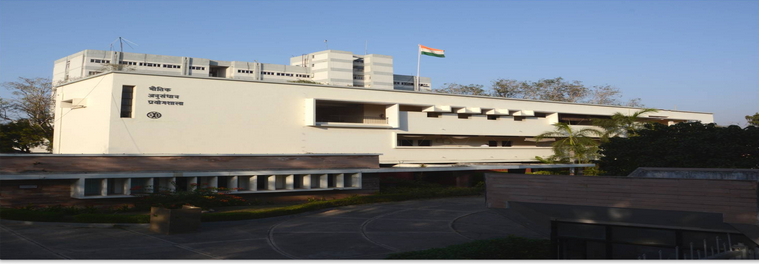
About Indian Institute of Geomagnetism
IIG has an enviable antiquity of over 181 years, which was instrumental in spawning geomagnetism in the Indian subcontinental region. It has evolved from being a data gathering organization to using long series geomagnetic data, to tackle applied aspects that benefit society, in an obvious and abstruse ways. Indian Institute of Geomagnetism (IIG) was given a full-scale mandate to pursue geomagnetic and allied field research in 1971. It has been an autonomous institution since its inception and is now functioning directly under the Department of Science and Technology, Government of India. The evolution of geomagnetism in the country has been interminably linked with the growth of this institution.
Geomagnetism has many societal applications and this science impacts all of humanity in one form or other. The very survival of all the life forms on earth is interminably related to the existence of this geomagnetic field. It’s in the fitness of things that we all understand the very significant role this component plays in cosmic natural processes. A significant contribution to research in the field of geomagnetism started in India as back as in 19th century. Geomagnetic observations commenced in India and rest of the world almost concurrently. The first magnetic observations in India were started at Madras in 1822, followed by the recordings at Simla (1841), Trivandrum (1841) and Colaba (1841). Among these, only Colaba observatory continued uninterrupted since 1841. The combined observations at Colaba and Alibag observatories provide the longest series (nearly 175 years) of magnetic field data.
Official Address
Contact Information
- 91-22-2748 4000
- 91-22-27480762
- Visit Official Website
This organization has released 7 recruitment notifications in the last 3 years.
Expired / Closed Notifications
Indian Institute of Geomagnetism (IIG) Recruitment 2026: Your Gateway to a Research Career
The Indian Institute of Geomagnetism (IIG) is a leading research institution under the administrative control of the Department of Science and Technology (DST), Government of India. It is dedicated to advancing the scientific understanding of the Earth's magnetic field and its influence on the near-Earth space environment. IIG conducts fundamental and applied research in geomagnetism, aeronomy, space physics, and related areas. It also contributes to geomagnetic data acquisition, analysis, and dissemination. For aspiring scientists and technical professionals, IIG offers a unique environment for research and development. This guide provides an in-depth look at the recruitment landscape at IIG for 2026.
Key Highlights: Indian Institute Of Geomagnetism Recruitment
| Organization Name | Industry | Recruitment Mode | Standard Salary (Entry Level) | Location |
|---|---|---|---|---|
| Indian Institute of Geomagnetism (IIG) | Research & Development (Space Physics, Geophysics) | Direct Recruitment (Merit/Interview based on GATE/NET sometimes) | Level 7/10 (7th CPC) | Mumbai, Navi Mumbai, Almora, Shillong, Jaipur, Tirunelveli |
Why Work at Indian Institute Of Geomagnetism (IIG)?
Working at the Indian Institute of Geomagnetism offers a distinct advantage for individuals passionate about scientific exploration and research. IIG provides a stable and secure work environment, crucial for long-term career growth and personal development. Employees gain exposure to cutting-edge research in geophysics and space physics, contributing to national and international scientific endeavors. The institute's commitment to academic advancement also means opportunities for further studies and professional development. As a government research body, IIG adheres to established service regulations, ensuring fair career progression and employee welfare.
Career Opportunities & Roles at IIG
IIG primarily recruits for scientific, technical, and administrative positions. The roles are typically focused on research, data analysis, instrument development, and support services. Common departments and roles include:
- Research Scientists: Conducting original research in geomagnetism, space weather, ionosphere, magnetosphere, etc.
- Scientific Officer/Assistant: Supporting research activities, data management, and setting up experiments.
- Technical Assistant/Officer: Maintaining scientific equipment, developing hardware/software, and providing technical support.
- Administrative Staff: Handling finance, accounts, human resources, and general administration.
- Project Scientists/Associates: Working on specific funded research projects as per their duration.
Eligibility Criteria (2026 Standards)
The eligibility criteria for recruitment at IIG can vary depending on the specific post. However, general requirements for scientific and technical positions typically include:
- Educational Qualification: A Master's degree (M.Sc.) in Physics, Geophysics, Mathematics, Computer Science, or a related field is usually required for scientific posts. For technical roles, a Bachelor's degree (B.E./B.Tech) in relevant engineering disciplines or a Diploma is often needed.
- Age Limit: For Scientist/Officer positions, the age limit is generally around 35 years, with relaxations for OBC (3 years) and SC/ST (5 years) candidates as per government norms. For Technical Assistants, the age limit might be around 28-30 years, with similar relaxations.
- Experience: Depending on the level, some positions may require prior research experience or relevant work experience. Freshers are often considered for entry-level positions.
Selection Procedure
IIG typically recruits through a merit-based selection process. The exact procedure can differ based on the post:
- Shortlisting: Candidates are initially shortlisted based on their academic qualifications, GATE/NET scores (if specified in the advertisement), or relevant experience.
- Written Examination: For some non-scientific or specialized technical roles, a written test may be conducted to assess fundamental knowledge.
- Interview: A crucial part of the selection process is the Personal Interview. Candidates are assessed on their subject knowledge, research aptitude, communication skills, and suitability for the role.
- Document Verification: Selected candidates undergo document verification before final appointment.
Note: IIG generally does not conduct common recruitment exams like SSC or UPSC for its core scientific and technical roles. Recruitment is usually through direct advertisement on its official website and notifications in the Employment News.
Salary & Perks
Recruitment at IIG is governed by the 7th Central Pay Commission (CPC) guidelines. The salary structure is competitive and includes various allowances:
- Basic Pay: Determined by the post and pay matrix level (e.g., Scientist 'B' often starts at Level 10, Scientific Assistant at Level 6).
- Dearness Allowance (DA): A percentage of basic pay, revised periodically.
- House Rent Allowance (HRA): Provided for accommodation, varies by city.
- Transport Allowance (TA): For commuting to work.
- Medical Facilities: Comprehensive medical coverage for employees and dependents.
- Leave Travel Concession (LTC): For travel during leave.
- Contributory Provident Fund (CPF) and **Gratuity** are also part of the benefits.
How to Prepare for Indian Institute Of Geomagnetism (IIG) Recruitment
Preparation strategy for IIG recruitment depends on the nature of the post:
- For Scientific & Research Roles: A strong foundation in M.Sc. level Physics, Geophysics, or related subjects is essential. Focus on core concepts, understand current research trends, and be prepared to discuss your academic projects and research interests in detail during the interview. Familiarize yourself with topics like Earth's magnetic field, atmospheric physics, space weather, and geophysical data analysis.
- For Technical Roles: Depending on the specialization, focus on the fundamentals of engineering (e.g., Electronics, Computer Science) or Diploma-level technical skills. Practice problem-solving and be ready to demonstrate practical knowledge of relevant technologies and equipment.
- General Preparation: Stay updated with IIG’s official website (iigm.res.in) for the latest recruitment notifications. Ensure your academic records are strong, and if a GATE/NET score is mentioned, prepare accordingly for those examinations if you haven't already appeared. For interviews, work on your communication skills and the ability to articulate technical concepts clearly.
Disclaimer: This recruitment guide is created by MySarkariNaukri.com based on available information and previous recruitment patterns. Candidates are strongly advised to refer to the official notifications released by the Indian Institute of Geomagnetism (IIG) on their website (iigm.res.in) and in the Employment News for the most accurate and up-to-date details regarding recruitment for the year 2026. MySarkariNaukri.com is not responsible for any inaccuracies or omissions.
Verification Source: Indian Institute of Geomagnetism Official Website - iigm.res.in
Frequently Asked Questions (FAQs)
Similar Organizations


.JPG)
.jpg)