The Gandhigram Rural Institute (GRI) is a prestigious Deemed-to-be-University funded by the Ministry of Education, Government of India, specializing in rural development and grassroots innovation. GRI offers a unique career path for those dedicated to social transformation, rural technology, and academic excellence, with eligibility ranging from 10th-standard vocational skills for field assistants to PhD/NET qualifications for senior professorial roles. Joining GRI means contributing to a "Viksit Bharat" by empowering rural communities through education and research.
Active Recruitment
2 Active-
The Gandhigram Rural Institute Recruitment 2026 – Apply Online for 1 PostLast Date: Feb 05, 2026 Dindigul Tech
-
The Gandhigram Rural Institute Assistant Librarian Recruitment 2026 – Walk-in Interview for 1 PostLast Date: Feb 04, 2026 Dindigul Tech
Related Categories
Government Jobs in Top Cities
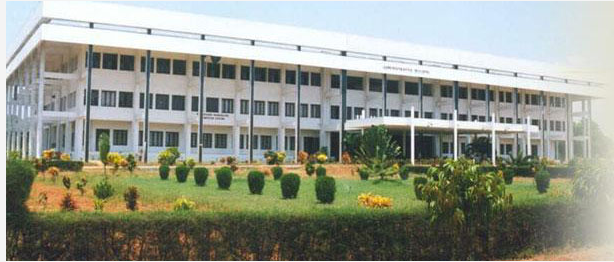
About The Gandhigram Rural Institute
.jpeg)
Gandhigram Rural Institute (GRI), founded by two dedicated disciples and contemporaries of Mahatma Gandhi, Dr.G.Ramachandran and Dr.T.S.Soundaram Ramachandran, has as its foundation Mahatma Gandhi’s revolutionary philosophy of Nai Talim, which effectively bridges the cognitive and practical dimensions, and focuses on the holistic development of learners, with an emphasis on skill development through value-based education, rooted in indigenous cultures and traditions. Since its establishment in 1956, GRI has been unstintingly contributing to higher education and has successfully pioneered rural higher education.
Along with Gandhiji’s Nai Talim, the ideals envisioned by Dr. Radhakrishnan Education Commission (1948-49), and National Council for Rural Higher Education headed by Dr. K. Shrimali, the then Deputy Minister, Ministry of Education, and three other proven world models listed below contributed to the establishment of GRI in 1956, namely
1. Folks Hoschkole system of Denmark by N.F. S. Gruntvig (1844)
2. Land-grant University system of USA (1862); and
3. Sriniketan Experiment of Shantiniketan by Tagore (1922)
The Institute, administered by the Ministry of Education, Government of India and fully funded through UGC, New Delhi, has developed academic programs in rural development, rural economics and extension education, rural oriented sciences, co-operation, development administration, rural sociology, English, Tamil and Indian languages. It runs B.Tech. in Civil Engineering with a focus on habitat development and M.Tech. in Renewable Energy. It also offers B.Sc Agriculture program.
Official Address
Contact Information
- 0451- 2451253 , 2452371 to 2452375
- 0451-2454466
- Visit Official Website
This organization has released 7 recruitment notifications in the last 3 years.
Expired / Closed Notifications
-
Gandhigram Rural Institute Invites Application for Finance Officer and Various PostsClosed: Aug 18, 2025
-
The Gandhigram Rural Institute Invites Application for Driver Recruitment 2022Closed: Jun 30, 2022
About Gandhigram Rural Institute Careers
| Feature | Organization Details |
| Organization Type | Deemed-to-be-University (Fully Funded by MoE, Govt. of India) |
| Headquarters | Gandhigram, Dindigul District, Tamil Nadu |
| Primary Entry Gate | UGC NET / CSIR NET / GRI Entrance Test / Skill Tests |
| Salary Range | ₹18,000 - ₹2,18,200 (Approximate per 7th CPC) |
🏛️ Organization Overview
The Gandhigram Rural Institute (GRI) was founded in 1956 by visionary Gandhians Dr. G. Ramachandran and Dr. T.S. Soundram to implement Mahatma Gandhi’s Nai Talim (Basic Education) system. Today, it stands as an "A++" Grade NAAC-accredited institution that bridges the gap between academic theory and rural reality. Located in the serene valley of the Sirumalai hills in Tamil Nadu, GRI operates as a multidisciplinary hub covering Agriculture, Rural Development, Health, and Engineering.
Strategically, GRI is critical to the Ministry of Education's rural outreach. It doesn't just produce graduates; it develops rural managers, scientists, and technicians who work directly in field observatories and rural industries. For career seekers, GRI offers the stability of a Central Government-funded institution combined with the impact of community-level service, making it a distinct alternative to conventional urban universities.
💼 Key Job Profiles (Evergreen Roles)
- Assistant Professor: Conducts academic lectures and leads community-based research in specialized fields like Rural Development, Food Processing, or Khadi Technology. Requires UGC/CSIR NET or a PhD.
- Technical Assistant (Extension/Lab): Facilitates field-level training for rural youth and maintains specialized labs (e.g., Soil Testing or Textile labs). Requires a Bachelor’s degree or Diploma in the relevant field.
- Multi-Tasking Staff (MTS) / Field Assistant: Handles administrative support and on-ground field data collection in the institute's various rural extension projects.
- Administrative Officer (Registrar/Finance/Controller): Senior-level management roles responsible for institutional governance and compliance with Government of India financial norms.
💰 Salary & Employee Benefits
GRI employees are governed by the 7th Central Pay Commission (CPC) scales, ensuring parity with other Central Universities.
- Academic Staff: Assistant Professors start at Academic Level-10 (Base: ₹57,700), while Professors reach Level-14 (Base: ₹1,44,200).
- Non-Teaching Staff: Scales range from Level-1 (MTS) starting at ₹18,000 to Level-14 (Registrar) starting at ₹1,44,200.
- Allowances: Employees receive Dearness Allowance (DA), House Rent Allowance (HRA) for rural/semi-urban areas, and Transport Allowance.
- Social Security: Beneficiaries of the National Pension System (NPS), CGHS/CSMA medical facilities, and Children's Education Allowance.
🎯 Selection Process
The GRI recruitment cycle follows a rigorous vetting process to ensure institutional integrity:
- Screening: Applications are shortlisted based on Academic Performance Indicators (API) for teaching roles or qualifying criteria for non-teaching roles.
- Written/Skill Test: For Group B and C posts (Technical/Clerical), a written exam testing General English, Quantitative Aptitude, and Domain Expertise is followed by a skill test (e.g., Typing or Laboratory proficiency).
- Presentation & Interview: Teaching candidates must typically deliver a demonstration lecture before appearing for a personal interview with the Selection Committee.
- Verification: Final selection is subject to strict document verification and medical fitness standards as per GoI norms.
💡 Expert Tips (How to Crack GRI Exams)
- Understand the Rural Context: For all interviews, demonstrate an understanding of rural issues like sustainable agriculture, the Blue Economy, or rural entrepreneurship. GRI values "social commitment" as much as technical skill.
- Master UGC Regulations: If applying for teaching posts, ensure your research papers are in UGC-CARE listed journals, as the screening committee follows latest UGC criteria strictly.
- Focus on Regional Presence: For non-teaching and field roles, a basic understanding of the rural landscape of South India, specifically Tamil Nadu, can be a competitive advantage.
Mandatory Disclaimer: All details are sourced from official notifications. MySarkariNaukri.com provides informational guidance only and is not affiliated with any government agency.
Verification Source: Verify at: https://ruraluniv.ac.in/
Frequently Asked Questions (FAQs)
Similar Organizations


_2.jpg)
.jpg)
.PNG)
.jpeg)