Government Jobs in Top Cities
About Cauvery Water Disputes Tribunal
The Cauvery Water Disputes Tribunal announced its final verdict on 5 February 2007. According to its verdict, Tamil Nadu gets 419 TMC of Cauvery water while Karnataka gets 270 TMC. The actual release of water by Karnataka to Tamil Nadu is to be 192 TMC annually. Further, Kerala will get 30 TMC and Puducherry 7 TMC.
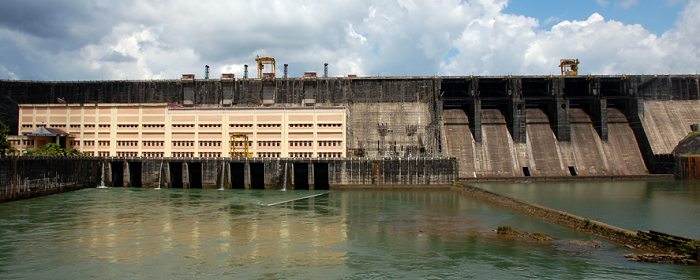
The river Cauvery originates in Karnataka's Kodagu district, flows into Tamil Nadu and reaches the Bay of Bengal. Parts of Tamil Nadu, Kerala, Karnataka and Pondicherry lie in the Cauvery basin. The origins of legal dispute over Cauvery waters date back to 1892 and 1924 in agreements signed between Mysore and Madras Presidency.
The water sharing dispute of the river between Karnataka and Tamil Nadu dates back to the British Raj. A number of districts in both states are dependent on the Cauvery for irrigation, while Bengaluru gets its water from the river.
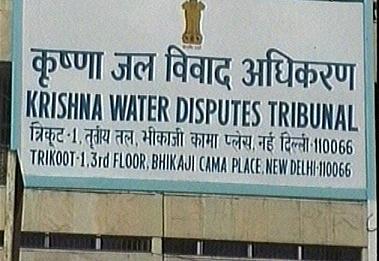
Official Address
Contact Information
- (+91)-11-23711988
- (+91)-11-23710253
- Visit Official Website
Cauvery Water Disputes Tribunal Recruitment 2026: A Comprehensive Career Guide
The Cauvery Water Disputes Tribunal (CWDT) is a quasi-judicial body constituted under the Inter-State River Water Disputes Act, 1956. It functions to adjudicate on water sharing disputes between riparian states. Unlike Public Sector Undertakings (PSUs) or Banks, the Tribunal typically recruits administrative, legal, and technical support staff through direct appointments or deputation. The recruitment mode is generally based on merit and interview, rather than standardized national entrance exams like GATE or IBPS.
Key Highlights
| Organization Name | Cauvery Water Disputes Tribunal |
| Industry | Judicial/Administrative Body (Water Resource Management) |
| Recruitment Mode | Direct Recruitment (Merit/Interview based) / Deputation |
| Standard Salary | As per Central Government guidelines (7th Pay Commission) |
Career Opportunities
The Cauvery Water Disputes Tribunal primarily recruits professionals in roles related to its core functions. These often include:
- Legal Officers/Advisors
- Water Resource Engineers/Experts
- Research Assistants/Analysts (Hydrology, Economics)
- Administrative Officers
- Clerical Staff (Upper Division Clerk, Lower Division Clerk)
- Confidential Assistants/Stenographers
Eligibility Criteria (2026 Standards - Expected)
Eligibility criteria are typically aligned with Central Government standards. Specific details may vary per post:
- Age Limit: Generally between 18-30 years for most posts, with relaxations for OBC (3 years), SC/ST (5 years), and other reserved categories as per government rules. Specific posts might have different age caps.
- Educational Qualification:
- Legal Posts: Bachelor's or Master's degree in Law (LLB/LLM) from a recognized university.
- Engineering/Technical Posts: Bachelor's degree in Engineering (Civil/Water Resources) or relevant scientific discipline.
- Administrative/Clerical Posts: Bachelor's degree in any discipline from a recognized university. Specific typing or shorthand proficiency may be required for clerical and assistant roles.
Selection Procedure
The selection process for the Cauvery Water Disputes Tribunal is generally straightforward and depends on the post:
- Shortlisting: Candidates meeting the basic eligibility criteria, particularly for specialized roles, might be shortlisted based on their academic record or experience.
- Written Examination: For certain administrative or clerical positions, a preliminary or main written examination may be conducted, covering general aptitude, reasoning, English, and general awareness.
- Skill Test: For posts like Stenographers or Clerks, a skill test (e.g., typing speed test, shorthand dictation) is usually part of the process.
- Interview: A personal interview is a crucial stage for most positions, assessing the candidate's knowledge, communication skills, problem-solving ability, and suitability for the role and organization.
- Document Verification: Following successful selection, candidates undergo document verification.
Note: Unlike PSUs or Banks, CWDT does not typically rely on GATE, NET, or IBPS scores for its recruitment.
Salary & Perks (7th Pay Commission)
Salaries are determined by the 7th Central Pay Commission. Posts are usually categorized under various Pay Levels:
- Group 'A'/'B' Officers: Pay Levels 10 and above (e.g., starting around ₹56,100 to ₹1,77,500 per month basic pay).
- Group 'B'/'C' Staff: Pay Levels 4 to 7 (e.g., starting around ₹25,500 to ₹44,700 per month basic pay).
In addition to basic pay, employees receive Dearness Allowance (DA), House Rent Allowance (HRA), and other allowances as per Government of India rules. Medical facilities, transport allowance, and other benefits are also provided.
Application Process & Notification
The Cauvery Water Disputes Tribunal announces vacancies through:
- Employment News: Official weekly publication by the Government of India.
- Tribunal's Official Website: Often, a dedicated 'Recruitment' or 'Careers' section will host detailed notifications and application forms.
- Leading Newspapers: Sometimes, major recruitments are advertised in national dailies.
Candidates are advised to regularly check these sources for official notifications and adhere strictly to the application deadlines and procedure mentioned.
How to Prepare for Cauvery Water Disputes Tribunal Recruitment 2026
Preparation strategies vary significantly based on the recruitment stage:
- For Written Exams (if applicable): Focus on General Knowledge (especially related to water resources, Indian polity, and environmental issues), Reasoning Ability, English Comprehension, and Quantitative Aptitude.
- For Interviews: A strong understanding of water law, inter-state water dispute mechanisms, and the specific role you are applying for is crucial. Be prepared to discuss your qualifications, experience, and how you can contribute to the Tribunal's objectives. For engineering or research roles, brush up on technical fundamentals related to hydrology, water management, and relevant software/tools.
- General Preparation: Stay updated on current affairs related to water resource management and inter-state relations in India. Good communication skills and a professional demeanor are vital for the interview stage.
Disclaimer: The information provided here is a general career guide based on expected trends for the year 2026. Official recruitment notifications from the Cauvery Water Disputes Tribunal should always be referred to for precise details regarding eligibility, vacancies, selection process, and application procedures. Visit the official website of the Cauvery Water Disputes Tribunal for the most accurate and up-to-date information.
Similar Organizations