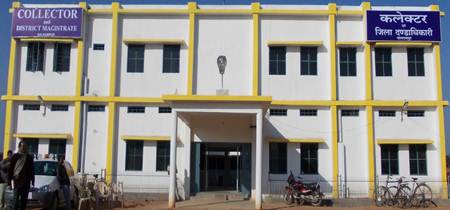
The office of the Collector & District Magistrate is a cornerstone of governance and administration at the district level in India. Responsible for maintaining law and order, overseeing development projects, and serving as the primary link between the state government and the citizens, these offices play a pivotal role in the socio-economic fabric of the nation. This guide provides an in-depth look at career prospects within the Collector & District Magistrate Krishna office for the 2026 recruitment cycle.
Government Jobs in Top Cities
About Collector & District Magistrate Krishna

Official Address
Contact Information
Collector & District Magistrate Krishna Recruitment 2026: Career Guide & Vacancy Details
The District Magistrate and Collector is the chief administrative officer of a district in India. This role is crucial for the implementation of government policies, district development, and maintaining public order. The office recruits various personnel to support its extensive administrative and developmental functions.
| Organization Name | Industry | Recruitment Mode | Standard Salary (Entry Level) |
|---|---|---|---|
| Collector & District Magistrate Krishna | Government Administration & Public Service | Departmental Examination/Merit/Interview (Varies by Post) | Level 6 to Level 10 (7th CPC) |
Career Opportunities
The Collector & District Magistrate Krishna office typically recruits for a variety of administrative, clerical, and support roles. These may include positions such as:
- District Collector/District Magistrate (through UPSC Civil Services Exam)
- Additional District Magistrate (Promotional Post)
- Sub-Divisional Magistrate (Promotional Post)
- Tehsildar/Talukdar
- Circle Officer/Executive Magistrate
- Stenographers
- Clerks (Upper Division Clerk, Lower Division Clerk)
- Record Keepers / Assistants
- Various field staff for developmental schemes.
Eligibility Criteria (2026 Standards)
Eligibility criteria vary significantly based on the specific post:
- For All India Services (IAS/IPS as District Collector):
- Age Limit: Generally 21 to 32 years for General candidates (relaxation for OBC, SC/ST, PwBD, Ex-Servicemen as per government rules).
- Education: Bachelor's Degree in any discipline from a recognized University.
- For State Civil Services (Dy. Collector, Tehsildar etc. via State PSC):
- Age Limit: Typically 21 to 30 years (State-specific relaxations apply).
- Education: Bachelor's Degree in any discipline.
- For Clerical/Support Staff:
- Age Limit: Usually 18 to 27 years (with relaxations).
- Education: Higher Secondary (10+2) or Graduation, depending on the post.
Selection Procedure
The selection process is dependent on the cadre and level of the post:
- For District Collector (IAS): Selection is through the UPSC Civil Services Examination (CSE) which includes Prelims, Mains, and Interview.
- For State Civil Services (e.g., Deputy Collector, Tehsildar): Selection is through State Public Service Commission (PSC) examinations, typically involving Prelims, Mains, and Interview stages, or direct recruitment based on merit and interview for certain posts.
- For Clerical and Support Staff: Recruitment is often through departmental examinations, skill tests (typing), merit lists based on academic qualifications, or direct interviews. The Collectorate itself may conduct these recruitments.
How to Prepare for Collector & District Magistrate Krishna Recruitment 2026: Career Guide & Vacancy Details Recruitment
Preparation strategies are tailored to the recruitment mode:
- For UPSC CSE / State PSC Exams: Focus on a comprehensive syllabus covering General Studies (History, Geography, Polity, Economy, Science), Quantitative Aptitude, Logical Reasoning, and English. Extensive revision and mock tests are crucial.
- For Departmental/Merit-Based Recruitment: Depending on the post, preparation may involve honing specific skills like typing speed, computer proficiency, and understanding administrative procedures. For clerical roles, General Knowledge and basic arithmetic are often tested. For technical or specialized support roles, domain knowledge is essential.
- Interview Preparation: Candidates should be prepared to answer questions related to administrative awareness, current affairs, general awareness, and personal suitability for a public service role. Strong communication skills and a clear understanding of the responsibilities of the post are vital.
Salary & Perks
Salaries are determined by the 7th Central Pay Commission (CPC) or equivalent State Pay Commissions. Posts recruited through UPSC/State PSCs fall under government pay matrices:
- Entry-Level Positions: Typically range from Level 6 (Approx. ₹35,400 - ₹1,12,400) to Level 10 (Approx. ₹56,100 - ₹1,77,500) in the Pay Matrix.
- Allowances: In addition to basic pay, government employees are entitled to Dearness Allowance (DA), House Rent Allowance (HRA), Transport Allowance (TA), and other specific allowances as per government rules.
- Perks: May include medical facilities, subsidized housing (if available), leave travel concession (LTC), pension benefits, and career advancement opportunities.
Disclaimer: This guide is for informational purposes only. Recruitment notifications, eligibility criteria, and selection processes are subject to change by the respective authorities. Candidates are strongly advised to refer to the official notification released by the Collector & District Magistrate Krishna office or the relevant Public Service Commission for accurate and the most up-to-date information. Always verify details on the official government websites.
Frequently Asked Questions (FAQs)
Similar Organizations


.jpg)
