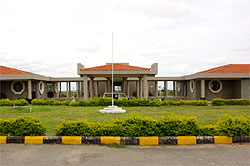
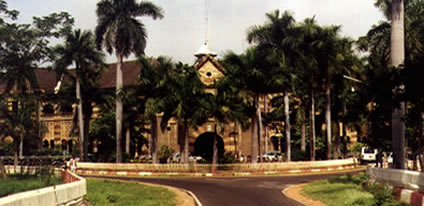
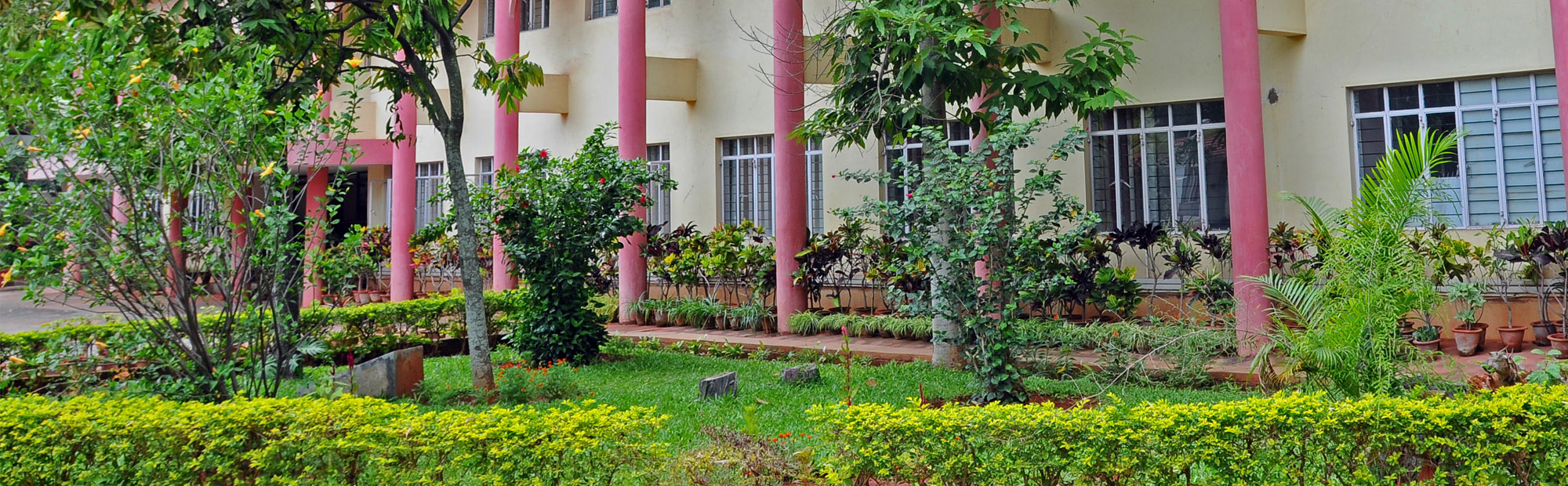
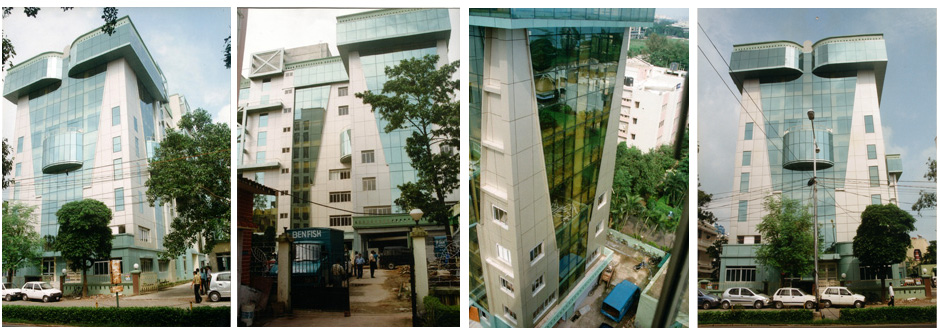
The Centre for Liquid Crystal Research (CLCR) is dedicated to advancing scientific understanding and technological applications in the field of liquid crystals. As a premier research institution, CLCR plays a vital role in pushing the boundaries of materials science and its impact on various industries, contributing to India's technological prowess and innovation ecosystem. This guide provides comprehensive details for aspiring candidates seeking a career at CLCR in 2026.
Government Jobs in Top Cities
About Centre for Liquid Crystal Research

The Centre was established in 1991 by an eminent liquid crystal scientist, Prof. S. Chandrasekhar, FRS. It was then known as Centre for Liquid Crystal Research, a registered scientific society in Karnataka with the objective to build a centre of excellence in line with the international trend those days on liquid crystal materials and devices. In 1995, it became an autonomous institute under the Department of Electronics (DOE), Government of India and in 2003, was brought under DST. Subsequently in the year 2010, the name was changed to Centre for Soft Matter Research. Recently in 2014, the Centre has further widened the scope of research activities to embrace nanoscience and technology and is now known as Centre for Nano and Soft Matter Sciences (CeNS). It is being mentored by Nano-Mission of the Government of India.
Official Address
Contact Information
- 91 (0)80 296 300 89 / 90
- Visit Official Website
CLCR Recruitment 2026: Career Guide & Vacancy Details
The Centre for Liquid Crystal Research (CLCR) is an autonomous research institution focused on pioneering research and development in liquid crystal science and technology. It serves as a hub for innovation, contributing significantly to India's scientific advancements and technological self-reliance in materials science.
Key Highlights
| Organization Name | Centre for Liquid Crystal Research (CLCR) |
|---|---|
| Industry | Research & Development (Materials Science) |
| Recruitment Mode | Direct Recruitment based on Merit and Interview (primarily for research positions). May consider GATE scores for specific engineering roles if applicable. |
| Standard Salary | As per 7th CPC norms (e.g., Level 10 for Scientist B), highly competitive with research allowances. |
Deep Dive Sections
Career Opportunities
CLCR primarily hires professionals for its research and development activities. Common roles include:
- Scientist B/C (Physics, Chemistry, Materials Science)
- Research Associate
- Postdoctoral Fellows
- Technical Assistants
- Administrative and Support Staff
Opportunities exist for individuals with expertise in condensed matter physics, organic chemistry, polymer science, material characterization, and device fabrication.
Eligibility Criteria (2026 Standards)
- Age Limit: Generally, for Scientist B, the age limit is around 30-35 years for General candidates, with relaxations for OBC (3 years) and SC/ST (5 years) as per government rules. Specific posts may have different age criteria.
- Educational Qualifications: Minimum educational qualification is typically a Master's degree (M.Sc.) in Physics, Chemistry, or Materials Science from a recognized university. For some engineering-related roles, a B.Tech/BE degree in relevant branches might be considered. A Ph.D. is often preferred or required for higher research positions.
Selection Procedure
The selection procedure at CLCR is generally merit-based and focuses on assessing research potential and domain knowledge:
- Shortlisting: Candidates are shortlisted based on their academic records, research publications (if any), and relevant experience.
- Written Examination (if applicable): For certain technical or administrative roles, a written examination may be conducted to assess fundamental knowledge.
- Interview: The primary selection method for research positions is a comprehensive interview. This may involve a technical presentation by the candidate followed by a question-and-answer session with a panel of experts.
- Document Verification: Successful candidates will undergo verification of their original documents.
Note: CLCR primarily recruits through direct interviews for research roles, not typically through centralized exams like GATE or SSC. However, for any specific engineering support roles, GATE scores or other relevant examinations might be considered.
Salary & Perks
Salaries at CLCR are structured as per the 7th Central Pay Commission (CPC) norms. This includes:
- Basic Pay: Determined by the entry-level pay matrix (e.g., Level 10 for Scientist B).
- Dearness Allowance (DA): Admissible as per government rules, revised periodically.
- House Rent Allowance (HRA): Provided if government accommodation is not allotted.
- Transport Allowance (TA): For commuting to and from duty.
- Medical Facilities: Comprehensive medical coverage for employees and dependents.
- Leave Rules: As per government norms.
- Research Allowances: Additional allowances may be provided to researchers based on their project and responsibilities.
Application Process
CLCR announces vacancies on its official website (clcr.res.in) and occasionally in the Employment News. Interested candidates are required to:
- Visit the official CLCR website.
- Navigate to the 'Recruitment' or 'Careers' section.
- Download the application form and detailed advertisement.
- Fill out the application form carefully and attach all required documents (certificates, mark sheets, research papers, etc.).
- Submit the application either online or offline as specified in the advertisement, usually by post to the CLCR administrative office.
How to Prepare for CLCR Recruitment 2026: Career Guide & Vacancy Details Recruitment
For Research Positions (Scientist/Research Associate):
- Strengthen Fundamentals: Ensure a thorough understanding of core concepts in your specialization (Physics, Chemistry, Materials Science). Reread standard textbooks and reference materials.
- Research Domain Knowledge: Stay updated with the latest advancements, recent research papers, and ongoing projects in liquid crystal science and related fields. CLCR's own publications can be a good source.
- Prepare for Presentation: If a presentation is part of the interview, prepare a concise and impactful summary of your past research work, highlighting your contributions and future research interests relevant to CLCR's objectives.
- Practice Technical Questions: Be ready to answer in-depth technical questions related to your thesis work, experimental techniques, and theoretical principles.
- Demonstrate Research Aptitude: Highlight your problem-solving skills, analytical abilities, and potential for independent research.
For Technical/Administrative Positions (if applicable):
- Syllabus Focus: If a written exam is conducted, carefully study the syllabus provided in the notification. This typically includes general aptitude, reasoning, English, and subject-specific knowledge.
- Mock Tests: Practice with mock tests to get familiar with the exam pattern, time management, and question difficulty level.
- General Awareness: Keep abreast of current affairs, science & technology news, and general knowledge relevant to government organizations.
Disclaimer: This career guide is based on the typical recruitment patterns and information available for research organizations in India. Candidates are strongly advised to refer to the official website of the Centre for Liquid Crystal Research (CLCR) for precise and up-to-date information regarding specific recruitment notifications, eligibility criteria, application procedures, and selection processes for CLCR Recruitment 2026. Verification of details from the official CLCR careers portal is crucial before applying.
Similar Organizations